90s Parenting Style Explained: Why It's Trending & How to Adapt
Discover why the '90s parenting style trend is gaining popularity today. Learn its core principles, benefits like fostering independence, and practical ways to integrate it into modern family life.
The '90s Parenting Style Trend Explained: Why It's Resonating Today
With my first child, I meticulously planned every minute of our day: preschool, enrichment classes, even the exact time they'd finish their carrot sticks. By my fourth, we were often heading out the door with mismatched socks and a granola bar for breakfast. Looking back, that shift wasn't an abdication of responsibility, but a deeper understanding of what kids truly need to thrive. The 90s parenting style trend explained isn't about replicating a bygone era, but about recapturing a spirit of independence and resilience that seems to be getting lost in our hyper-connected, hyper-scheduled world.
What Defined '90s Parenting?
What exactly is this elusive '90s parenting style? It wasn’t a formally defined doctrine but rather an observation of an era characterized by a generally hands-off approach. Think less helicopter, more gentle breeze.
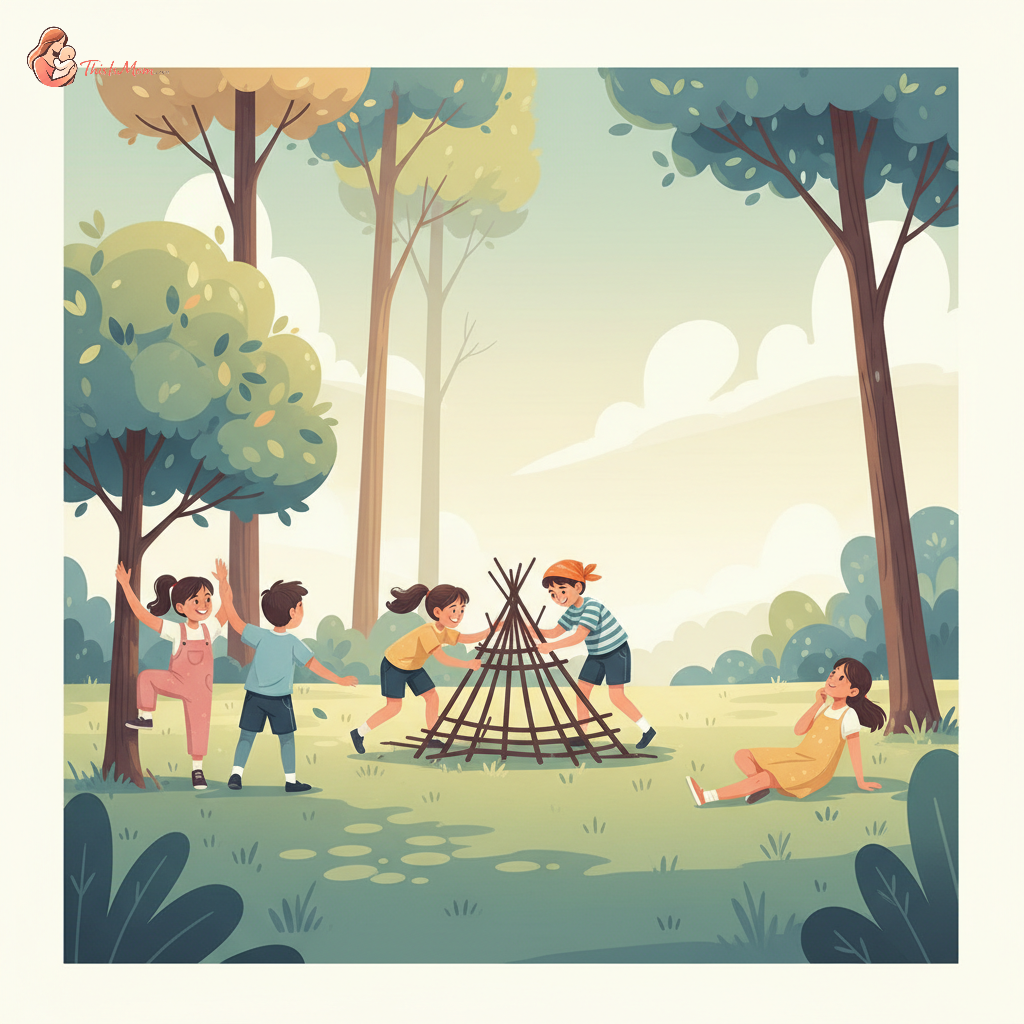
Children were typically given more unstructured time. Playgrounds were filled with kids figuring things out for themselves, and afternoons were often spent exploring the neighborhood, building forts, or simply staring at clouds. The emphasis was on letting kids be kids, with parental guidance acting as a safety net rather than a constant tether. It was a subtle, yet significant, shift from a model of absolute control to one of thoughtful guidance.
Why Are We Looking Back to the '90s Now?
So, why are modern parents, bombarded with information and often feeling immense pressure, looking back to the '90s? In hindsight, it’s a reaction to the intensity of present-day parenting. The constant drive for optimization and the pervasive fear can be exhausting. There’s a growing desire to raise children who are resilient, independent, and capable of navigating the world. We recognize the benefits of letting kids experience failure, try new things without constant adult intervention, and discover their own capabilities. Furthermore, the digital age presents its own challenges. Many parents are grappling with how to balance the undeniable advantages of technology with the core need for real-world experiences and genuine human connection. Childhood memories from this era often center around freedom and exploration, which appeals to many today.
Bringing the Best of the '90s to Today's World (Safely)
The appeal of 90s parenting isn't a call to let kids roam unsupervised in a way that feels unsafe or irresponsible by today's standards. It’s about integrating its core values into our modern lives in a balanced way.
Discover your baby's phase
Fostering independence doesn't have to equate to "free-range" risks. It means giving children age-appropriate autonomy. This could be as simple as letting an older child navigate a familiar bus route or allowing a younger one to walk to a neighbor's house independently. Introducing boredom is another key element. In an era of constant digital stimulation, a little boredom can be a powerful catalyst for creativity. When kids are left to their own devices, they invent games, tell stories, and develop their imaginations. Navigating screen use with intention, not just prohibition, is also crucial. Instead of banning devices, we can focus on setting clear boundaries and encouraging their use for learning, connection, and creative expression, rather than passive consumption.
Practical Steps for a '90s-Inspired Approach
Adopting a more '90s-inspired approach doesn't require a radical overhaul. It's about small, intentional shifts.
Here are a few practical ways to infuse this philosophy into your family life:
- Encourage unstructured outdoor play: More time in nature, less planned 'activities.' Let them dig in the dirt, climb trees (safely), and simply explore.
- Simplify schedules: Look for opportunities to reduce the number of extracurriculars. Less "doing" and more "being" allows for spontaneous family moments and downtime.
- Empower problem-solving: When your child faces a challenge, resist the urge to fix it immediately. Ask questions like: "What could you try?" or "How do you think you could solve this?" Offer support, but let them lead the discovery.
- Embrace imperfection: Let kids try things their own way, even if it’s not the "perfect" way. Learning happens through experimentation.
What About Siblings and That 'Favorite' Child Question?
Sibling dynamics are a constant in any family, and the '90s approach can actually help diffuse some of that rivalry. When children have more unstructured time to play together, they learn to negotiate, share, and entertain themselves as a unit. This reduces the pressure of individual parental attention. And that age-old question – who is the parent's favorite? Looking back, and by my fourth child, I learned that "favorite" is a fluid concept. It shifts depending on the day, the moment, and the child's needs and personality. Each child has their unique strengths and challenges, and their "favorite" status often depends on whose current need is being met. The truth nobody tells you about parenting multiple children is that your love isn't divided, it expands. Building a culture of shared responsibility, where siblings help each other and contribute to household tasks, also fosters a stronger bond and reduces the focus on individual favors.