Assess Fine Motor Skills: 18-Month-Old Home Checklist
Easily assess your 18-month-old's fine motor skills at home with this practical checklist. Learn key milestones, playful activities, and when to consult a pediatrician.
Your 18-Month-Old's Dexterity: How to Assess Fine Motor Skills at Home
Your 18-month-old is likely a whirlwind of new abilities, from toddling with newfound confidence to exploring their world with curious hands. You might be wondering if their developing dexterity is on track. Understanding how to assess fine motor skills for an 18-month-old at home can offer valuable insights, giving you peace of mind and helping you support their growth.
Grasping the Basics: What Exactly Are Fine Motor Skills?
Fine motor skills involve the coordination of small muscles in the body, primarily in the hands, wrists, and fingers. These movements are crucial for tasks requiring precision and control, distinguishing them from gross motor skills.
Big Movements vs. Small Movements: Fine Motor vs. Gross Motor
Gross motor skills are the larger movements that use big muscle groups. Think of running, jumping, climbing, and walking. Fine motor skills, on the other hand, are the delicate, intricate movements. This includes things like picking up small objects, turning pages, or using utensils. Both are vital for a child's overall development and independence.
Why These Little Movements Matter So Much
The development of fine motor skills at 18 months is a stepping stone to many future abilities. These skills are fundamental for daily self-care tasks like feeding oneself, dressing, and eventually writing and other academic pursuits. Supporting this development now lays a strong foundation for their future successes.
Developmental Benchmarks: What to Expect at 18 Months
The American Academy of Pediatrics (AAP) and the Centers for Disease Control and Prevention (CDC) provide helpful guidelines on typical developmental milestones. These benchmarks can help you understand what fine motor skills are generally expected around this age.
Key Fine Motor Skills at This Age, According to the Experts
The guidelines from the AAP and CDC suggest that by 18 months, children are often able to:
- Feed themselves with a spoon, though some mess is common.
- Turn pages of a board book, often one page at a time.
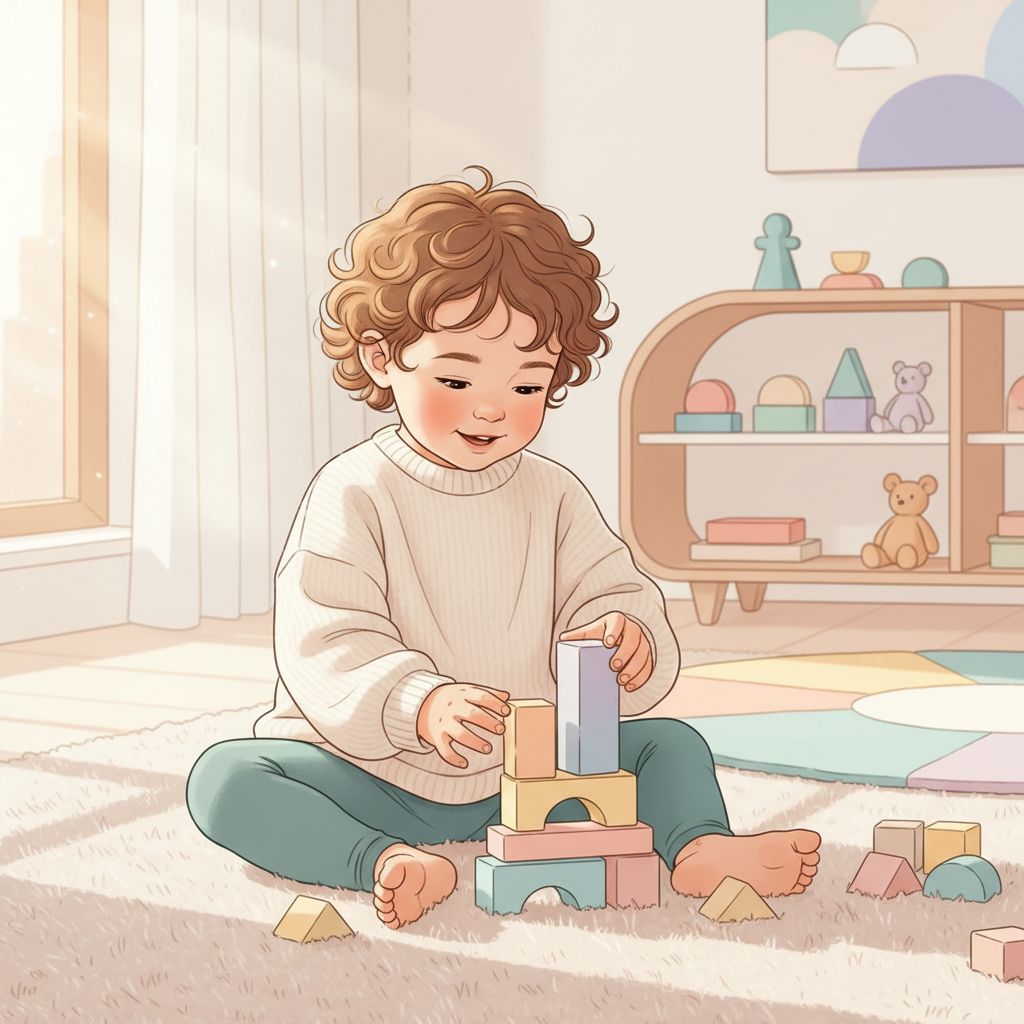
- Stack two or more blocks to build a tower.
- Scribble with a crayon or marker.
- Remove some of their own clothing, like socks or loose hats.
- Pick up small objects, like Cheerios, using a pincer grasp (thumb and forefinger).
Is My Child On Track? A Gentle Overview
It’s important to remember that development isn't a race, and children reach milestones at their own pace. However, if your 18-month-old consistently struggles with several of these tasks, it might be worth a closer look. For instance, if they show little interest in using their hands for manipulative play or have significant difficulty grasping objects, these could be areas to discuss with your pediatrician. For concerns about how a child handles food, understanding toddler refusing vegetables baby led weaning ideas can be helpful, though this is generally about food preference, not motor skills.
Discovering Dexterity: Your Home Checklist for Fine Motor Skills
You don't need special equipment to observe your child's fine motor development. Everyday items and simple play activities can offer a clear picture of their abilities.
Everyday Items: Simple Activities for Assessment
Engage your child in these common activities and observe their approach.
- Snack Time Exploration: Offer small, easy-to-grasp snacks like O-shaped cereal or small pieces of fruit.
- What to observe: Can they pick up individual pieces using their thumb and forefinger? Do they try to bring food to their mouth? Learning to eat independently is a key part of fine motor development, and if you have concerns about feeding, exploring guides on baby first finger foods transition purees to solids might offer useful insights.
- Book Time: Sit down with a sturdy board book.
- What to observe: Do they attempt to turn the pages themselves? How do they hold the book?
- Block Play: Have a few large building blocks available.
- What to observe: Can they grasp the blocks? Do they attempt to stack them? Even trying is a positive sign. You can encourage building skills with activities for a 2 year old stacking blocks.
- Art Exploration: Provide a chunky crayon and a large piece of paper.
- What to observe: How do they hold the crayon? Do they make marks on the paper? Scribbling is a key early step.
Games That Build and Reveal Fine Motor Abilities
Discover your baby's phase
Play is the most natural way for children to learn and demonstrate their skills.
- The "Putting In" Game: Use a container with a lid (like an empty wipe container or a large jar) and small objects that fit inside (large beads, small blocks, pom-poms).
- What to observe: Can your child remove objects from the container? Can they place objects back inside? This highlights grasping and releasing skills.
- Simple Puzzles: Age-appropriate puzzles with large knobs or chunky pieces.
- What to observe: Can they grasp the puzzle piece? Do they try to fit it into the correct spot?
- Rolling and Throwing: Small, soft balls are great for this.
- What to observe: Can they hold the ball? Can they roll it back and forth with you? Can they throw it (even if it’s just letting go)? This involves hand-eye coordination.
Remember, the goal isn't to "test" your child, but to observe their natural engagement and abilities during enjoyable activities.
Noting Concerns: When to Consider a Pediatrician's Input
While every child develops differently, certain signs might suggest that your child could benefit from additional evaluation.
Signs an 18-Month-Old Might Need Extra Support
The CDC's developmental milestones list includes looking for signs that a child is not meeting certain developmental markers. For fine motor skills at 18 months, some potential red flags include:
- Lack of interest in using their hands for play or manipulation.
- Significant difficulty grasping objects, even large ones.
- Persistent fisting of one hand, or not using both hands together.
- Trouble bringing objects to their mouth despite being interested.
- Inability to stack even two blocks.
- Absence of scribbling or marking on paper when offered.
For parents concerned about their child's progress regarding fine motor skills at 18-24 months, these are the kinds of observations that are helpful to share with a healthcare provider. Concerns about gait, like toddler toe walking red flag normal, could also be discussed at this time.
Clarifying Common Concerns: Neuropathy and Fine Motor Skills
You might hear about conditions like neuropathy, which refers to nerve damage. In young children, such issues can sometimes affect motor development. However, it's essential to understand that many factors influence fine motor skills.
It's not uncommon for toddlers to show slight clumsiness or asymmetry as they develop. If you have specific concerns about nerve function or any other potential medical condition impacting your child's motor skills, this is precisely the type of detailed observation you should bring to your pediatrician. They are equipped to assess these complex issues.
Nurturing Dexterity: Playful Activities for Continued Growth
The good news is that fine motor development can be actively encouraged through everyday play. Engaging in these activities will not only support your child’s skills but also provide valuable bonding time.
Easy Activities for Continued Growth
Here are some simple yet effective fine motor skills activities for 1-2 year olds:
- Peeling and Sticking: Offer large stickers that are easy to peel and stick onto paper.
- Water Play: In a shallow bin, let them splash with cups and containers. They can practice scooping and pouring. This can also be a great way to introduce non-toxic items, much like finding the safest non-toxic crib mattress for baby eczema allergies for a safe environment.
- Sensory Bins: Fill a bin with safe materials like dried pasta, large pom-poms, or kinetic sand, along with scoops and cups.
- Play-Doh Fun: Supervised play with Play-Doh can encourage squeezing, rolling, and poking.
- Building with Various Materials: Beyond blocks, offer items like large Duplo bricks or even cardboard boxes for stacking and arranging.
Integrating Fine Motor Play into Daily Routines
You can weave fine motor practice into your existing schedule:
- Mealtimes: Continue encouraging self-feeding with spoons and forks. If you are looking for dairy egg free toddler snacks pack ideas, ensure they are easy for small hands to manage.
- Dressing: Let your child help with simple tasks like pulling on socks or putting a hat on their head.
- Clean-up Time: Make putting toys away a game. Have them put blocks in a bin or dolls in a basket.
- Reading: Encourage page-turning and pointing to pictures.
These activities, focusing on fine motor skills at 18-24 months, often have benefits for gross motor skills development too, as they work in tandem.