Bassinet Mattress Firmness for SIDS Prevention in the US
Learn essential guidelines for bassinet mattress firmness in the US to prevent SIDS. Discover what 'firm' means, materials, certifications, and safe sleep practices for your baby.
Bassinet Mattress Firmness: Your US Guide to SIDS Prevention
Your new baby is home, and you're navigating the world of safe sleep. One of the biggest questions on parents' minds is about the bassinet mattress: how firm does it need to be for SIDS prevention? This is a crucial question, and the evidence is clear. Understanding bassinet mattress firmness for SIDS prevention in the US market means focusing on what experts recommend for your baby's safety.
Understanding Safe Sleep for Your Little One
Sudden Infant Death Syndrome (SIDS) is a term every parent hears, and it's natural to feel concerned. The American Academy of Pediatrics (AAP) provides comprehensive guidelines aimed at reducing the risk of SIDS and other sleep-related infant deaths. These recommendations are updated as new research emerges.
At its core, the AAP's safe sleep strategy emphasizes creating a safe sleep environment. This means placing your baby on their back for every sleep, on a firm, flat sleep surface, in their own crib, bassinet, or play yard. The goal is to minimize the risk of suffocation, strangulation, or entrapment.
A firm sleep surface is considered critical for newborns. The AAP explains that soft surfaces can increase the risk of an infant’s face becoming covered, potentially rebreathing exhaled air, or becoming trapped. This is why a firm bassinet mattress recommendation is so prominent for SIDS prevention.
It's also helpful to address common misconceptions. For instance, some parents worry that a firm mattress might be uncomfortable for their baby. However, the evidence points to the safety benefits of firmness outweighing any perceived comfort issues from a softer surface.
What Does 'Firm' Really Mean for a Bassinet Mattress?
Defining "firm" for a bassinet mattress is key to ensuring safety. The guidelines aren't just about a general feeling of firmness; they refer to a specific level of support. A firm mattress should not have a deep indentation when your baby lies on it.
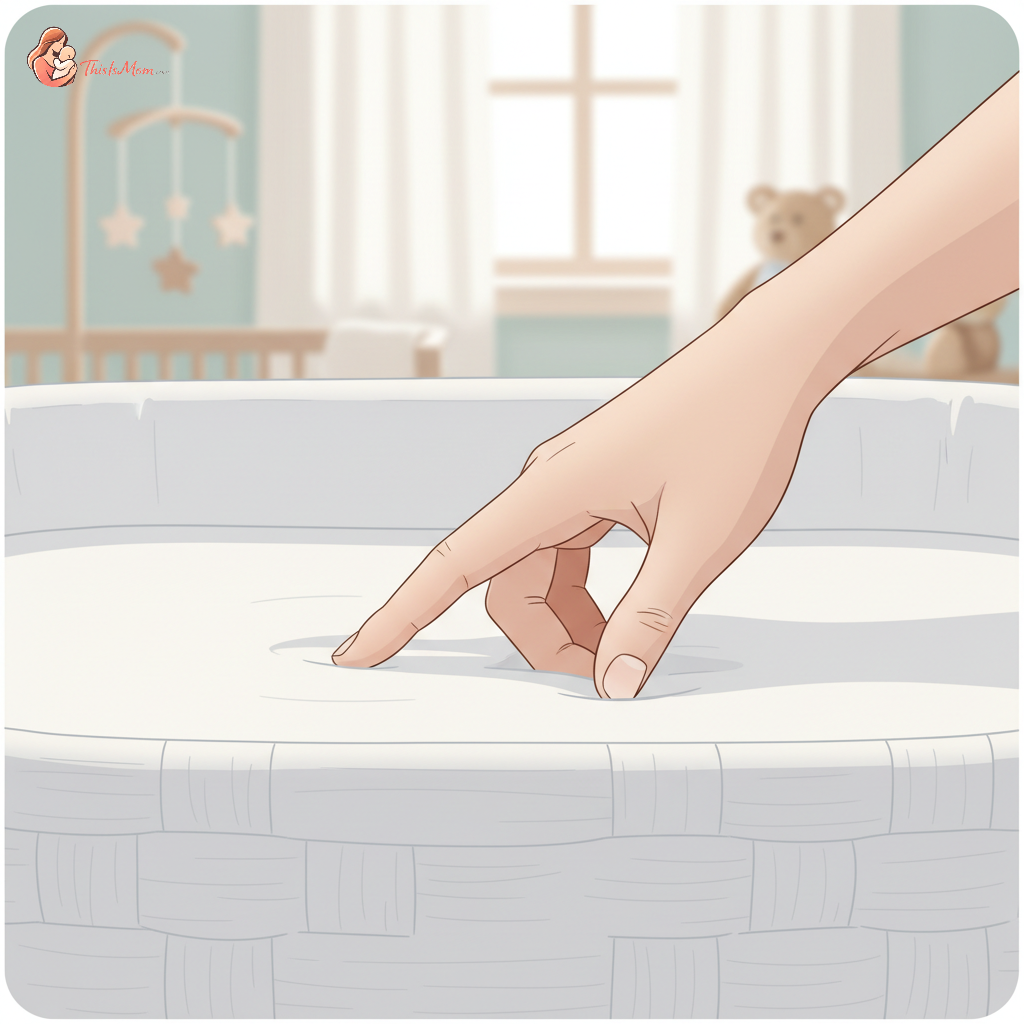
The "dent test" is a practical way to check your bassinet mattress at home. Gently press down on the mattress with your hand. When you remove your hand, the mattress should quickly spring back into its original shape. If it retains a significant dent, it's likely too soft.
This is why soft mattresses and plush bedding are considered dangerous for infants. They can conform to the baby's shape, increasing the risk of their face pressing against the surface. The AAP strongly advises against using soft bedding in the bassinet.
Comparing Bassinet Mattress Materials and Firmness
When considering a bassinet mattress, the materials used can impact both firmness and safety. Understanding these options helps parents make an informed choice.
Foam mattresses are common for bassinets. For these, look for high-density foam. The density, rather than just thickness, contributes to the firmness and durability. Certifications, such as those indicating low volatile organic compounds (VOCs), can also be important considerations for overall safety.
Innerspring mattresses are another option, often found in larger cribs but sometimes scaled down for bassinets. When choosing an innerspring mattress, ensure the coils provide adequate support and are well-covered by padding that doesn't compromise the firmness of the sleep surface.
Natural materials like coconut fiber or natural latex are sometimes used. While they can offer firmness, it's important to ensure these materials are processed safely and don't introduce other risks. Research the specific brand and materials thoroughly.
Discover your baby's phase
Waterproof covers are often integrated or available separately. These can be very helpful for keeping the mattress clean, but they shouldn't make the surface significantly softer or less breathable. Breathability is a factor researchers are exploring, though the primary emphasis remains on firmness and a clear sleep space.
Navigating Safety Certifications and Standards in the US Market
In the United States, several organizations help ensure the safety of baby products, including bassinets and their mattresses. Understanding these standards can guide your purchasing decisions.
The Juvenile Products Manufacturers Association (JPMA) offers a certification program for various baby products, including bassinets. Products that achieve JPMA certification have been tested to meet rigorous safety standards, including those set by the American Society for Testing and Materials (ASTM). These standards cover aspects like structural integrity and stability.
The Consumer Product Safety Commission (CPSC) is a federal agency responsible for protecting the public from unreasonable risks of injury or death associated with consumer products. The CPSC sets mandatory standards for cribs and play yards, and while specific mattress firmness standards for bassinets aren't always explicitly detailed by the CPSC as a standalone item, the overall safety requirements for bassinets implicitly mandate a safe sleep surface.
It is generally advised to avoid unregulated or secondhand bassinet mattresses. Without knowing their history or if they meet current safety standards, it's difficult to ensure they provide a safe sleep environment. Opting for new products with clear safety certifications is the most reliable approach.
Choosing the Right Bassinet Mattress for Your Baby's Safety
When you're ready to buy a bassinet mattress, a few key questions can help ensure you're making the safest choice. The best bassinet mattress for SIDS prevention is one that meets the firmness criteria.
First, ask about the firmness. Does the manufacturer specify that it meets current safety recommendations for a firm sleep surface? Look for descriptions that emphasize density and quick recovery after pressure.
Crucially, ensure the mattress fits snugly in your bassinet. There should be no gaps between the mattress and the sides of the bassinet. The AAP advises that you should not be able to fit more than two fingers between the mattress and the bassinet's edge. A loose mattress can create a dangerous space where an infant could become trapped. This is why a bassinet with wheels for easy movement can be a useful feature, ensuring the bassinet is stable and the mattress remains secure.
Finally, consider when to replace your bassinet mattress. While bassinets are typically used for a shorter period than cribs, if the mattress shows signs of significant wear, sagging, or damage that compromises its firmness or fit, it's time for a replacement.
Beyond the Mattress: Other Safe Sleep Essentials
Choosing the right mattress is a vital step, but it's part of a larger picture of safe infant sleep practices. The AAP's recommendations extend to the entire sleep environment.
Remember, bare is best. The bassinet should be free of soft bedding, including blankets, pillows, bumpers, and stuffed animals. These items increase the risk of suffocation, strangulation, and entrapment.
Room sharing, where your baby sleeps in their own bassinet in your bedroom, is recommended for at least the first six months. This has been shown to reduce the risk of SIDS. Bed sharing, however, is not recommended by the AAP due to increased risks.
Always place your baby on their back to sleep, for both naps and nighttime sleep. This position is the safest. If your baby is able to roll over independently from back to front and front to back, you do not need to reposition them.