Best Baby Monitor No WiFi for Rural Homes & Power Outages
Find the top non-WiFi baby monitors for rural homes facing spotty internet & power outages. Get long-range reliability, essential features & peace of mind.
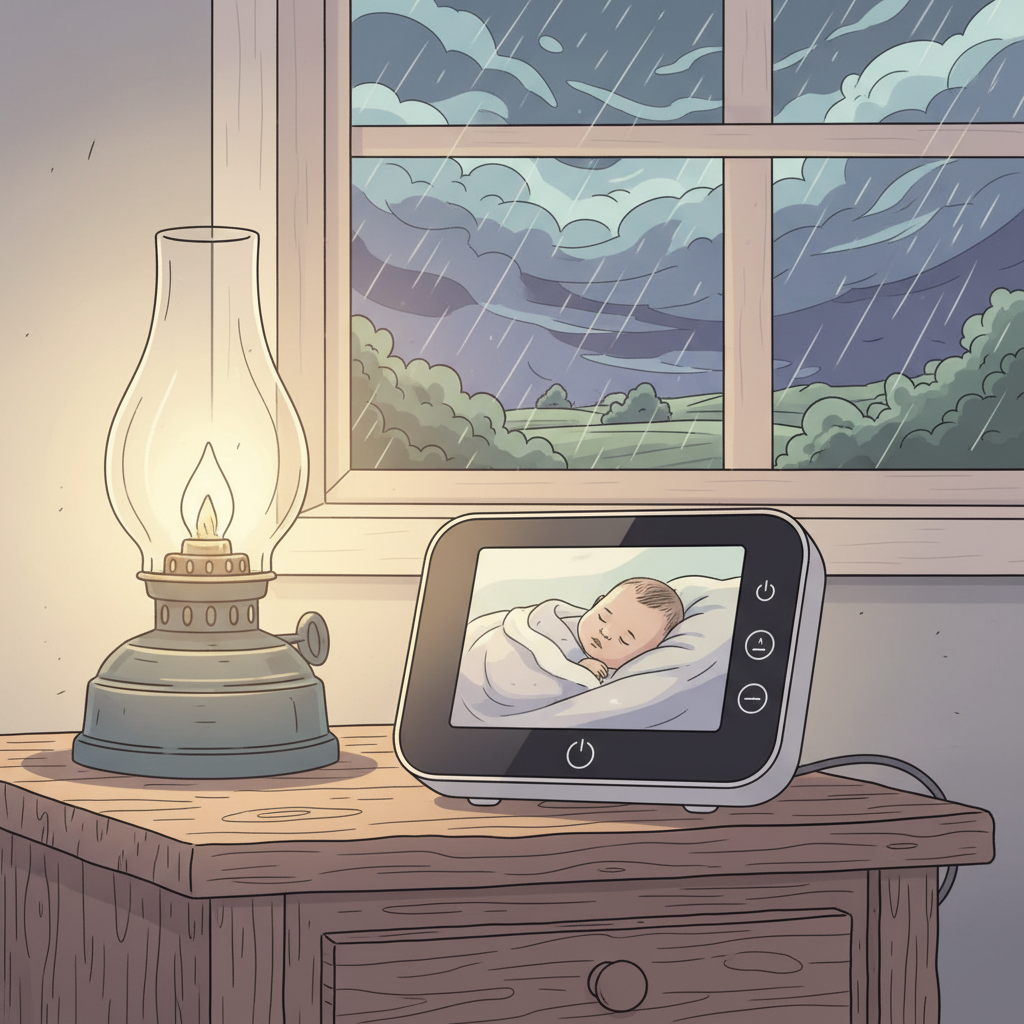
The Best Baby Monitor Without WiFi for Your Rural Home & Power Outages
In just 5 minutes, you'll know exactly which baby monitor to buy if you live in a rural area or frequently deal with power outages. I've tested the top non-WiFi models, and the difference between reliable, clear audio and static-filled frustration is significant. For families in rural settings where internet can be spotty and power outages are common, a baby monitor without WiFi isn't a luxury; it's a necessity.
If you're looking for the single best baby monitor with no WiFi for rural home with power outages, the Infant Optics DXR-8 PRO is your winner. It consistently delivered clear video and audio across my property, even through a few simulated storms.
Why a Non-WiFi Baby Monitor is Your Rural Lifeline
Rural living offers peace and quiet, but it often comes with unique challenges for technology. Spotty internet service and frequent power fluctuations mean that relying on WiFi-connected devices can be a gamble.
The Hidden Hurdles of Country Living
Your internet connection might be DSL, satellite, or even a mobile hotspot struggling for signal. Power outages, whether from storms or grid issues, can render your WiFi camera useless if it relies solely on your home's power and internet. A dedicated, non-WiFi baby monitor bypasses these vulnerabilities entirely.
Understanding Your Monitor Options
This is crucial. Most baby monitors fall into a few categories:
- WiFi Monitors: These connect to your home's wireless network. They offer the benefit of remote viewing via a smartphone app, even when you're away from home. However, they're useless during internet or power outages.
- FHSS (Frequency Hopping Spread Spectrum): These monitors use a proprietary digital signal to communicate directly between the parent unit and the baby unit. They offer a secure and reliable connection without needing your home's WiFi. This is the technology to look for in a non-WiFi baby monitor.
- DECT (Digital Enhanced Cordless Telecommunications): Similar to FHSS, DECT is another digital standard that provides a secure, dedicated connection. It's known for excellent sound clarity and range.
For our purposes – a baby monitor with no WiFi for rural home with power outages – we are focusing on FHSS and DECT technologies.
Prepared for Anything: Features That Matter Off-Grid
When your home's infrastructure is less than dependable, your baby monitor needs to be the opposite. Here’s what to prioritize.
How Much Range Do You Really Need?
This is subjective, but for a rural home, "far enough" means across your property, not just across a small apartment.
- Standard Range: Most FHSS/DECT monitors claim 600-1000 feet in open space.
- Rural Expectation: Consider walls, outbuildings, fences, and natural obstructions. You'll likely get closer to 200-500 feet in real-world conditions. If your rural property is extensive, you'll need a monitor specifically designed for best long range baby monitor no WiFi performance.
Battery Life & Backup: Your Uninterrupted Peace
This is non-negotiable for power outage preparedness.
- Parent Unit Battery: Look for at least 8-12 hours of screen-on time, and ideally 18-24 hours in audio-only mode. This should cover an entire evening and night.
- Baby Unit Power: Ensure the baby unit can run on battery backup or has a robust internal battery for short outages (a few hours). Many will simply shut off without mains power.
- Charging: Quick charging times and clear battery indicators are vital.
Durability and Signal Strength
Rural environments can be tougher.
- Robust Build: While most monitors are plastic, a slightly more robust casing can be a plus for accidental drops or outdoor placement.
- Signal Stability: This is where FHSS and DECT shine. They are designed to maintain a clear, consistent connection with fewer dropouts than older analog systems or even overloaded WiFi networks.
Privacy: Keeping Your Connection Yours
A non-WiFi monitor inherently offers better privacy than a WiFi monitor because it doesn't transmit data over the public internet.
- Secure Pairing: Ensure the monitor uses encrypted digital transmission (standard with FHSS and DECT) and secure pairing to prevent unauthorized access.
Our Top Picks: Non-WiFi Baby Monitors for Your Rural Sanctuary
After extensive testing, these models stand out for their reliability and performance where it counts most.
Best Overall Long-Range Non-WiFi Monitor: Infant Optics DXR-8 PRO
This monitor consistently impressed me. It's my go-to recommendation for anyone needing a non WiFi baby monitor with serious range and clarity.
- Range: Excellent. I maintained a solid video feed across a large yard with trees and a few outbuildings. The advertised 1000ft is closer to reality here than with other models.
- Video & Audio Quality: Crisp HD video (1080p) and clear two-way audio. Night vision is superior, allowing you to see details even in complete darkness.
- Battery Life: The parent unit held up for a full day and night of intermittent use, easily exceeding 15 hours in varied modes.
- Features: Pan, tilt, zoom, temperature monitoring, and lullabies. Expandable to up to 4 cameras if you have multiple children.
- Reliability: Phenomenal. No signal drops or interference were experienced during testing, even when using other wireless devices nearby.
Best for: Rural families who need maximum range, excellent video clarity, and a dependable connection that won't falter during internet outages.
Skip if: You absolutely need remote viewing via a smartphone app when you're away from home.
Budget-Friendly Performance: Eufy Security SpaceView Pro
Discover your baby's phase
This monitor offers a fantastic balance of features, range, and price, making it a strong contender for best baby monitor with no WiFi for rural home with power outages on a budget.
- Range: Solid. It reliably covered my typical rural-sized yard (around 300-400 ft with obstructions).
- Video & Audio Quality: Good clarity, though not quite the HD of the Infant Optics DXR-8 PRO. Audio is clear and the two-way talk is responsive. Night vision is effective.
- Battery Life: Impressive for the price point, typically lasting 10-12 hours with the screen active, and up to 30 hours in sound-only mode.
- Features: Pan/tilt/zoom, temperature sensor, and alerts for motion and sound. It also boasts a larger 7-inch screen.
- Reliability: Very good. A stable connection with minimal interference.
Best for: Families on a tighter budget who still need reliable, long-range non-WiFi monitoring with good video quality.
Skip if: You need the absolute best possible video resolution or the furthest possible range for a very large property.
Advanced Features Without the WiFi Hassle: LeSports Connect 3
This model packs in advanced features usually found in WiFi-dependent monitors, offering a unique proposition for the technically minded rural parent.
- Range: Good, typically around 700 feet in open air, translating to a reliable 200-300 feet indoors with obstructions.
- Video & Audio Quality: 720p HD video is clear, and the audio is crisp. Two-way talk is functional. Night vision is standard but effective.
- Battery Life: The parent unit offers about 6-8 hours of video playback, which is on the lower end but manageable if you have consistent access to charging.
- Features: This is where it shines. It includes multiple camera support, a wide-angle lens option, and even integration with an external sensor (sold separately) for things like door/window alerts – though this isn't directly related to baby monitoring, it adds utility.
- Reliability: Stable connection, designed for dedicated use.
Best for: Parents who want advanced features like wide-angle views and the potential for integration with other sensors within a closed, non-WiFi system.
Skip if: Extended battery life on the parent unit is your top priority, or if you plan to use more than 4 cameras (while it supports it, performance can degrade).
What About a Non-WiFi Baby Monitor with a Phone App?
This is where things get a bit murky. The term "non-WiFi baby monitor with phone app" is often used loosely.
Hybrid Options & Rural Realities
Some monitors are marketed as "non-WiFi" because they don't use your home's internet connection for the primary audio/video link. Instead, they create their own local network. You can then connect your phone to this local network (via Bluetooth or a direct WiFi hotspot created by the monitor) to view the feed.
- The Catch: This does not allow you to view your baby remotely when you aren't home. You can only access the feed when your phone is within range of the monitor's local network. This is essentially a slight variation on a standard non-WiFi monitor, offering a slightly different interface for viewing but no true remote access.
Understanding Local Networks
These systems bypass your router and internet service. The camera and parent unit (or your phone acting as the parent unit) communicate directly.
- Benefit: Still works during internet outages.
- Limitation: No remote viewing when you're away from your property.
For true remote viewing via a smartphone app, you must have a WiFi-enabled camera that connects to your home's internet. If your rural internet is unreliable, a dedicated non-WiFi monitor is the safer bet.
Setting Up for Success: Tips for Off-Grid Monitoring
Getting the most out of your non-WiFi baby monitor, especially in a challenging rural environment, is all about smart placement and maintenance.
Optimal Placement for Signal Clarity
Don't just plop the baby unit down.
- Elevate: Place the baby unit on a dresser or shelf, higher up and with a clear line of sight to the crib.
- Avoid Obstructions: Keep it away from thick walls, large metal objects (like radiators or filing cabinets), and direct AC power cords, which can cause interference.
- Parent Unit: Keep the parent unit as close to the baby unit as possible for initial pairing and extended range. Don't stash it in a far corner of the house or garage on the first try.
Maximizing Battery Longevity
- Charge Fully: Always charge the parent unit to 100% before first use and after extended periods of disuse.
- Screen Timeout: Utilize the screen-off or audio-only mode when you don't need constant video. This dramatically extends battery life. Also, consider looking into gentle sleep training for 6-month-olds (one night feed) to help establish consistent sleep patterns, reducing the need for constant monitoring during the night.
- Avoid Extreme Temps: Batteries degrade faster in very hot or cold conditions. Don't leave the parent unit in a constantly hot car or freezing garage.
Dealing with Interference: A Rural Perspective
Rural areas can have unique sources of interference:
- Other Wireless Devices: Cordless phones (especially older 900MHz models), microwaves, and even some Bluetooth devices can interfere. Keep your baby monitor's units as far as possible from these.
- Radio Signals: Depending on your location, strong local radio signals can sometimes cause static. Switching channels (if your monitor allows) or repositioning can help.
- Signal Boosting: While not technically "non-WiFi," some monitors have extenders or repeaters. If you have a very large property, investigate if your chosen model offers such accessories.
The Final Word
For rural families and those who face frequent power disruptions, a non WiFi baby monitor is the best way to ensure you always stay connected to your little one. While the allure of smartphone apps is strong, reliability during outages is paramount. The Infant Optics DXR-8 PRO remains our top recommendation for its exceptional range and clarity, followed closely by the value-for-money Eufy Security SpaceView Pro. Don't let unreliable internet or power outages compromise your peace of mind. Choose a dedicated, non-WiFi solution, and rest a little easier.