Best Car Seat for Ford Explorer Third Row Access
Find the best car seats for your Ford Explorer's third row. Discover slim designs, easy installation, and top models for infant, convertible, and booster stages to ensure effortless third-row access and safety.
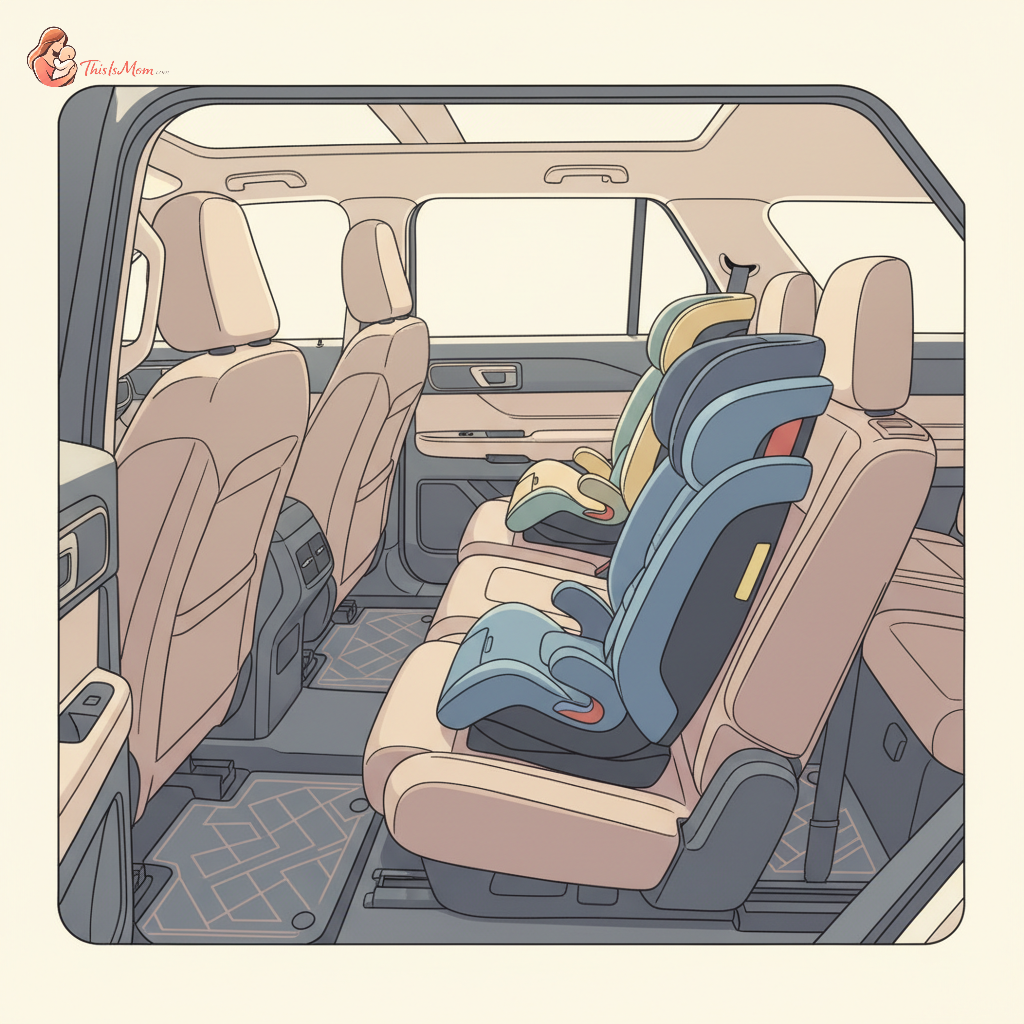
--- # Best Car Seat for Ford Explorer Third-Row Access
In just a few minutes, you'll discover exactly which car seats unlock easy access to your Ford Explorer's third row, and which ones will make you question your choices. As a parent navigating the daily chaos of school runs and grocery hauls, I’ve wrestled with this exact problem. Getting kids in and out of the third row in a busy SUV like the Ford Explorer is a logistical puzzle.
The right car seat isn't just about safety; it’s about sanity. If you're trying to fit multiple car seats, wrangle siblings, or simply avoid Olympic-level contortions, this guide is for you. I’ve put top models through the paces, focusing on car seats that play well with the Explorer's unique configuration and offer efficient third-row access.
Why Third-Row Access Matters in Your Ford Explorer
Let’s be real: if you’re driving a Ford Explorer with a third row, you’re likely managing more than one child, or you frequently haul extra passengers or gear. The daily juggle is intense. You’re trying to get kids in and out, often with bags, sports equipment, or groceries in tow.
Common car seat challenges in SUVs with a third row include:
- Limited space between the second and third rows.
- Bulky car seats that make climbing into the back a nightmare.
- Difficult-to-reach seat belt buckles.
- Second-row captain's chairs or bench seats that don't easily slide or tilt forward.
Choosing the right car seat can drastically simplify your life. It means quicker carpool lines, less parental grumbling, and, more importantly, safer and more efficient transitions for your family. We’re focusing on what makes a car seat truly functional for Ford Explorer 3rd row access.
Key Features to Look For: Third-Row Friendly Car Seats
When optimizing for your Ford Explorer's third row, specific features become non-negotiable. It’s not just about the most expensive or feature-rich seat; it’s about how it physically fits and functions within your vehicle.
- Narrow Footprint: This is paramount. You need seats that don’t eat up precious space. Slimmer designs allow for easier pass-through for passengers climbing to the third row, and they are essential if you plan to install multiple car seats across the second row. This is the key to maximizing your SUV’s versatility.
- Installation Ease: A seat that’s difficult to install correctly is a safety hazard. Look for seats with straightforward LATCH systems and clear belt paths. In a large SUV, you’ll likely be installing and uninstalling seats frequently, so a quick and secure installation is a win.
- Belt Path Design: In the third row, buckles can be hard to reach. Seats with accessible and well-designed belt paths make it easier to buckle your child in securely, reducing the risk of incorrect installation. Some seats have a lower profile or strategically placed paths that are a godsend.
- Side-Impact Protection: Never compromise on safety for convenience. Ensure any seat you choose meets or exceeds federal safety standards and offers robust side-impact protection. This is important for any car seat, especially when you're concerned about fitting multiple seats and ensuring easy access.
Top Car Seats for Ford Explorer Third-Row Access (by Stage)
Your child’s stage dictates the type of car seat needed. Within each stage, certain models offer superior third-row functionality in a Ford Explorer. My testing focused on seats known for their narrow car seat for SUV third row capabilities without sacrificing safety.
Infant Car Seats: Lighter, Easier to Remove
These are typically the easiest to manage as they often click into a base and can be carried in and out. The key here is a base that doesn't take up too much real estate and a seat that’s relatively lightweight.
Discover your baby's phase
- Nuna PIPA Series (e.g., PIPA RX, PIPA Lite RX): Known for their incredibly lightweight design and premium features, Nuna PIPA seats are a strong contender. The bases are generally streamlined, and the seats themselves are easy to maneuver. Installation is typically straightforward with their rigid-latch system.
- Best for: Parents prioritizing lightweight design and premium features with a streamlined base.
- Skip if: You're on a very tight budget; these are a splurge.
- Chicco KeyFit 30: A long-standing favorite for a reason. The KeyFit 30 is praised for its intuitive SuperCinch LATCH system and easy installation. Its base is reasonably compact, making it a good fit for tighter spaces.
- Best for: Ease of installation and reliable performance at a mid-range price point.
- Skip if: You need the absolute lightest option; it’s a bit heavier than some competitors.
Convertible Car Seats: Slim Designs for Long-Term Use
Convertible seats offer the most flexibility and longevity, but they can also be the bulkiest. For the Explorer's third row, you'll want slim profiles that allow for more than one across if needed, or easy access for passengers.
- Clek Foonf / Fllo: These seats are exceptionally narrow, making them ideal for fitting three across in a row if your configuration allows. They have a high weight limit and excellent safety features. Their slim design is a significant advantage for easy third-row access car seat needs.
- Best for: Maximizing space, especially for fitting multiple seats, and long-term rear-facing use.
- Skip if: You need a seat that’s extremely lightweight for frequent transfer; they are heavy.
- Graco SlimFit3 LX: As the name suggests, this seat is designed with space-saving in mind. It offers multiple modes (rear-facing, forward-facing, booster) and a relatively slim profile that can work well in the Explorer's third row, especially when you need to optimize for space.
- Best for: A versatile, budget-friendly option that prioritizes a narrower fit.
- Skip if: You need the absolute highest-end materials or the most premium installation system.
- Britax Boulevard ClickTight / Advocate ClickTight: While not the absolute slimmest, Britax's ClickTight installation system makes getting a secure fit incredibly easy. The Boulevard is slightly narrower than the Advocate. Their design offers excellent head protection and a secure feel.
- Best for: Parents who prioritize an incredibly simple and secure installation process.
- Skip if: Space is your absolute top priority and you need the narrowest possible seat; consider Clek or Graco first.
Booster Seats: High-Back vs. Backless Considerations
Once your child has outgrown their forward-facing convertible seat, boosters are the next step. In the Explorer's third row, access is key. Often a high-back booster can help guide the seat belt, making it easier for kids to buckle themselves.
- Graco Nautilus SnugLock / Graco Atlas 4-in-1: These combination seats (transition from harness to booster) are popular for a reason. They offer a good balance of features, safety, and a manageable footprint. The Nautilus SnugLock offers enhanced installation ease.
- Best for: A budget-friendly, long-term harness-to-booster solution.
- Skip if: You want a dedicated backless booster for maximum flexibility or the most premium fabrics.
- Chicco KidFit 30 / KidFit Zip: These high-back boosters are known for their comfortable padding and ease of use. The belt guides are generally well-placed, and they offer a good fit for many vehicles, including providing better access in the Explorer's third row compared to wider seats.
- Best for: Comfort and ease of use for children transitioning to a booster.
- Skip if: You need an ultra-slim backless booster for very tight spaces.
- Clek Oobr: This is a premium high-back booster known for its exceptional safety and narrower design, similar to their convertible seats. It’s built like a tank and offers superior side-impact protection.
- Best for: Safety-conscious parents who want a very narrow, high-quality high-back booster.
- Skip if: Budget is a major concern or you prefer a lighter, more portable booster.
Installation Hacks for Your Ford Explorer's Second Row
Getting car seats installed correctly in a large SUV like the Ford Explorer, especially when you need to maintain third-row access, requires strategy. The second-row seats in the Explorer are critical for accessing the third row.
- Strategizing LATCH vs. Seat Belt Installation: Always check your Ford Explorer manual and your car seat manual. For the third row, LATCH anchors may not be present, or they might be harder to access. In these cases, a secure seat belt installation is your primary method. Seats with rigid LATCH systems in the second row can sometimes make it easier to tilt or slide the seat forward.
- Utilizing the Tilt-and-Slide Feature: If your Explorer has second-row captain's chairs or a bench with a tilt-and-slide feature, understand how it works with your specific car seat. A bulky seat can impede this mechanism. Slimmer car seats are key to keeping this functionality.
- The 'Puzzle Piece' Approach: When installing multiple car seats (e.g., two in the second row), you might need to use a combination of LATCH and seat belt installations, or place seats outboard versus in the center. You may need to place seats in specific positions to allow one to slide or tilt. This is where the narrow footprint of a narrow car seat for SUV third row really shines.
- Tips for Maximizing Space and Ensuring Easy Access:
- Install car seats on the outboard positions of the second row if possible, allowing the center to be used for access.
- If using infant seats with bases, ensure the base isn't angled too far forward, blocking the pathway.
- For convertible seats, consider rear-facing as long as possible in the outboard positions, as they often take up less space front-to-back than forward-facing configurations in some seats.
- Always do a "wiggle test" after installation. The seat should not move more than an inch side-to-side or front-to-back at the belt path.
Before You Buy: Essential Car Seat Safety and Fit Checks
Purchasing a car seat is a significant investment, and the Ford Explorer car seat configuration is unique. Before you commit, a few final checks are crucial.
- Always Read Your Car Seat and Ford Explorer Manuals: This cannot be stressed enough. Your vehicle's manual will detail specific seating positions, LATCH anchor locations, and any restrictions. Your car seat manual will explain proper installation methods for every mode.
- The 'Wiggle Test': Checking for Proper Installation: Once installed, grab the car seat at the belt path (where the LATCH strap or seat belt is routed). Try to move it. It should not move more than one inch in any direction. This confirms a secure fit.
- When to Consult a Certified Child Passenger Safety Technician (CPST): If you’re unsure about installation, have a tricky vehicle, or need to fit multiple seats, a CPST is your best resource. You can find one near you through safekids.org or NHTSA’s website. They are invaluable for ensuring easy third row access car seat solutions are also safe.
- Important Safety Reminders from the AAP and NHTSA:
- Keep children in rear-facing car seats for as long as possible, until they reach the height or weight limit of their seat.
- Children should use a forward-facing car seat with a harness until they are too big for it.
- Only then should they move to a belt-positioning booster seat.
- Children should ride in a booster seat until the vehicle seat belt fits properly.
The bottom line for a Ford Explorer's third row is space and accessibility. You need seats that are narrow enough to allow passage, easy enough to install so you don't dread the process, and safe enough to protect your most precious cargo. My pick for the most versatile solution is often a narrow convertible like the Clek Foonf or Fllo due to their slim profile, allowing for maximum flexibility in Ford Explorer car seat configuration, but the right choice truly depends on your family's specific needs and budget.