Humidifier for Nursery w/ Hardwood Floors: A No-Damage Guide
Find the best humidifier for your baby's nursery with hardwood floors. Discover safe options and placement tips to prevent wood damage while keeping your baby healthy.
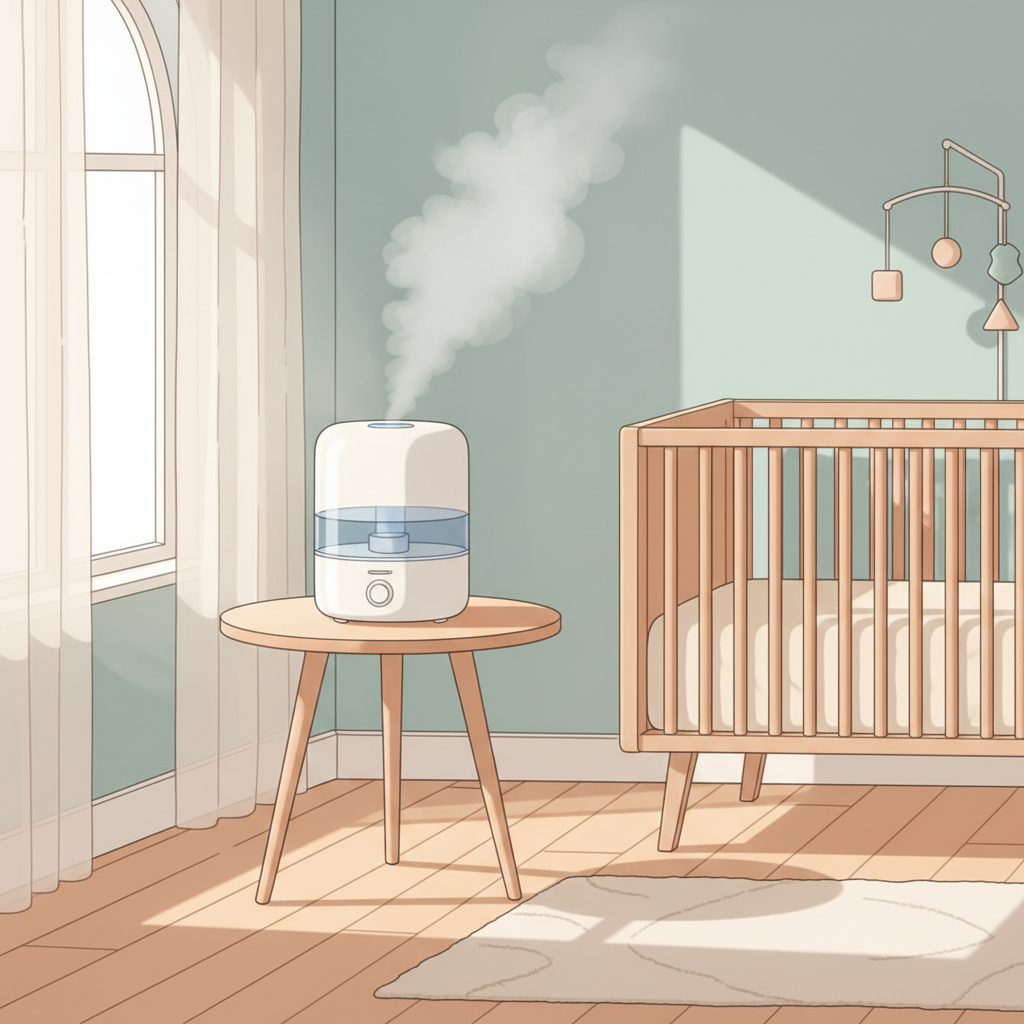
- Benefits for Baby:
- Soothes congestion and stuffy noses, making breathing easier.
- Helps alleviate dry, itchy skin and eczema flare-ups.
- Reduces irritation in the nasal passages, potentially lowering the risk of nosebleeds.
- Promotes better sleep by creating a more comfortable breathing environment.
Your hardwood floors, however, are susceptible to moisture. Unlike carpet, wood can absorb excess water, leading to swelling, warping, and permanent damage. This means choosing a safe humidifier for wood floors requires a different approach than selecting one for a carpeted room.
Hardwood Floor Protection 101: What to Look For
When your nursery has hardwood floors, your humidifier choice is critical. You need functionality without the risk of moisture damage.
Warm Mist vs. Cool Mist: The Floor Factor
- Warm Mist Humidifiers: These boil water to create steam. While this process kills bacteria in the water, the resulting steam is hot. This can be a safety concern for curious little hands and feet. The heat can also, in rare cases, slightly warm the floor directly beneath the unit.
- Cool Mist Humidifiers: These use cool or room-temperature water. They are generally considered safer due to the lack of hot steam. There are two main types of cool mist:
Evaporative vs. Ultrasonic: Which is Safer for Wood?
This is where protecting your hardwood floors becomes a key consideration.
- Evaporative Humidifiers: These use a fan to blow air through a wet wick or filter. The water evaporates naturally into the air.
- Floor-Friendly: Because evaporation is a slower, more controlled process, these units typically emit a finer mist that is less likely to condense directly onto surfaces. The air they produce is also often less saturated than with ultrasonic models, reducing the risk of pooling. This makes them an excellent humidifier for a baby room with no condensation.
- Ultrasonic Humidifiers: These use high-frequency vibrations to break water into a fine mist that is then emitted into the air.
- Floor Risk: While effective and often quieter, ultrasonic models can produce a very fine, dense mist. If placed too close to wood, or if the room is already humid, this mist can settle and condense. However, many modern ultrasonic units have features to mitigate this risk.
Key Features to Prevent Condensation and Pooling
When shopping, prioritize these features to safeguard your floors:
- Adjustable Mist Output: The ability to dial down the mist intensity is paramount.
- Built-in Hygrometer/Auto Shut-off: This feature senses the room's humidity level and automatically adjusts or shuts off the unit to prevent over-humidification. This is a crucial feature for the best humidifier for a nursery with hardwood floors.
- Wide, Stable Base: Prevents tipping, which is the quickest way to cause a spill.
- Leak-Proof Design: Check reviews specifically mentioning leaks. No one wants a surprise puddle.
- Self-Contained Water Reservoir: Minimizes the risk of overflow compared to units that require topping up from a separate jug.
- Directional Mist Nozzle: Allows you to aim the mist away from vulnerable furniture or walls.
Top Humidifiers for Nurseries with Hardwood Floors: Our Picks
After testing several models in a room with engineered hardwood, here are my top recommendations. I focused on units with features that minimize the risk of moisture damage.
Evaporative Models: The Natural Choice for Wood
These are generally the safest bet for hardwood floors due to their natural evaporation process.
- Crane EE-002 Bamboo Pure Cool Evaporative Humidifier
- Why it's a good fit: The bamboo casing is attractive, and its evaporative technology mimics natural evaporation. It's designed to prevent over-humidification, and the mist is dispersed gently. The controlled output significantly reduces the chance of condensation settling on your floors.
- Pros: Natural evaporation, quiet operation, attractive design, good for medium-sized rooms.
- Cons: Requires filter replacement (an ongoing cost), not as powerful for very large rooms.
- Best for: Parents prioritizing floor safety and those with medium nurseries who appreciate natural materials.
- Skip if: You need to humidify a very large room or want a no-filter option.
- Dyson AM10 Humidifier
- Why it's a good fit: While an investment, Dyson’s humidifier uses UV-C light to kill 99.9% of bacteria before emitting a dispersed, smooth airflow. Its intelligent humidity control measures room temperature and humidity to humidify accurately, preventing over-saturation that can damage wood. It’s designed for even air distribution.
- Pros: UV-C sanitization, intelligent humidity control, sleek design, multi-functional (fan in warmer months).
- Cons: Expensive, can be complex to clean thoroughly.
- Best for: Parents who want state-of-the-art features, maximum sanitization, and are willing to splurge for peace of mind and advanced floor protection.
- Skip if: Budget is a primary concern, or you prefer simpler, single-function devices.
Ultrasonic Models with Safeguards for Wood
Many modern ultrasonic units have features that make them viable options if you prefer their quiet operation.
- Levoit LV600HH Ultrasonic Cool Mist Humidifier
- Why it's a good fit: This unit offers both cool and warm mist options and features a built-in hygrometer. You can set your desired humidity level, and it will automatically shut off when reached, preventing over-humidification and protecting your floors. The mist nozzle is also adjustable.
- Pros: Large capacity, dual mist options, auto shut-off, quiet operation, optional aroma tray.
- Cons: Requires regular cleaning to prevent mold/bacteria; mist can still be dense at highest settings if not managed.
- Best for: Families needing a high-capacity unit, appreciate dual mist options, and want reliable auto shut-off.
- Skip if: You are extremely sensitive to even the slightest chance of mist settling and prefer to only use evaporative models.
Discover your baby's phase
- TaoTronics TT-AH002 Cool Mist Humidifier
- Why it's a good fit: This ultrasonic humidifier is known for its quiet operation and simple controls. It features an adjustable mist output and an auto shut-off function when the water level is low. While lacking a built-in hygrometer, its simplicity and low mist output at lower settings make it a relatively safe choice if placed thoughtfully.
- Pros: Very quiet, easy to use and clean, affordable, good for smaller to medium rooms.
- Cons: No built-in hygrometer means more manual monitoring is needed to avoid over-humidification.
- Best for: Parents who want a quiet, budget-friendly option and are diligent about monitoring humidity levels.
- Skip if: You want a "set it and forget it" device or struggle with consistently monitoring room conditions.
Room Size and Run Time Considerations
- Room Size: Always check the manufacturer’s recommended room size. A unit that’s too small will run constantly and might not be effective. A unit that’s too large will over-humidify. For a nursery, look for units designed for roughly 200-400 sq ft, which covers most standard baby rooms.
- Run Time: Consider the tank capacity and how long it runs between refills. A larger tank means fewer nighttime refills, which is a win. Aim for at least 8-12 hours of run time on a medium setting.
Setting Up for Success: Placement and Maintenance Tips
Proper placement and diligent maintenance are your best allies in protecting your hardwood floors and ensuring your baby breathes healthy air.
Optimal Placement to Protect Floors and Baby
- Elevate it: The single best way to prevent nursery humidifier damage to hardwood is to never place it directly on the floor. Use a small, sturdy table, a dresser, or a shelf.
- Distance is Key: Keep the humidifier at least 1-2 feet away from walls, furniture, and electrical outlets. This allows the mist to disperse before reaching surfaces.
- Aim the Mist: If your unit has a directional nozzle, point the mist towards the center of the room, away from any wood surfaces or electronics.
- Consider Airflow: Place it where the mist can circulate freely, not in a corner where it can get trapped.
- Safety First: Ensure it’s out of reach of your baby once they become mobile.
Routine Cleaning for Health and Humidifier Longevity
This is non-negotiable for any humidifier, especially in a baby’s room. Mineral buildup and bacteria can cause damage to the unit and, more importantly, be unhealthy for your baby.
- Daily: Empty, rinse, and dry the water tank.
- Every 2-3 Days: Disassemble and clean the tank and basin with mild soap and water. Use a dedicated humidifier cleaning brush for nooks and crannies.
- Weekly: Deep clean with a vinegar or hydrogen peroxide solution (follow manufacturer instructions) to descale and disinfect.
- Filter Replacement: For evaporative models, replace filters as recommended by the manufacturer to maintain efficiency and air quality.
When to Check for Moisture (and What to Do)
Be vigilant; even with the best precautions, check periodically.
- Daily Checks: After the humidifier has been running for a while, briefly feel the air near the mist output and visually inspect the floor surface beneath and around the unit's placement area.
- Look for Signs: Watch for any dampness, condensation beading, or wood that looks darker or feels soft.
- Adjust or Relocate: If you find any moisture, immediately reduce the mist setting, increase the distance from surfaces, or relocate the humidifier to a less sensitive area.
- Use a Hygrometer: A separate hygrometer is your best friend here. Aim for a humidity level between 40-60%. If it consistently goes above 60%, your humidifier is likely set too high or running too long.
FAQs About Humidifiers and Hardwood Floors
Can a humidifier damage my hardwood floors?
Yes, absolutely. If a humidifier is placed directly on the floor, leaks, or over-saturates the air, the excess moisture can be absorbed by the wood. This can lead to swelling, warping, buckling, and permanent staining.
What type of humidifier is best for preventing floor damage?
Evaporative humidifiers are generally the safest for hardwood floors because they release a finer mist that evaporates more naturally into the air, with less risk of direct condensation. If you opt for an ultrasonic model, ensure it has an adjustable mist output, a built-in hygrometer with auto shut-off, and is placed well away from the floor and furniture.
How often should I clean my nursery humidifier?
Daily rinsing and drying are recommended. A thorough cleaning with soap and water should happen every 2-3 days, with a deeper disinfection weekly. Always follow the manufacturer's specific cleaning instructions.
The bottom line is that a humidified nursery is beneficial for your baby, and protecting your investment in beautiful hardwood floors is achievable with the right humidifier and careful setup. Choose wisely, place thoughtfully, and clean consistently.