Daycare Separation Anxiety: Helping Your 3-Year-Old After Summer
Is your 3-year-old struggling with daycare separation anxiety after summer break? Discover gentle strategies for smoother drop-offs and building confidence.
Back to Daycare After Summer: Navigating Your 3-Year-Old's Separation Anxiety
With my first, the summer before preschool felt like an endless stretch of sunshine and park dates. When it was time to go back, he strolled in like he owned the place. My fourth, on the other hand? After a glorious summer of building forts and chasing fireflies, the thought of returning to daycare sent him into a tailspin. This whole daycare separation anxiety 3 year old after summer break thing can hit even seasoned parents by surprise. Looking back, the difference wasn't a magic trick; it was recognizing that each child, and each phase, needs a slightly different approach.
If I could tell my younger self one thing when facing that sudden separation anxiety in my 3-and-a-half-year-old, it would be to trust the process and trust your child. This isn't about a failing on your part; it's a perfectly normal reaction to a significant change.
Why This Familiar Fear Creeps Back In
You might wonder, "Is this just normal 3-year-old separation anxiety, or is something else going on?" The truth is, it's often a blend of both. During the carefree days of summer, routines melt away. We sleep in a little later, mealtimes are more flexible, and the constant presence of family is the norm. These deep, cherished connections become the bedrock of their security. Summer break often means uninterrupted family time, which is wonderful.
But when the school year starts, it's a whiplash of transition. The structured environment of daycare, while familiar, now feels like a stark contrast to the relaxed pace they’ve grown accustomed to. This shift can trigger a resurfacing of anxieties, especially for a 3-year-old who thrives on predictability. It’s less about a sudden fear and more about a re-adjustment to a less predictable, albeit temporary, separation.
Gentle Steps for Smoother Daycare Departures
The key here is consistency and a calm demeanor from you, even when your insides are churning. With my first, I’d linger, offering prolonged goodbyes and extra hugs, thinking I was being kind. By my fourth, I’d learned that a swift, confident farewell, however hard it felt, was far more effective for easing <a href="/blog/overtired-vs-undertired-baby-nap-signs-solutions">toddler separation anxiety at daycare</a>.
Before the first day back, try to gradually re-establish a school-day rhythm. This might mean setting earlier wake-up times and having breakfast around the same time your child would at daycare. Even a a week or two of this can make a difference.
When it’s actually time to leave:
- Keep it brief: A few minutes is usually enough. Lingering often amplifies their distress.
- Be positive: Talk about how much fun they’ll have, what they’ll learn, and who they’ll see.
- Hand-off with confidence: Give a clear ‘I love you, I’ll be back after snack time,’ and then go. Don’t sneak out, but don't make a performance of it either.
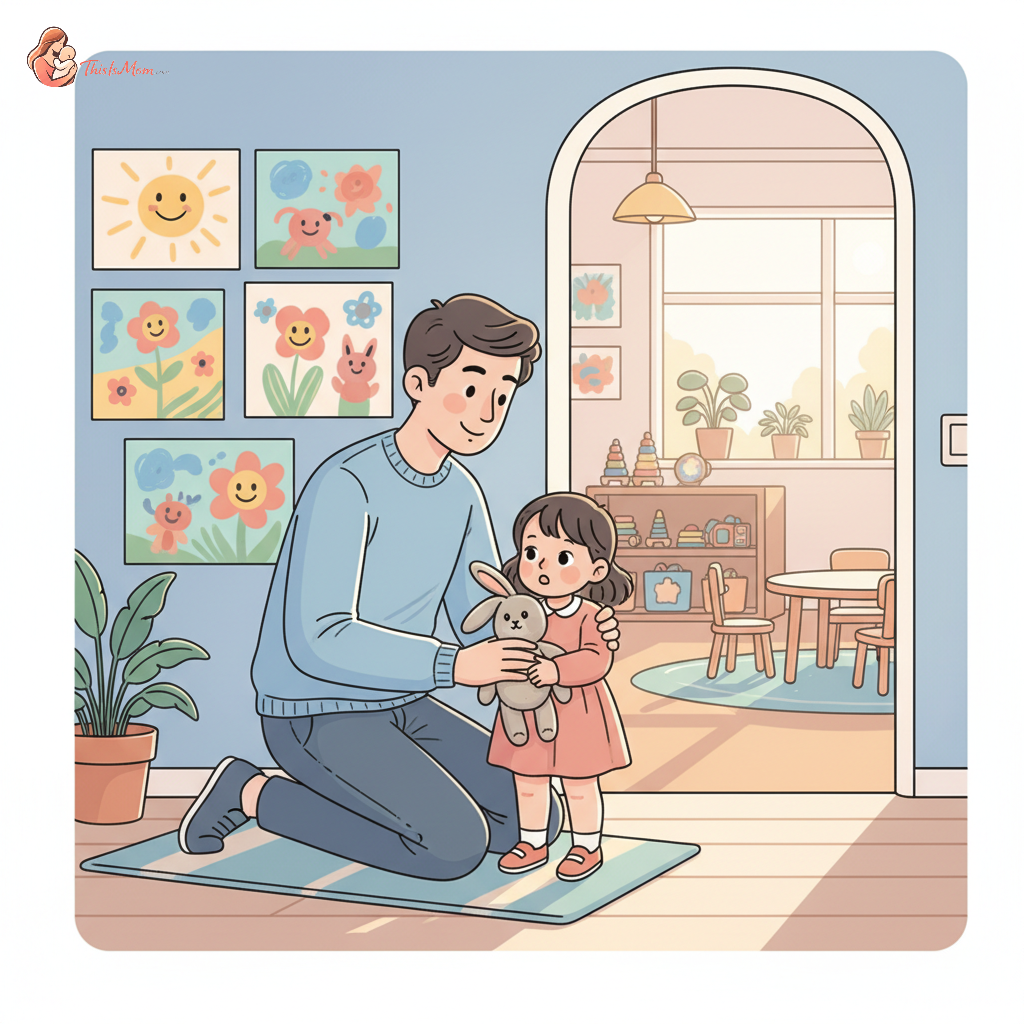
A stuffed animal or a special blanket can be a lifeline. This comfort object acts as a tangible link to home and can provide a sense of security throughout the day. Let your child choose a special toy or a small item from home to bring with them. It’s a small thing, but for a 3-year-old wrestling with separation anxiety at school, it can be a huge comfort.
Your Role at Home: Building Confidence
Discover your baby's phase
The hours they spend away are just one part of the equation. What happens at home significantly impacts how they feel about daycare. Talking about their day, and framing daycare as a fun, engaging place, can make a world of difference in managing their separation anxiety after starting daycare.
Try to initiate conversations that highlight the positives. Instead of asking, "Did you cry today?" try, "What was the most fun thing you did at daycare?" or "Who did you play with today?" Be a detective for good news.
Role-playing can be incredibly powerful for a 3-year-old who is experiencing <a href="/blog/encourage-independent-play-clingy-toddler">separation anxiety</a>. Use dolls or stuffed animals to act out leaving and returning. You can be the "leaving" parent, and they can be the "staying" child, and vice versa. This allows them to process their feelings in a safe, pretend environment.
Remember to validate their feelings. Say things like, "I know it's hard to leave me, and it's okay to feel sad or worried." Then, gently reassure them. "But you are so brave, and you have so much fun at daycare. I will be back to pick you up after your nap." This combination of empathy and reassurance is crucial.
Understanding the Adjustment Timeline
The million-dollar question every parent asks: How long does separation anxiety last at daycare? The truth nobody tells you is that there’s no single answer. For most children adjusting to daycare separation anxiety, things start to improve within a few weeks. The initial intense crying at drop-off might lessen to tears, then to a brief protest, and eventually to a quick goodbye before they run off to join their friends.
Look for subtle signs of progress. Perhaps they start telling you about their day more readily. Maybe they’re excited about specific activities or friends. Or perhaps the drop-off itself becomes less of a drama, even if there are still tears. These are all positive indicators that they are settling in.
If the anxiety seems to be persisting intensely for more than a month, or if your child’s overall behavior is significantly impacted (e.g., sleep disturbances at night, or a refusal to engage in activities they once enjoyed), it might be worth looking into further. This isn't about panicking, but rather about ensuring all needs are being met.
A Team Effort: Partnering with Daycare
You and your child's daycare providers are on the same team. Open communication is your most valuable tool. When you first notice the 3-year-old separation anxiety at daycare resurfacing after summer, let the staff know. They’ve seen it all before and can offer insights and support.
Share what strategies have worked at home, like the comfort object or the consistent goodbye routine. Ask them to keep you updated on how your child is doing during the day. Sometimes, knowing they had a good afternoon, played with friends, or enjoyed a specific activity can ease your own worries and reinforce the positive aspects of their daycare experience for you to share at home.
Building trust with the daycare staff means recognizing they are professionals who care about your child's well-being. A united front, where you and the caregivers have a shared understanding and consistent approach, is the most effective way to help your child navigate these challenging transitions.