10 DIY Sensory Activities for 18-Month-Old Speech Delay
Discover 10 simple DIY sensory activities using household items to support language development in 18-month-olds with a speech delay. Boost communication through play!
The Sensory Secrets to Sparking Little Voices: DIY Activities for Your 18-Month-Old
Before you reach for another brightly colored, battery-operated toy, try this: sit on the floor with your 18-month-old for ten minutes and just watch. Notice what they’re drawn to. What textures do they explore with their fingers? What sounds do they make when they discover something new? This quiet observation is the first step in unlocking incredible learning. We often worry about milestones, especially when it comes to speech, and finding effective DIY sensory activities for 18-month-olds with a speech delay can feel overwhelming. But the truth is, the most powerful tools for language development are often right at your fingertips, waiting to be discovered in your own home.
Where Touch, Taste, and Sound Meet Talking
The connection between our senses and our ability to communicate is profound. From the very beginning, a child’s mind is a sponge, absorbing the world through every sensory input. They learn about gravity by dropping a ball, about texture by feeling the softness of a blanket, and about cause and effect by banging a spoon.
Speech development is an intricate process that relies on this sensory foundation. When an 18-month-old hears a word, they connect it to the object or action they are experiencing. The more they can see, touch, smell, hear, and even taste (safely, of course!), the richer their understanding and the stronger their desire to vocalize their discoveries.
At 18 months, a typical language milestone might include saying a few single words or even starting to combine two words. If your child is not quite there yet, it’s a good moment to pause and observe. A perceived speech delay doesn't mean a lack of ability, but often a need for more rich, varied sensory experiences to fuel their language journey. These early months are a sensitive period for language acquisition, making it an ideal time to offer engaging, at-home sensory activities for speech. If you're concerned about your child's development at this age, understanding signs early intervention is needed for 18 month old with no words can be a helpful step.
Simple Wonders from Your Own Kitchen and Garden
The beauty of Montessori-inspired parenting is its emphasis on using what’s readily available. You don’t need a fancy playroom; the most engaging DIY sensory activities for 18-month-olds with a speech delay can be found tucked away in your kitchen cabinets or waiting in your backyard.
Kitchen Cabinet Treasures
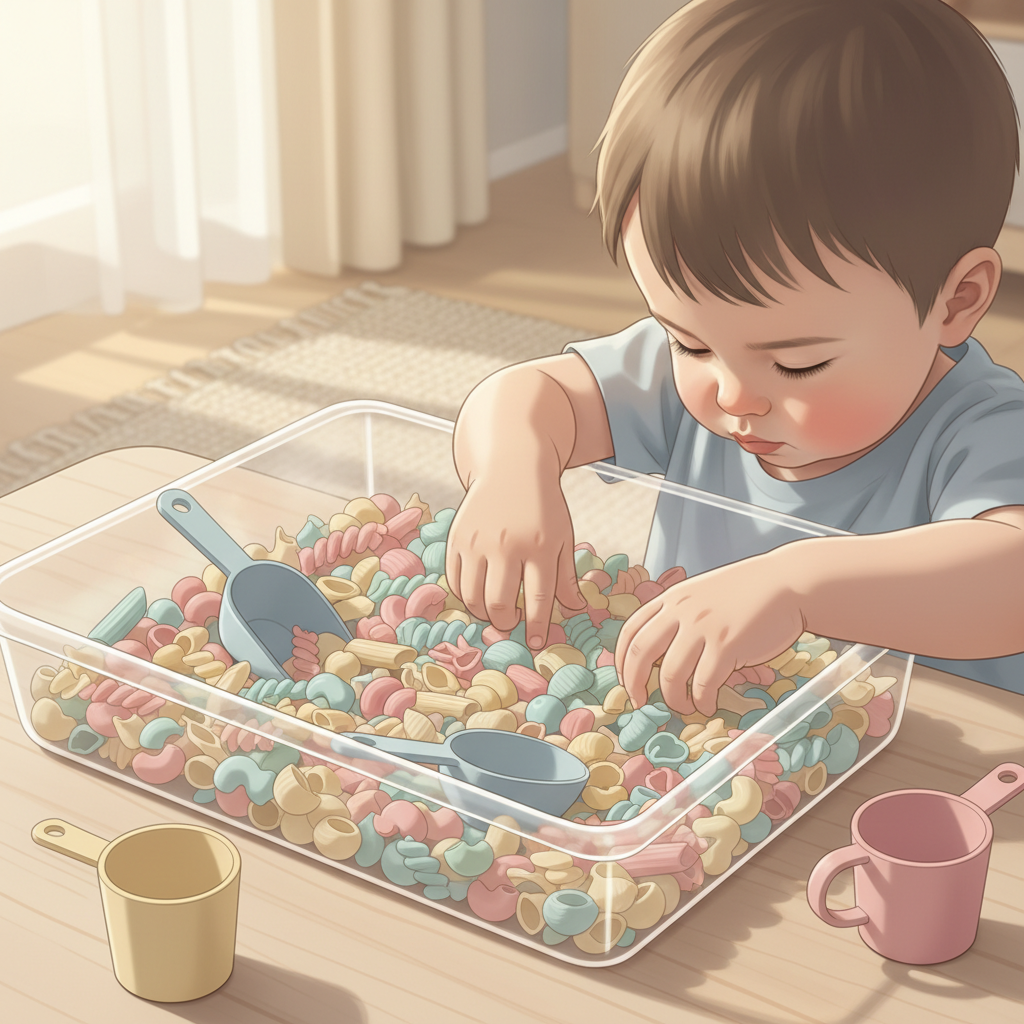
Your kitchen is a goldmine for tactile exploration. A shallow bin filled with uncooked pasta (like penne or rotini) offers a satisfying crunch and unique shapes to explore. Add scoops, small bowls, and empty containers for pouring and transferring. This simple setup encourages fine motor skills and provides opportunities to name different pasta shapes.
Consider a water play invitation, supervised closely, of course. A shallow bin with water, a few cups, and a sponge can captivate an 18-month-old for ages. You can introduce different-sized containers for pouring and discuss which holds more or less. The splashing, the feel of the water, and the actions of filling and emptying all work together to build understanding.
Rice or dried beans are another excellent option for a sensory bin. Ensure the child is closely supervised to prevent them from putting small items in their mouth. You can add scoops, funnels, and small toys that can be buried and unearthed. Narrate the process: "You're scooping the rice," "The little car is hiding!"
Nature's Own Sensory Bin
Step outside and gather treasures! A bin filled with leaves (ensure they’re not poisonous), smooth stones, twigs, and even a little bit of clean dirt can be incredibly engaging. This connection to the natural world is grounding and provides a wealth of textures and natural scents. Talk about the crunch of the leaves, the roughness of the bark, the coolness of the stones. These are rich descriptive words that can be added to your child’s vocabulary.
Fabric and Textures
Open up your linen closet or a box of old clothes. Scraps of different fabrics – silk, cotton, denim, a fuzzy blanket – can be a delightful sensory experience. Hang them at your child’s level for them to touch, or let them explore a basket of these textures. Discuss the differences: "This is smooth," "This is soft and fuzzy."
Old scarves are perfect for peek-a-boo games, which encourage anticipation and vocalization. You can also drape them over furniture for the child to crawl under or pull off, narrating these actions.
Turning Sensory Exploration into Conversational Opportunities
The true magic happens when we interact with the child during their sensory play. It’s not just about providing the materials; it’s about being present and guiding their exploration through language.
Be the Narrator
As your child plays, describe what you see them doing and what they are interacting with. "You're picking up the red block." "The water is cold!" "You’re pouring the rice." This constant narration helps them associate words with actions and objects.
Discover your baby's phase
Invite Responses with Pauses
When you ask a question, even a simple one like, "What is this?" or "Do you want more pasta?", pause expectantly. Give the child time to process and respond, whether with a gesture, a sound, or a word. Even an attempt is a victory. If they don’t respond verbally, you can offer the word yourself, "Yes, more pasta!"
Use Your Whole Body
Gestures, facial expressions, and sounds are all part of communication. When you hand the child a toy, say the word clearly and point to the toy. Exaggerate your sounds when singing or reading. If your child points to something, name it for them. If they make a sound, offer a vocalization back. This back-and-forth exchange is the very foundation of conversation. Learning to manage mealtime can also be a part of this developmental stage, so knowing what to do when 18 month old throws food can be helpful for parents.
These indoor sensory play speech delay activities are not about drilling words, but about creating a rich, responsive environment where language is naturally encouraged through play.
Expanding the Language Horizons Beyond the Bin
Sensory play is a powerful tool, but it integrates beautifully with other daily activities that nurture language development.
The Magic of Books
Reading together is paramount. Choose board books with bright, clear pictures or tactile elements. Point to objects and name them. Encourage your child to point. Repeat words and phrases. Don’t worry if they don’t sit still for the whole book; focus on the interaction you do have. Each page is an opportunity to build vocabulary.
Singing and Rhyming
Nursery rhymes and simple songs are fantastic for language development. The rhythm, repetition, and rhymes help children grasp the sounds of language. Actions that go along with songs, like clapping or waving, add another layer of sensory engagement and understanding. Songs with call-and-response elements are particularly effective.
Weaving Language into Daily Life
Everyday routines offer a wealth of opportunities for toddler language development activities.
- Bath time: Talk about the water, the bubbles, the toys. "The water is warm." "Let's wash your hands."
- Mealtime: Name the foods. Discuss their colors and textures. "This banana is yellow and soft." "You are eating the peas."
- Getting Dressed: Name the clothing items, colors, and actions. "Let’s put on your blue shirt." "Your feet go in the socks."
These are not separate lessons but natural conversations woven into the fabric of life, providing context and meaning to words. These easy sensory bin ideas for toddlers can be naturally extended into these routines.
A Gentle Nudge Towards Support
It’s wise to be aware of typical developmental milestones. While every child progresses at their own pace, certain indicators might suggest seeking professional guidance. For an 18-month-old, this might include a very limited use of gestures to communicate, not responding to their name, or having a limited repertoire of sounds or vocalizations. It’s also important to consider if your 18 month old is not talking and what that might signify.
Resources like the American Academy of Pediatrics (AAP) and the Centers for Disease Control and Prevention (CDC) offer general guidelines on developmental milestones. If you have concerns about your child’s speech development, the best first step is to talk to your pediatrician. They can assess your child's overall development and, if necessary, refer you to a speech-language pathologist (SLP).
Early intervention is incredibly beneficial. An SLP can provide personalized strategies and support, helping to unlock your child's communication potential. Remember, seeking support is a sign of proactive, loving care, not a failure.
The most beautiful sounds are often those that emerge from a child’s own exploration and discovery. This week, choose one simple sensory activity, gather your household items, and embrace the joy of observing your child light up. You might be surprised by the words that begin to bloom.