8 Safe Early Pregnancy Back Pain Remedies for First Trimester
Discover safe and gentle remedies for early pregnancy back pain during your first trimester. Learn about causes, stretches, heat/cold therapy, posture tips, and when to consult your doctor for relief.
Navigating Those First Trimester Aches: Your Guide to Early Pregnancy Back Pain Remedies Safe for the First Trimester
It's completely normal to start noticing new aches and pains as your body prepares for a new life. You might be surprised to find back pain showing up so early in your pregnancy, even in the first trimester. This often leads expectant parents to wonder about safe and effective early pregnancy back pain remedies safe for the first trimester. Rest assured, you’re not alone in this, and there are many gentle approaches to help you find comfort.
My superpower has always been showing up calmly for friends when things feel overwhelming, and I’ve sat with so many of them through the dizzying highs and sometimes unexpected lows of early pregnancy. Back pain is a frequent companion, and while we’re not medical professionals, we can share what has brought relief and comfort, always with the understanding that your healthcare provider is your ultimate guide.
Why Your Back Hurts So Soon: Understanding Early Pregnancy Back Pain
You're right to ask why this discomfort might be surfacing so soon. The first trimester is a period of profound transformation, and your body is working hard behind the scenes.
The Usual Suspects for First Trimester Backaches
Several factors can contribute to lower back pain during pregnancy first trimester. One of the biggest culprits is hormonal. As your body ramps up progesterone production to support the pregnancy, this hormone also relaxes the ligaments in your body. This is a necessary process to prepare your pelvis for childbirth, but it can also lead to instability and strain in your lower back and pelvic joints.
Beyond hormones, your posture is likely starting to shift even before you're showing. Your growing uterus, while small initially, can subtly alter your center of gravity. Many pregnant individuals unconsciously adjust their posture to accommodate this, often leaning back to avoid toppling forward. This new stance puts extra pressure on your lower back. Stress and tension, which are common during early pregnancy as you adjust to this new chapter, can also manifest as muscle tightness in your back.
When Does Back Pain Start in Pregnancy?
For many, back pain starts in pregnancy as early as the first trimester. While it’s more commonly associated with the later stages of pregnancy when the baby is larger and heavier, the hormonal shifts and subtle postural changes begin much earlier. So, if you’re experiencing discomfort now, it’s not necessarily a sign that something is wrong; it’s often an early indicator of the incredible physical adaptations happening.
Where is Early Pregnancy Back Pain Typically Located?
The early pregnancy back pain location is often felt in the lower back, around the dimples of your tailbone area. It can also radiate slightly into your hips and pelvis. This is because the ligaments that support your pelvis are being affected by those pregnancy hormones. You might notice it more when you’ve been sitting or standing for a while, or after a period of rest.
Finding Comfort: Safe & Gentle Relief for Your Back in the First Trimester
The good news is that you don't have to simply endure this discomfort. There are plenty of safe and gentle ways to ease how to relieve back pain during pregnancy first trimester. The key is to be kind to your body and prioritize what feels right for you.
Simple Stretches to Soothe the Ache
Gentle movement can be incredibly beneficial. These simple stretches can help release tension and improve mobility without overstretching already sensitive ligaments.
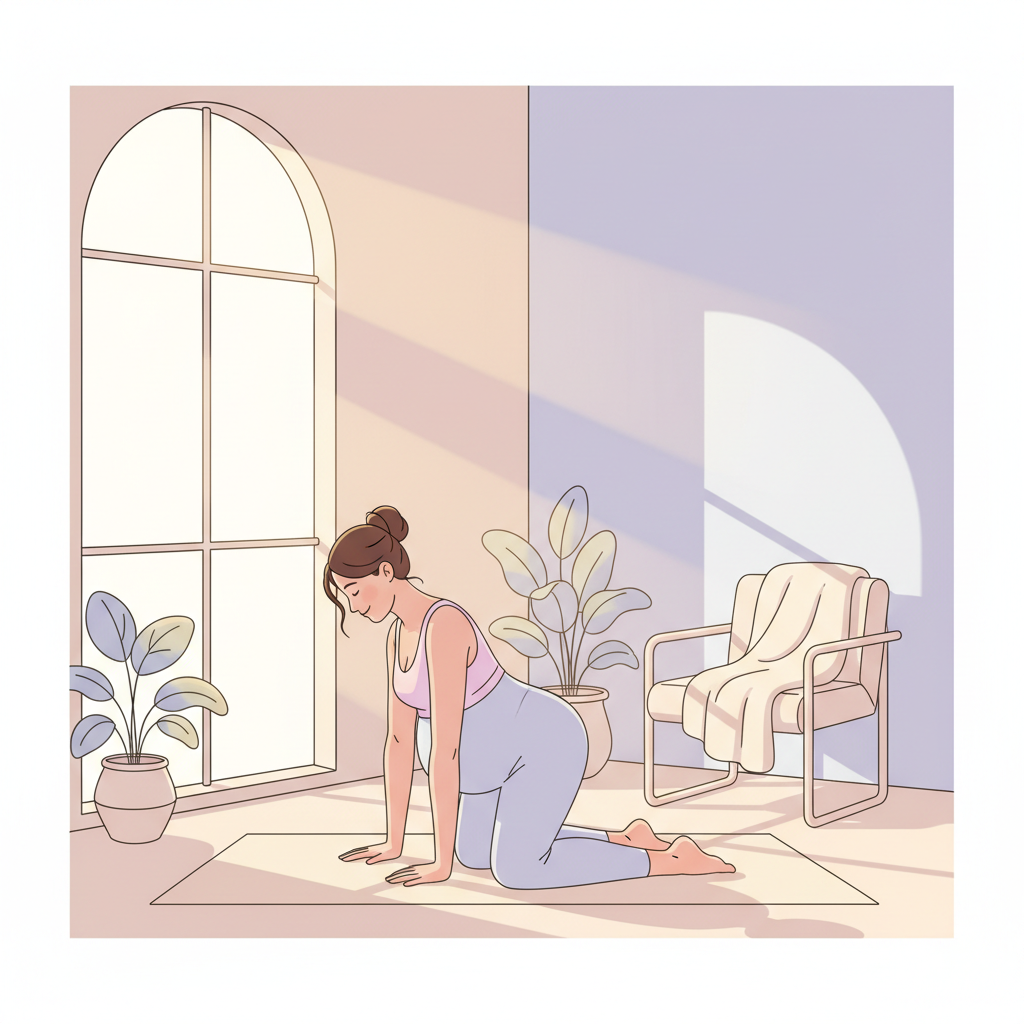
- Pelvic Tilts: This is a fantastic exercise for relieving lower back pressure. Get on your hands and knees (a position often called "tabletop"). As you exhale, gently tuck your tailbone under, drawing your belly button towards your spine. This will create a gentle curve in your lower back. Hold for a breath, then inhale and release, allowing your back to return to a neutral, slightly arched position. This movement helps mobilize your pelvis and ease strain.
- Cat-Cow Stretch: Also done on hands and knees, this flowing movement is excellent for spinal flexibility. Start in tabletop. As you exhale, inhale and drop your belly towards the floor, lifting your chest and tailbone towards the ceiling (Cow pose). As you exhale, round your spine upwards, tucking your chin towards your chest and drawing your belly button in (Cat pose). Move slowly and with your breath.
Always listen to your body. If a stretch causes sharp pain, ease out of it. These are about gentle mobilization, not pushing your limits.
Heat and Cold: What’s Safe and How to Use It
Heat therapy can be wonderful for easing muscle tension. A warm compress or a gentle heating pad set on a low setting can bring soothing relief to your lower back. Make sure it’s not too hot – you want comfort, not a burn. A warm bath can also be a luxurious way to relax tense muscles, as long as the water is comfortably warm, not hot.
Cold packs can also be effective, especially if you feel any inflammation or a dull ache. Wrap an ice pack in a thin towel and apply it to the affected area for about 15-20 minutes at a time. This can help numb discomfort and reduce any swelling. You might find alternating between heat and cold beneficial.
Supportive Pillows and Sleep Positions
Discover your baby's phase
Your sleep situation can significantly impact your back. As your body changes, so might your favorite sleeping positions.
- Side Sleeping: This is often the most recommended position during pregnancy. To get the most support, place a pillow between your knees. This helps align your hips and spine, taking pressure off your lower back.
- Body Pillow: Many pregnant individuals find a long body pillow incredibly helpful. You can hug it, place it between your knees, and even use it to support your growing belly. Experiment with how you position it to find what offers the most relief.
- Elevated Head: If you experience heartburn along with back pain, elevating your head slightly with extra pillows can offer dual relief.
Using Your Support System
Think of your body as a wonderful, adaptable system. Offering it the right support can make a significant difference.
Posture Perfect: Standing, Sitting, and Lifting
Good posture is your ally against back pain. Even in the early stages, a little awareness goes a long way.
- Standing: Try to stand with your weight balanced evenly on both feet. Avoid locking your knees. Imagine a string gently pulling you up from the crown of your head. If you’re standing for a long time, shift your weight or rest one foot on a low stool.
- Sitting: When sitting, especially at a desk, ensure your back is supported. Use a small cushion or rolled-up towel behind your lower back for added lumbar support. Keep your feet flat on the floor or on a footrest. Avoid slouching; try to maintain that gentle, upright posture.
- Lifting: This is a big one. Always bend at your knees, not your waist. Keep the item you're lifting close to your body, and engage your core muscles slightly as you lift. Avoid twisting your body while lifting.
When to Consider Support: Maternity Belts
While often thought of for later pregnancy, some individuals find relief from very early on. Maternity support belts, also known as belly bands, offer gentle support to your growing abdomen and can help alleviate the strain on your back muscles and ligaments. Talk to your OB/GYN or midwife before purchasing one to ensure it’s appropriate for your stage of pregnancy and to get guidance on how to wear it correctly.
Gentle Movement for a Happy Back
Staying active in a way that feels good for your body is crucial for managing back pain.
- Walking: A simple, brisk walk can do wonders. It helps keep your muscles engaged and can improve circulation.
- Swimming: The buoyancy of water can make you feel almost weightless, taking immense pressure off your joints and back. Prenatal water aerobics classes are also a great option.
- Prenatal Yoga: Specifically designed for pregnant bodies, prenatal yoga focuses on gentle stretching, strengthening, and relaxation techniques that can significantly ease back pain and prepare your body for labor. Look for classes led by instructors experienced in prenatal modifications.
When to Seek Guidance: Red Flags and Reassurance
It’s important to remember that while some back pain is a normal part of pregnancy, certain symptoms warrant a call to your healthcare provider. Your intuition is powerful, and it’s always best to err on the side of caution.
Recognizing Concerning Symptoms
While dull aches and stiffness are common, you should contact your OB/GYN or midwife if you experience:
- Severe or sudden back pain.
- Pain that is accompanied by fever or chills.
- Any vaginal bleeding or spotting.
- Burning during urination or changes in your urine.
- Leakage of fluid from your vagina.
- Numbness, tingling, or weakness in your legs or feet.
- Pain that comes in waves or makes it difficult to stand up.
These could be signs of something more serious that needs medical attention.
The Importance of Communication
Never hesitate to bring up any pain or discomfort you're experiencing with your healthcare provider. They are your best resource for understanding what’s happening with your body and for ensuring the health and safety of both you and your baby. They can assess your specific situation, rule out any underlying issues, and offer personalized advice and interventions.
For any medical decisions, always defer to your OB/GYN or midwife. This information is meant to empower you with knowledge and comfort measures, not to replace professional medical advice.
Navigating pregnancy is a unique journey for every individual. Your body is capable, and you are the expert on what feels right for you. Trust your instincts, be gentle with yourself, and know that finding comfort through discomfort is a learned skill. You’ve got this, mama.