Explaining Postpartum Depression to Your Partner & Family
Learn how to explain postpartum depression (PPD) to your male partner and family. Get tips for effective communication, active support, and seeking professional help.
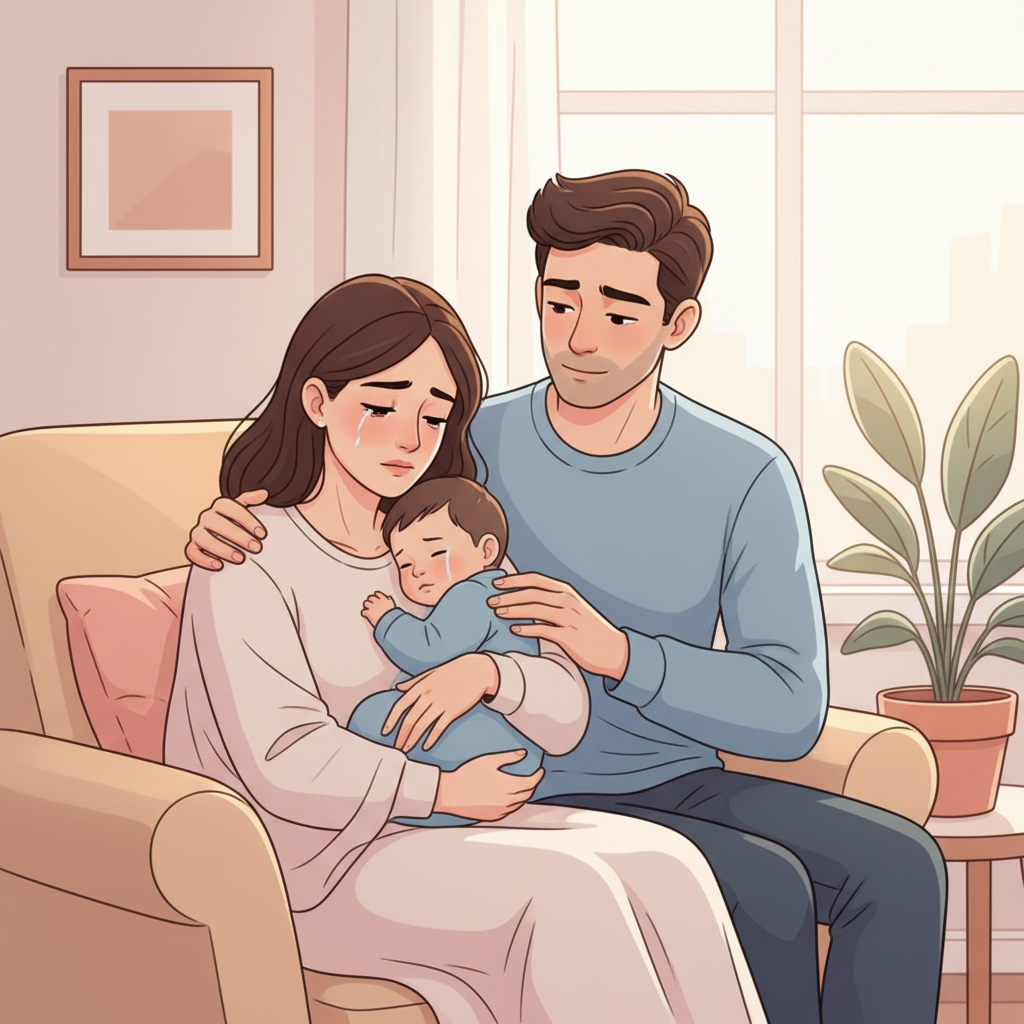
Explaining Postpartum Depression: A Guide for Partners & Family
It was 2 AM, and I was staring at the ceiling fan. Noah, my beautiful baby boy, was finally asleep, but my brain was racing. Every tiny sound felt amplified, every worry a monstrous threat. I felt a cold dread settle in my chest, a feeling I couldn't shake. This wasn't just exhaustion from a new baby; this was something darker, heavier. This is what explaining postpartum depression to your male partner and family feels like – trying to describe a storm happening inside you to people who can only see the rain outside.
The Invisible Weight: What Postpartum Depression Can Feel Like
When people talk about postpartum, it's often the cute baby clothes and milestone photos that come to mind. But there's a whole other side, a raw, often terrifying undercurrent that many of us live through.
It's More Than Just the "Baby Blues"
Most of us have heard of the "baby blues" – those fleeting moments of sadness or weepiness that can happen in the first couple of weeks after birth. These are common and usually pass. Postpartum depression (PPD), however, is different. It's a persistent, intense sadness, anxiety, and fatigue that can significantly impact your ability to function and care for yourself and your baby.
The truth is, PPD can manifest in so many ways. For me, it was a constant knot of anxiety, a feeling of perpetual dread, and an inability to feel joy, even when Noah was smiling at me. It felt like I was watching my life from a distance, disconnected and numb.
Recognizing Your Own Struggles: It's Okay to Not Be Okay
There's so much pressure to "bounce back" after having a baby, to present a perfect picture of motherhood. But if you’re feeling overwhelmed, hopeless, irritable, or have thoughts of harming yourself or the baby, it’s crucial to recognize that this is more than just a rough patch. Ask your OB about mental health screening postpartum.
The guilt that comes with feeling this way is immense. You might wonder why you can't just "love" this perfect baby all the time, or why you're not enjoying motherhood as much as you thought you would. Please know, you are not alone in these feelings. It's brave to acknowledge when you're not okay.
Why Understanding PPD is Crucial for Your Support System
When you're deep in the trenches of PPD, your support system can feel like your lifeline. But for them to be truly helpful, they need to grasp what you're going through.
Dispelling Myths and Misconceptions
Honestly, a lot of people still have outdated ideas about postpartum mental health. They might think it's just a woman being dramatic, or that a good night's sleep will fix it. They don't understand that PPD is a complex medical condition, not a character flaw. Partner support for postpartum rage and irritability can also be crucial, as partners might misunderstand these intense emotions.
This lack of understanding can lead to unhelpful advice or dismissive comments. Your partner and family's ability to provide effective support hinges on their genuine comprehension of PPD.
The Difference Between "Helping Out" and "Active Support"
"Helping out" can be someone doing the dishes when you ask. "Active support" is recognizing when you’re struggling and stepping in proactively, often without being asked.
For example, "helping out" might be someone holding the baby for a few minutes. "Active support" is your partner anticipating your need for a break and taking over for an hour so you can shower and sit in silence, or ensuring you eat a proper meal. It's about them understanding the depth of your struggle.
How to Explain Postpartum Depression to Your Partner (and Family)
This can be one of the hardest conversations you'll ever have. It requires vulnerability, patience, and a clear articulation of your internal experience.
Finding the Right Time and Place
Don't try to have this conversation when you're exhausted, in the middle of a feeding, or when your partner is rushing out the door. Find a quiet moment when you both have time to talk without interruption. Maybe it's after the baby is asleep for the night, or during a quiet Saturday morning. Creating a positive postpartum recovery space at home can help foster a calmer environment for these important discussions.
It’s important to feel as calm and centered as you can before you start.
Language That Helps Them Understand (Avoid Blame, Focus on Feelings)
Try to explain how you're feeling rather than what they are or aren't doing. Instead of saying, "You never help me," try "I've been feeling so overwhelmed and anxious lately, like I can't keep up."
Here are some phrases that might help:
- "I'm not just sad; it feels like a heavy, constant cloud is over me."
- "I’m having trouble connecting with Noah, and it scares me."
- "My thoughts race, and I can’t seem to quiet them down."
- "I feel guilty and ashamed because I'm not enjoying this as much as I thought I would."
- "It’s like my brain isn’t working right. It’s not my fault, and it’s not yours."
Focus on the invisible nature of what you're experiencing.
What You Need From Them: Specific Actions, Not Just Words
Vague requests like "I need your support" can leave partners guessing. Be specific about what would actually help.
Here are some examples of actionable requests:
- "Could you please take Noah for his entire morning nap so I can sleep?"
- "I need you to handle dinner tonight and clean up afterward."
- "When I tell you I'm having a bad day, can you just listen without trying to fix it immediately?"
- "I need you to check in on me regularly, not just about the baby, but about how I'm truly feeling."
- "Could we set aside 15 minutes each day to just talk to each other?"
Clearly defining these needs can make a huge difference.
Discover your baby's phase
The Role of a Pediatrician or Therapist in the Conversation
Sometimes, it’s easier to have a third party involved. If your partner or family is receptive, suggest bringing them to a doctor's appointment. My postpartum hair loss is making my PPD worse is a topic that might be easier to discuss with a medical professional present.
Say something like, "I’m really struggling, and I’ve been advised to talk to my doctor. Would you be willing to come with me to that appointment so you can hear it from them directly?" A healthcare professional can explain PPD in a way that is medically sound and takes some of the pressure off you to be the sole educator.
Navigating Reactions and Asking for What You Need
Their reaction might not be what you expect or hope for, and that's okay. You can adjust your approach.
When Your Partner Doesn't Fully Grasp It (Initially)
It's possible your partner might be dismissive at first, perhaps out of fear or not understanding. They might say things like, "You're just tired," or "Everyone feels this way."
Take a deep breath. You might need to have multiple conversations. You can share articles or resources that explain PPD from a medical perspective. Reiterate that this is a serious condition and not a sign of weakness. Encourage them to do their own research using reliable sources.
Setting Boundaries with Well-Meaning Family Members
Older generations, or even well-meaning friends, might offer unsolicited advice that makes things worse. "Just get some fresh air," or "You need to get out more."
You have the right to set boundaries. A gentle but firm response can work: "I appreciate your concern, but right now, what I need is rest. The doctor has advised me to focus on recovery." It’s about protecting your energy.
Actionable Ways Your Partner Can Support You
Beyond the specific requests, here are ongoing ways your partner can be a rock:
- Educate themselves: Encourage them to read up on PPD from reputable sources.
- Be patient: Healing takes time, and days can be a roller coaster.
- Listen actively: Hear what you're saying, without judgment.
- Help with practical tasks: This frees up your mental and physical energy.
- Encourage self-care: Make sure you're getting breaks, even short ones. Managing postpartum fatigue with multiple young children is a reality, and breaks are vital.
- Offer reassurance: Remind you that you are a good mom, even on your worst days.
These are crucial steps for fostering partnership in your recovery.
Remembering Their Journey Too: Partner's Mental Load
It’s easy to get lost in our own struggles, but it's important to remember that this is a big adjustment for everyone.
Paternal Postpartum Depression: A Brief Mention
While the focus is often on maternal PPD, partners can experience postpartum depression and anxiety too. They are also navigating major life changes, sleep deprivation, and adjusting to a new family dynamic. Partner support for postpartum rage and irritability might also be needed if they are struggling.
Sometimes, paternal PPD can look different – it might manifest as increased irritability, withdrawal, or overworking. Recognizing that other parents can struggle too can foster empathy.
Encouraging Open Communication From Both Sides
Create a space where both you and your partner feel safe to express your feelings, fears, and struggles. It’s not about who has it harder, but about supporting each other through this immense transition. Postpartum vaginal dryness can cause discomfort and impact intimacy, making open communication even more critical.
Regular check-ins, even just a few minutes each day, can make a world of difference. Ask each other, "How are you really doing?"
Seeking External Help and Resources Together
You don't have to navigate this alone. Professional help and support groups can be invaluable.
When to Talk to Your Doctor
If you're experiencing any of the following, it's time to contact your healthcare provider immediately:
- Persistent feelings of sadness, hopelessness, or emptiness.
- Intense mood swings.
- Difficulty bonding with your baby.
- Withdrawing from loved ones.
- Doubts about your ability to care for your baby.
- Thoughts of harming yourself or your baby.
Your doctor can diagnose PPD and discuss treatment options, which might include therapy, medication, or a combination of both. It is essential to seek medical advice. You can also ask your OB about mental health screening postpartum proactively.
Recommended Support Groups and Organizations
Connecting with others who understand can be incredibly healing.
- Postpartum Support International (PSI): This organization offers a helpline, online support groups, and resources for moms and families. They are a fantastic starting point for finding local and online PPD support.
- Your OB/GYN or Primary Care Physician: They can provide referrals to therapists and local mental health services.
- Therapists specializing in perinatal mental health: Many therapists are trained to help with the unique challenges of pregnancy and postpartum.
Remember, reaching out for help is a sign of strength, not weakness.
This journey of new parenthood is rarely Instagram-perfect. There will be tough days, confusing feelings, and moments you question everything. But by communicating openly, educating your loved ones, and seeking the support you deserve, you can find your way through the storm. You are capable, you are loved, and you are doing a better job than you think. Keep putting one foot in front of the other, mama. You’ve got this.