Explaining Postpartum Mood Disorders to Older Kids
Learn how to talk to your older children about postpartum mood disorders with age-appropriate honesty and reassurance. Help them understand and cope with family changes.
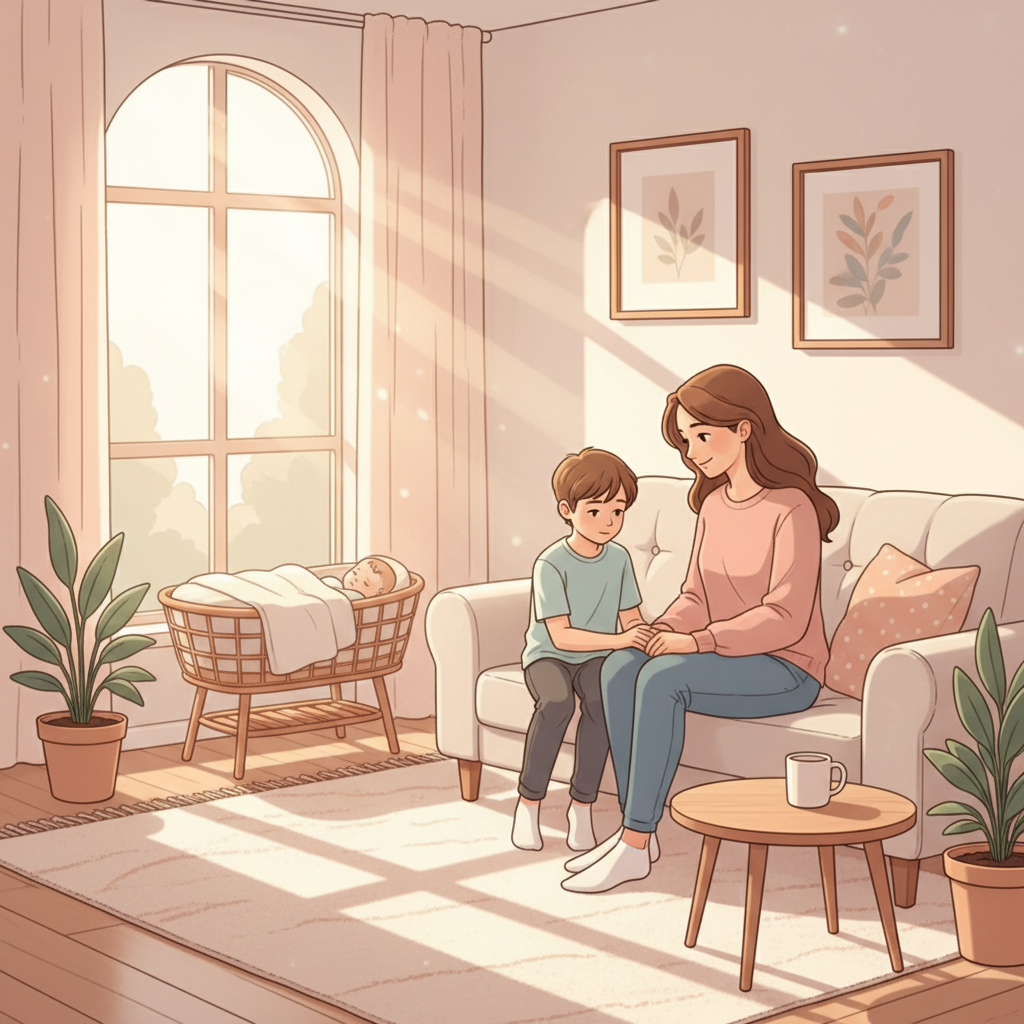
It's Not Just "Baby Blues": Explaining Postpartum Mood Disorders to Older Kids
It was 7 p.m. on a Tuesday. Noah, my sweet 9-month-old, was finally asleep after a marathon nursing session. I was supposed to be reviewing his feeding log, but instead, I was staring blankly at the wall, bone-deep tired. My older son, Leo, then 6, peeked his head into the living room. "Mom? Can you play Go Fish?" And I just… couldn't. I felt a wave of guilt wash over me, followed by a surge of irritation that felt completely out of my control.
This is real talk. Becoming a mom again, even with previous experience, is a seismic shift. If "baby blues" have turned into something more serious, explaining postpartum mood disorders to your older children can feel like another impossible task on an already overflowing plate.
I had no idea how much my own mood and energy could shift after Noah arrived. It wasn't just the lack of sleep; it was a deeper exhaustion, a fog that seemed to dim the color of my world. My patience was thinner than a communion wafer.
What's Going On? Beyond the Usual Sleep Deprivation
Let's be honest, motherhood comes with a built-in exhaustion manual. But postpartum mood disorders (PPMDs) are more than just feeling a little worn out. They’re a spectrum of conditions that can significantly impact a mother’s mental and emotional well-being after childbirth.
These aren't just fleeting sad moments. They can be persistent feelings of overwhelming sadness, anxiety, irritability, or a general lack of interest in things you used to love – including your children. It's like a dark cloud has moved in and won't budge.
- Postpartum Depression (PPD): This is probably the most talked-about PPMD. It can manifest as persistent sadness, crying spells, loss of appetite, trouble sleeping (even when the baby is asleep!), and feelings of worthlessness or guilt.
- Postpartum Anxiety: This can feel like constant worry, panic attacks, racing thoughts, and a feeling of impending doom. It’s like your brain is on a permanent alert.
- Postpartum Psychosis: This is much rarer but more severe and requires critical attention. It can involve hallucinations, delusions, and can be very dangerous.
The truth is, these conditions can make it incredibly hard to function normally. Mom might seem distant, overly emotional, or just… not herself. It can be confusing and even scary for everyone involved. For instance, a mom experiencing this might find it hard to manage even simple tasks like a C-section recovery which requires rest and patience.
When to Talk, and How to Start the Conversation
This is the part that feels so heavy. When do you open this can of worms? And how do you even begin to explain something so complex to little humans? My advice? Don't wait until you're at your breaking point.
There’s no magic script. But the sooner you can open the door for honest conversation, the better. Choose a time when things are relatively calm. Perhaps after dinner, when everyone is home and relatively rested (ha!). A quiet afternoon, a car ride, or during a cozy snuggle session before bed can also work.
The key is to tailor the message to each child’s age and understanding. What you say to a 4-year-old will be very different from what you say to a 12-year-old. If you are a working mother, you may need to consider FMLA extension to help manage these challenges.
Keeping It Real, But Not Terrifying: Your Words Matter
Here's the thing about talking to kids: they pick up on everything. They'll know something's up, even if you don't say a word. So, honesty is your best policy, wrapped in a whole lot of reassurance.
For younger ones, like toddlers and preschoolers, keep it super simple:
- "Mommy is feeling a little bit tired and sad right now, and it makes it hard for me to play sometimes. It's not because of you. I still love you so, so much."
- "My brain and my body are a little bit mixed up because of the big changes with the new baby. But doctors are helping me feel better."
Think about what they can grasp. Focus on the observable. "Mommy is feeling sad" is more concrete than "Mommy has postpartum depression."
For elementary-aged kids and pre-teens, you can get a bit more detailed. They might be asking more direct questions:
- "Sometimes, after a baby is born, a mommy’s brain chemistry changes, and it can make her feel very sad, worried, or even angry, even when she doesn't want to. This is called postpartum depression [or anxiety]."
- "It's like when you get a really bad cold, and your body feels all yucky and it's hard to do things. My body is feeling that way right now, but it’s with my feelings."
- "It is important for you to know that this has nothing to do with you. It's not your fault. Mommy loves you more than anything in the world, even when I can’t show it as much as I want to right now."
Discover your baby's phase
And for teens? They’re likely more aware and might be worried about you, or even embarrassed. Open the door for them to ask questions and acknowledge their feelings:
- "I'm going through a tough time right now with my mental health. It's called postpartum depression, and it's something many moms experience. It makes me feel really low, and sometimes anxious, and it's not your fault or anyone's fault."
- "I'm getting help for it, and I’m working on feeling better. I want you to know you can talk to me about anything, even if it's hard to hear."
The crucial reassurance for all ages: This is not their fault. They did not cause this. Mom’s love for them is unwavering, even if her expression of it is temporarily impaired. This is especially important if they are also dealing with toddler social anxiety or other transitional issues.
What Your Kids Might Be Noticing (And Wondering)
Your older kids are smart. They’re going to see and feel the changes, even if they can’t articulate them. They might notice:
- Mom seems sad or tired a lot: They might see you crying, or just not having the energy for their usual boisterous play. They might wonder why you’re not as energetic.
- Changes in mom's patience or engagement: You might be quicker to snap, or less able to engage in their games or conversations. They could feel rejected or like they've done something wrong. This could also be a sign of toddler overstimulation if they are already struggling.
- Mom seems withdrawn: You might be spending more time alone or in your bedroom, not participating in family activities as much.
When you talk to them, you can address these observations directly:
- "You might have noticed I seem sad lately. It's because my brain is having a hard time right now, and it’s making me feel blue."
- "I know I haven’t been as patient as usual. Sometimes, when I'm feeling this way, it's hard for me to control my reactions. I'm working on it. "
- "I might not be able to play as much as usual right now, but that doesn't mean I don't love playing with you. I'm just feeling a bit under the weather, like a grump cloud is following me."
And always, always loop back to the love. Reassuring them about Mom's love is paramount. "Even when I'm feeling this way, my love for you is the biggest, strongest thing. It never goes away."
Helping Them Help Themselves (And You)
This is a delicate balance. You want to involve your older kids and make them feel helpful, but you don't want to burden them.
- Age-appropriate tasks and responsibilities: For younger kids, this might be simple things like putting away a few toys, helping to fetch a diaper, or handing you the baby’s bottle. For older kids, it could be helping with meal prep, tidying up their own rooms, or even walking the dog.
- Empower their communication: Encourage them to talk about their feelings. Let them know it’s okay to be frustrated, sad, or even angry about the changes. If they’re talking to you, they’re less likely to bottle it up. Model this behavior by sharing your own (age-appropriate) feelings of frustration or sadness. This can also help if you're trying to encourage toddlers to point instead of grunting, as open communication is key.
- Caring for their own well-being: This is huge. Their routines might be disrupted. They still need playtime, attention, and consistency. If possible, having a trusted friend or family member spend dedicated, fun one-on-one time with them can be invaluable. Make sure they know they are still a priority.
Remember, you're navigating a new family dynamic. Their needs are still valid and important, even with a new baby in tow. You might also be dealing with postpartum insomnia, which adds another layer of exhaustion.
It's Okay to Ask For Help, Everyone
This journey is not meant to be walked alone. When you’re struggling with PPMDs, seeking professional help is a sign of strength, not weakness. And when you’re getting support, you can reassure your children that things are getting better.
- Talk to your doctor: Your OB-GYN or your pediatrician are excellent starting points. They can screen you for PPMDs and connect you with resources. If you are concerned about physical recovery, like pelvic floor therapy, your doctor can also guide you there.
- Mental health professionals: Therapists, counselors, and psychiatrists can provide specialized support and treatment. Research suggests that various forms of therapy, and sometimes medication, can be very effective in treating PPMDs.
- Support groups: Connecting with other mothers who have experienced similar challenges can be incredibly validating.
When your children see you taking steps to get better, it sends a powerful message:
- "I’m talking to a doctor/therapist who is helping me understand why I've been feeling this way. They are helping me learn how to feel more like myself again."
- "We’re working together as a family to get through this. Mommy is getting better, and things will start to feel more normal soon."
This whole experience is a testament to how much love and strength you have. You're managing a tiny human, a whole household, and your own emotional landscape. Be gentle with yourself, and remember that even in the fog, your kids are learning profound lessons about resilience, empathy, and the complexities of human emotion. You’ve got this, Mama. And your kids do too, because you're showing them how to navigate it all, one honest conversation at a time.