5 Gentle Exercises to Turn a Breech Baby at Home
Explore safe, at-home exercises like the breech tilt, pelvic tilts, and inversions to encourage your breech baby to move into a head-down position. Always consult your provider first.
Honoring Your Body's Wisdom: Gentle Exercises and Positions to Encourage Your Breech Baby to Turn
It's completely normal to wonder about your baby's position as your pregnancy progresses, and especially if you've heard your baby is in a breech presentation. Hearing that your baby is breech—meaning they are positioned bottom-down or feet-down instead of head-down—can bring up a lot of questions and a desire to do everything you can to help them get into the head-down position. You're looking for gentle exercises to turn a breech baby at home, and your intuition is guiding you toward proactive, supportive measures. As a fellow mom who has sat with many friends through their pregnancies, I’ve seen firsthand how powerful it is to feel informed and empowered during this time.
Understanding Your Baby's Position
Knowing your baby's position is an essential part of understanding your pregnancy's journey. While most babies naturally settle into a head-down (cephalic) position by the third trimester, some remain in a breech presentation. This isn't necessarily cause for alarm, as babies have their own timelines and reasons for their positioning.
There are a few types of breech presentations:
- Frank Breech: The baby's hips are flexed, and their legs are extended straight up toward their chest, with the bottom being the presenting part.
- Full (Complete) Breech: The baby's hips and knees are flexed, so their feet are near their bottom. This is sometimes described as the "tailor-sit" position for a baby.
- Footling Breech: One or both of the baby's feet are presenting first.
When to Talk to Your OB or Midwife
Before exploring any at-home techniques, the most crucial step is a conversation with your healthcare provider—your OB or midwife. They are your ultimate resource for medical guidance. They can accurately determine your baby's position through palpation and ultrasound.
Professional guidance is paramount because every pregnancy is unique. Your provider can assess if there are any underlying reasons for the breech presentation and advise on the safest course of action for you and your baby. A thorough understanding of pregnancy discharge: infection vs. normal? key signs is also important during this time to communicate any concerns to your provider.
You might consider exploring breech baby exercises at home generally after your provider confirms the breech position and discusses your options. They can also help you identify any situations where self-correction might not be appropriate.
Red flags to discuss with your provider include if you experience any bleeding, cramping, contractions, or a sudden gush of fluid. These are signs to stop any exercises and seek immediate medical advice. Always trust your provider's expertise for any medical decisions.
Recommended Gentle Exercises to Turn a Breech Baby at Home
When your healthcare provider gives you the green light, there are several gentle, how to turn breech baby naturally at home techniques that can encourage your baby to shift. The goal of these exercises is to create space and gravitational shifts that may invite your baby to roll head-down.
- The Breech Tilt: This is a popular method that uses gravity to encourage the baby to move.
- How to do it: Lie on your back with your hips elevated by pillows or on the edge of a sofa or bed. Place pillows underneath your hips so that your pelvis is higher than your head and shoulders. You'll want to be at about a 45-degree angle.
- Why it helps: This position can help shift the pressure off your baby's bottom and encourage them to flip head-down.
- Duration: Stay in this position for 10-15 minutes, perhaps two to three times a day. It's often recommended to do this on an empty stomach to avoid discomfort.
Discover your baby's phase
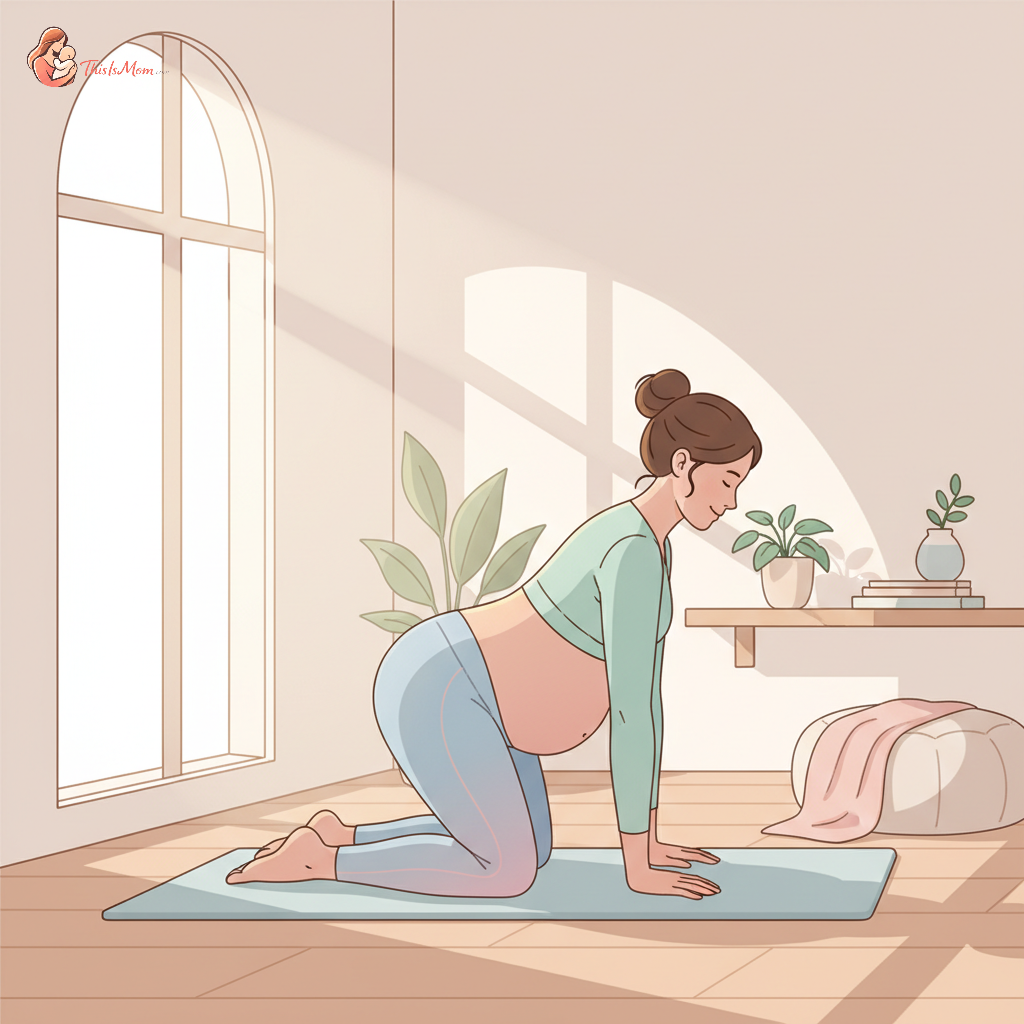
- Pelvic Tilts: These exercises are excellent for relieving pressure and promoting a more mobile pelvis, which can create room for your baby to turn.
- How to do it: Get on your hands and knees, ensuring your hands are directly below your shoulders and your knees are below your hips. As you exhale, round your back upwards towards the ceiling, tucking your chin to your chest and drawing your belly button towards your spine. As you inhale, gently arch your back, letting your belly drop slightly towards the floor and lifting your head to look forward.
- Why it helps: This movement can help relax and open up your pelvis, and the rocking motion can encourage your baby to shift their position.
- Frequency: Perform these tilts several times a day, moving with your breath. Pregnancy pelvic pain makes walking impossible: 10 relief tips can also be helpful if you experience discomfort.
- Forward-Leaning Inversion: This is another gravity-assisted pose that can be very effective.
- How to do it: Start on your hands and knees. Place a pillow or two under your chest and shoulders. Slowly lower your upper body towards the floor, so your chest and head are resting on the pillows, your elbows on the floor. This creates an inverted position.
- Why it helps: Similar to the breech tilt, this inversion uses gravity to encourage the baby to move towards the head-down position by shifting the pressure.
- Safety first: Ensure you have a stable surface and comfortable padding. You might do this for a shorter duration, say 5-10 minutes, and repeat it a couple of times a day.
- Cat-Cow Pose: This yoga-inspired movement is fabulous for spinal mobility and can help create space within the uterus.
- How to do it: Performed on your hands and knees, as described for pelvic tilts. Inhale as you drop your belly, lift your chest and tailbone, and gaze upward (Cow Pose). Exhale as you round your spine, tuck your chin and tailbone, and draw your navel in (Cat Pose).
- Why it helps: It gently massages abdominal organs and can help create shifting opportunities for your baby. It also helps to release tension in your back and pelvis.
Optimizing Your Daily Routine and Sleeping Positions
Beyond dedicated exercises, simple adjustments to your daily life can play a role. The principle of using gravity to your advantage is key.
- Gravity at work: Try to spend time in positions that allow your baby to move freely. Sitting upright in chairs with good posture, spending time on your hands and knees, and avoiding prolonged periods of reclining can be helpful. Think about what sleeping positions to turn breech baby might encourage movement.
- Sleeping positions: Many find that sleeping on their side, particularly their left side, can be more comfortable and may allow more space for the baby to move. Some suggest keeping your hips slightly elevated or using a wedge pillow to support your belly and pelvis. Again, discuss with your provider what feels best and safest for you.
- The role of chiropractic care: Some people find chiropractic care, specifically the Webster technique, beneficial. This technique focuses on aligning the pelvis and reducing tension in the pelvic ligaments, which may help create a more optimal environment for the baby to turn. It's a good idea to ask your provider if they recommend consulting with a chiropractor experienced in prenatal care.
What To Expect if Your Baby Turns (or Doesn't)
It's wonderful to monitor your baby's movements and any changes in your belly.
- Signs your baby might have turned: You might feel a rolling sensation or a distinct shift in where you feel kicks or hiccups. Your belly might also appear to have changed shape, with the roundness of the baby's head now lower down.
- Continuing the conversation: If you suspect your baby has turned, or if you're unsure, always communicate this to your OB or midwife at your next appointment. They can confirm the position. If your baby doesn't turn, or if you choose not to try these exercises, that's also a valid path. Your provider will discuss your birth options.
- Alternative options: If your baby remains breech, your provider will discuss options such as External Cephalic Version (ECV). This is a procedure performed by your provider to manually turn the baby from the outside. They will explain the risks and benefits, and whether it is a suitable option for you.
Ultimately, your body and your baby know what they are doing. These breech baby exercises at home are simply tools to potentially encourage a shift, offering you a sense of agency and involvement in your pregnancy journey. Remember that your provider is your partner in this, and their guidance is essential.
In the end, your birth experience will unfold in its own unique way. Trust your intuition, communicate openly with your care team, and honor the incredible journey you are on. You are capable, and you've got this.