Helicopter Parenting vs. Introduced Adversity for Resilience
Explore the balance between helicopter parenting and introduced adversity. Learn how to foster resilience, problem-solving skills, and self-efficacy in children through age-appropriate challenges.
Helicopter Parenting vs. Introduced Adversity: Building Resilience
Your toddler is crying because they can't reach a toy on a high shelf. Do you immediately retrieve it, or do you let them figure out a solution? This micro-moment touches on a larger conversation many parents are having: how to protect our children while equipping them to face life's inevitable challenges. The discussion often centers on helicopter parenting vs. introduced adversity, and understanding the nuances is key to fostering true resilience.
What It Means to Hover and Why We Worry
The term 'helicopter parenting' describes a style of raising children characterized by over-involvement and excessive attention to a child's experiences and accomplishments. It's like a parent hovers overhead, ready to swoop in at the first sign of trouble or difficulty. While driven by a deep desire to protect children from harm and disappointment, research suggests this approach can sometimes have unintended consequences for child development.
Many parents today feel a heightened sense of anxiety, perhaps fueled by constant news cycles or a desire to ensure their child has every possible advantage. These fears can lead to constant supervision, intervening in minor conflicts, and shielding children from any form of struggle. However, guidelines from organizations like the American Psychological Association (APA) point out that avoiding all discomfort can hinder a child's ability to develop coping mechanisms.
Introduced Adversity: A Pathway to Resilience
So, what's the alternative to hovering? Many experts advocate for 'introduced adversity' – the practice of intentionally creating safe, age-appropriate opportunities for children to encounter and overcome challenges independently. This isn't about exposing children to trauma or danger; it's about allowing them to experience manageable frustrations and setbacks.
The psychological benefits of this 'healthy struggle' are significant. When children are allowed to grapple with a problem, even a small one, they learn valuable lessons. They develop problem-solving skills, build confidence in their own abilities, and cultivate what psychologists call self-efficacy – the belief that they can succeed at tasks and challenges. This sense of mastery is a cornerstone of resilience.
Research suggests that experiencing and overcoming minor obstacles helps children build a stronger internal locus of control, meaning they believe they have agency over their lives and can influence outcomes. This contrasts with a child who is consistently rescued, potentially developing a more external locus of control, feeling that success or failure is due to outside forces.
Age-Appropriate Challenges: Practical Ideas for Every Stage
Fostering independence in kids doesn't happen overnight; it evolves with their development. The key is to offer challenges that are within their reach, providing support without taking over.
Here are some examples of introduced adversity by age group:
- Toddlers (Ages 1-3):
- Learning to wait for a turn with a toy or for a snack.
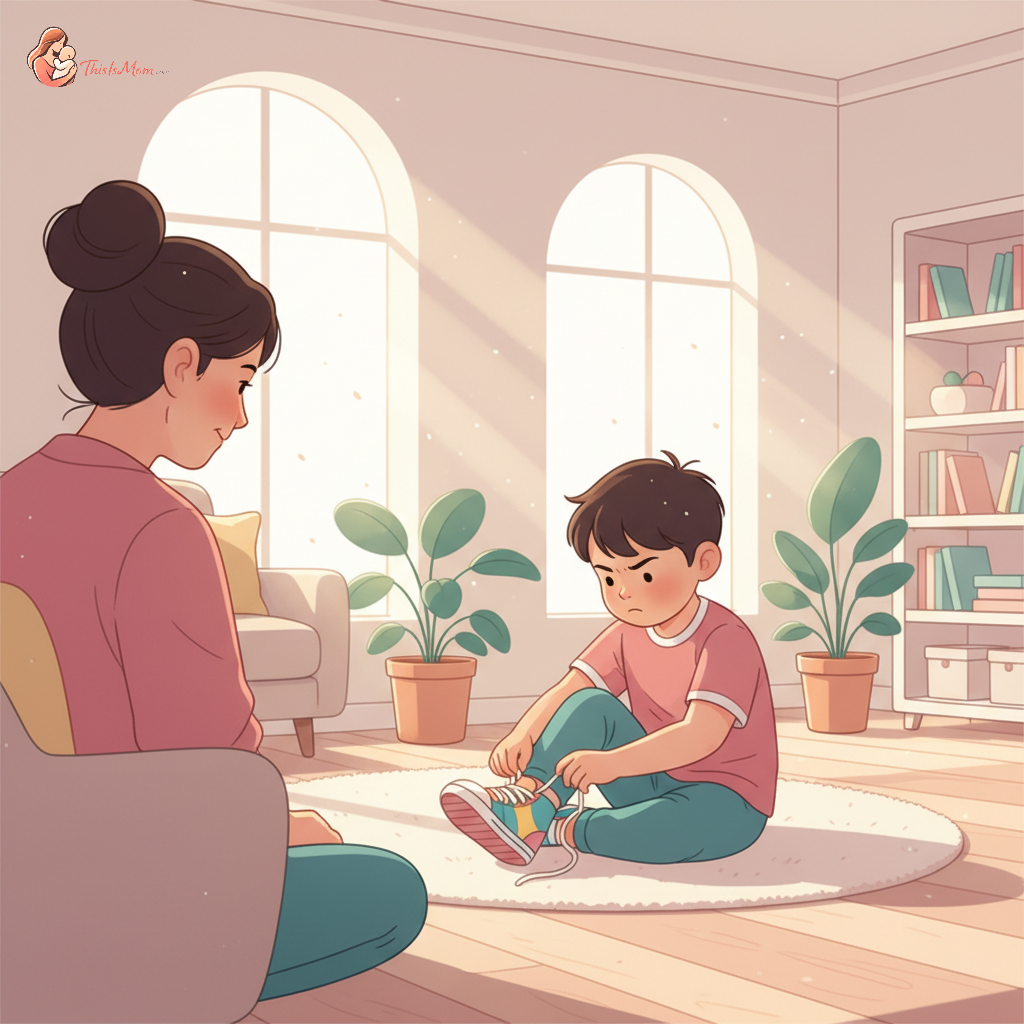
- Trying to put on their own shoes, even if it takes longer.
- Attempting to stack blocks or complete a simple puzzle, with gentle encouragement.
- Managing minor frustrations when a toy doesn't work as expected.
Discover your baby's phase
- Preschoolers (Ages 3-5):
- Engaging in independent play without constant adult direction.
- Resolving simple peer disagreements with minimal adult mediation.
- Trying to dress themselves completely, including fasteners.
- Assisting with simple household tasks, like putting toys away or helping set the table.
- Navigating a slightly more complex playground structure.
- School-Aged Kids (Ages 6-10):
- Managing their own homework completion and organization.
- Problem-solving when they forget a required item for school.
- Contributing regularly to household chores and responsibilities.
- Navigating social dynamics with friends, including minor conflicts.
- Planning a simple outing or activity with a friend, with parental oversight.
These are just starting points. The goal is to create opportunities for children to stretch their capabilities and learn from the experience.
The Art of Stepping Back: When to Intervene and When to Observe
One of the most challenging aspects of parenting is knowing when to step in and when to let our children figure things out. The Centers for Disease Control and Prevention (CDC) emphasize the importance of responsive parenting, which includes offering support but also allowing for exploration and independence.
Distinguishing between helpful support and over-involvement means observing your child's efforts. Are they making progress, even slowly? Are they showing signs of distress that are beyond their current coping skills? A helpful parent might offer a hint, ask a guiding question ("What could you try next?"), or provide a tool to help, rather than doing the task for them.
Teaching children to ask for help is also a crucial skill. Instead of expecting you to anticipate their every need, encourage them to articulate what they are struggling with and what kind of assistance they require. This empowers them and teaches them to advocate for themselves.
Creating a safe environment for failure is paramount. Children need to understand that making mistakes is a normal part of learning and growth. When a child fails at something, approach it with curiosity and a focus on what can be learned, rather than with disappointment or criticism. This helps build their resilience.
Balancing Safety and Growth: Finding Your Family's Sweet Spot
Of course, balancing protection and growth is an ongoing process that requires a nuanced approach. Addressing real safety concerns is non-negotiable. This means ensuring physical safety and protecting children from genuinely harmful situations. However, the goal is to do so in a way that doesn't stifle their developing independence and problem-solving abilities.
Consider your child's individual temperament and readiness. Some children are naturally more cautious, while others are more adventurous. What might be an appropriate challenge for one child could be overwhelming for another. Tailor your approach to your child's unique personality and developmental stage.
Open communication about boundaries and expectations is also key. Talk to your children about why you're encouraging them to try things on their own. Explain that you trust them to figure things out and that you'll be there to support them if they truly need it. This transparency can build trust and cooperation.
Ultimately, building resilience isn't about denying children challenges; it's about providing them with the scaffolding to meet those challenges. By intentionally introducing age-appropriate adversity and learning when to step back, we can help our children develop the confidence, competence, and adaptability they need to thrive. Finding this balance is an ongoing journey, unique to each family. The evidence points towards the benefits of allowing children to experience controlled struggles, fostering a sense of agency and robust coping skills that will serve them well throughout their lives.