Postpartum OB Checkup: How to Advocate for Yourself
Learn how to advocate for yourself at your postpartum OB checkup. Discover essential questions to ask about physical, mental, and reproductive health.
Your Postpartum OB Checkup: How to Advocate for Yourself
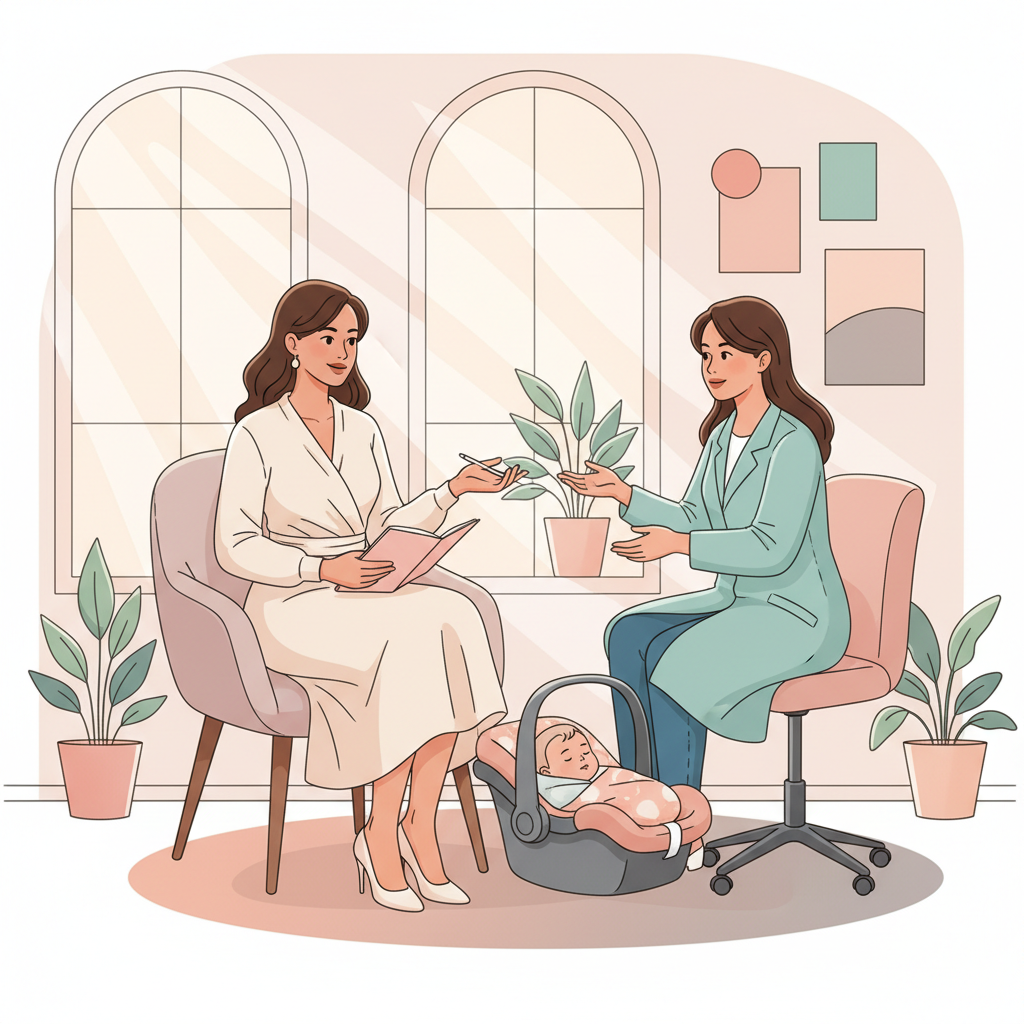
It was 10 a.m. on a Tuesday, and I was sitting in the sterile-smelling OB waiting room, Noah happily gumming on a crinkly toy in his carrier. This was my six-week postpartum appointment, and honestly, I felt like I was faking it. I looked okay on the outside, but inside? I was a tangled mess of exhaustion, lingering physical discomfort, and a persistent hum of "What am I even doing?" It hit me then: this appointment wasn't just a formality. It was my chance to get my own needs addressed. Learning how to advocate for yourself at your postpartum OB checkup is crucial, and if I can help one of you feel more prepared, then we're already winning.
Why Your Postpartum Checkup Matters More Than You Think
So, you just created a tiny human. Congrats! That’s kind of a big deal. And then, BAM, you’re handed a bill of health for your new baby and told to “come back in six weeks.” But wait, what about me?
Look, we’re all laser-focused on that little bundle of joy for those first few weeks, and rightfully so. But your body has just been through a marathon. It’s gone through pregnancy, labor, and delivery. That deserves just as much attention, if not more.
Your postpartum recovery is not a sprint to "normal." It's a wild, unpredictable journey. Things change daily, both physically and emotionally. What felt like a niggle last week might be a real issue this week.
And please, please don't think you can skip this. Opting out of your postpartum appointment is like ignoring a warning light on your car’s dashboard. Serious issues, like uterine infections, severe anemia, or even postpartum depression, can go undetected if you don't show up and speak up.
Pre-Appointment Prep: Your Self-Advocacy Power Pack
Walking into that appointment without a plan is like bringing a knife to a gunfight. You need your arsenal.
First, grab a notebook or open a note on your phone. Let's create your personalized postpartum visit checklist. Jot down everything that’s on your mind, no matter how small or silly it seems.
Think about your body and mind since delivery. What’s hurting? Are there any weird symptoms you’re noticing? How’s your mood really? Don’t censor yourself. The more details you can provide, the better your doctor can assess your situation.
And don’t feel like you have to go it alone. If you have a supportive partner, friend, or family member who can watch the baby or just be there for moral support, bring them! Sometimes having another set of ears or just a friendly face can make a huge difference.
What to Ask at Your Postpartum OB Checkup: Essential Questions
This is where we really dig in. Think of this as your postpartum care self-advocacy deep dive.
Let's Talk About Your Body
- Pelvic Floor & Healing: "How is my general healing progressing? Are there any specific exercises you recommend for my pelvic floor? I'm experiencing [pain/discomfort/pressure] here [describe location]. Is this normal?" If you had stitches, ask about their healing. Considering gentle postpartum exercises for diastasis recti and core strength might also be relevant.
- Pain & Discomfort: "I'm still having [specific pain, e.g., abdominal incision pain, back pain, perineal pain]. What can I do about it?" For those dealing with abdominal pain post-C-section, exploring options to rebuild core strength after C-section is also important.
- Bodily Fluids: "My bleeding has changed to X, is that expected?"
Your Mental Health Check-in
Everyone talks about the "baby blues," but postpartum mental health is so much more complex. Be honest about how you're feeling.
- "I've been feeling [anxious/irritated/overwhelmed/sad] more often than not. Could this be postpartum depression or anxiety?" If you're specifically struggling with intrusive thoughts, learning how to talk to your OB/GYN about postpartum anxiety and intrusive thoughts can be beneficial.
- "I'm having trouble sleeping, even when the baby is sleeping. Are there strategies for this?"
- "I feel disconnected from my baby/partner. What should I be looking out for?"
This is a critical part of your postpartum visit checklist. Don't gloss over it.
The Future: Contraception & Family Planning
Discover your baby's phase
This might feel like the last thing on your mind right now, but it's important.
- "When is it safe to resume sexual activity?"
- "What are my birth control options for postpartum?"
- "I'm interested in [specific method, e.g., IUD, pill, implant]. What do you recommend?"
Real Talk: Sleep, Nutrition, and Energy
You’re running on fumes, and that’s okay to admit.
- "I’m averaging X hours of sleep per night. What are the risks of chronic sleep deprivation, and how can I manage it better?"
- "I'm struggling with my appetite/digestion. Any advice?"
- "I have zero energy. Is there anything other than sleep that could help boost this?"
For Those with C-Sections
If you had a C-section, you have specific recovery questions to ask at your postpartum appointment.
- "How is my C-section incision healing?"
- "I'm experiencing some [scar sensitivity/numbness/pain] around the incision. Is this common?"
- "Are there any specific movements or exercises I should avoid or should focus on?" For those more than a year out, understanding how to safely rebuild core strength after a C-section is key.
Navigating the Appointment: Making Your Voice Heard
Okay, you’ve got your questions. Now, how do you make sure you actually get answers?
Be direct and clear. Start with your biggest concerns. If you feel a lot of symptoms, prioritize them.
- "The most important thing I want to discuss today is..."
- Use your notes. Don't be afraid to refer to them. That’s what they’re for!
- Ask for clarification. If the doctor uses medical jargon, say, "Could you explain that in simpler terms?"
What if you feel rushed or unheard? This is unfortunately common, but it doesn't mean you should just accept it.
- Politely interrupt if they seem to be moving on too quickly. "Excuse me, I just want to make sure we cover this point about..."
- Request more time. "I have several concerns that I feel we haven't fully addressed. Would it be possible to schedule a follow-up, or could you allocate a few more minutes?"
- If you consistently feel dismissed by a provider, it might be time to explore other options. Your health is worth finding someone who listens to you. For military spouses, finding specific postpartum depression support can be crucial if they feel unheard.
Beyond the 6-Week Mark: Ongoing Postpartum Care
Your 6-week postpartum checkup is a checkpoint, not the finish line.
Your body is still healing and changing. Understand that this journey can take months, even up to a year or more.
It’s crucial to know when to reach out between those scheduled appointments. Don't wait if you experience:
- Severe pain
- Heavy bleeding that saturates a pad in an hour
- Signs of infection (fever, redness, pus at incision site)
- Thoughts of harming yourself or your baby
- Any symptom that just feels wrong
And here’s a secret nobody tells you: there’s increasingly a discussion about a 1-year postpartum checkup, especially for those with gestational diabetes, preeclampsia, or significant mental health challenges. It’s a good idea to ask your OB about their recommendations for ongoing care. This is your health, and it deserves long-term attention.