Build a Freezer Stash Without Oversupply: Gentle Pumping Tips
Learn how to build a breast milk freezer stash without triggering oversupply. Get gentle pumping strategies, storage tips, and recognize signs of oversupply for a stress-free experience.
Building Your Breast Milk Stash, Gently: No Oversupply Drama Here
It was 5:17 a.m. when my alarm went off, and for a split second, I felt a familiar surge of panic. Noah was finally asleep, a tiny, warm weight against my chest, and the thought of disturbing him, of connecting a pump to my already sore breasts, felt like a cruel joke. But then I remembered the goal: a small, manageable breast milk stash. The kind that doesn't leave you engorged and achy, but offers a little peace of mind. Because "oversupply" was a scary word I was determined to avoid.
Building a freezer stash exclusively breastfeeding can feel like a tightrope walk, especially when you want to avoid the discomfort and potential complications of oversupply. I'm here to tell you it's absolutely doable. It's about working with your body, not against it.
So, How Much is "Enough"?
Let's be honest, the Instagram moms with freezers full of milk might make you feel behind. But here's the thing: you don't need enough milk to supply a small army. For most exclusively breastfeeding moms, a small, manageable stash is where it's at.
Think about your "why." Are you hoping to have a bottle ready for your partner to give a feeding while you grocery shop? Or maybe just a few ounces for a sitter if you want to sneak in a haircut? Having enough for one or two bottles is often the perfect amount. This means around 4-8 ounces can be a fantastic starting point. It provides flexibility without the pressure of astronomical goals.
Setting realistic stash goals means tailoring your ambition to your life and your milk supply. For many, a freezer stash exclusively breastfeeding means having enough for a missed feeding or two.
Pumping Without the Oversupply Avalanche
The key to building a freezer stash without oversupply is timing and consistency, but not too much consistency. Your body is brilliant at producing milk on demand. Introducing a pump too early or too often can send signals that you need to make more.
So, how to pump and not create oversupply? It's about gentle initiation. Wait until your supply feels established, typically after the first 4-6 weeks postpartum. Your milk supply usually regulates by this point, making it less likely that pumping sessions will trigger a massive increase.
Introducing pumping into your routine should be strategic. Avoid pumping right after a nursing session, as this can signal overproduction. Instead, try pumping between feedings. And crucially, if you feel uncomfortably full after pumping, it might be a sign you're doing too much too soon.
Your Gentle Pumping Playbook
When it comes to building a breast milk stash without oversupply, think quality over quantity in terms of session length and frequency. Forget the idea of "power pumping" if your goal is to avoid oversupply – those intense sessions are designed to increase supply.
Instead, focus on short, strategic sessions. Aim for perhaps 10-15 minutes, once a day, or even every other day. This is enough to collect a few ounces without significantly altering your body's production signals.
How often should you pump to build a freezer stash? For a small, manageable stash, starting with once a day is usually sufficient. If you find yourself feeling exceptionally full, you might want to pump slightly less often.
Discover your baby's phase
Building a freezer stash while exclusively breastfeeding is about learning your baby's cues and your body's signals. It’s not about emptying your breasts every time you pump. You may also be interested in learning about how to find human milk for babies during formula shortage if you're concerned about milk availability.
Here are some strategies:
- Pump at a different time than baby nurses: This is crucial. Pumping right after baby feeds can signal your body to produce more milk to "catch up."
- Listen to your body: If you feel uncomfortably full after a pumping session, you might need to reduce the duration or frequency.
- Start small: A short, 10-15 minute pumping session is often enough to collect a few ounces without encouraging oversupply.
- Don't force it: If Noah is cluster feeding or you're just exhausted, skip the pump. Your milk supply will adjust.
Storing Your Liquid Gold Savvy
Once you start collecting those precious ounces, proper storage is key. You want to preserve that "liquid gold" and ensure it's safe for your little one.
For short-term storage (up to 4 hours), you can leave breast milk at room temperature. For longer storage in the refrigerator, use clean containers and store it towards the back, where the temperature is coldest. It can last up to 4 days in the fridge.
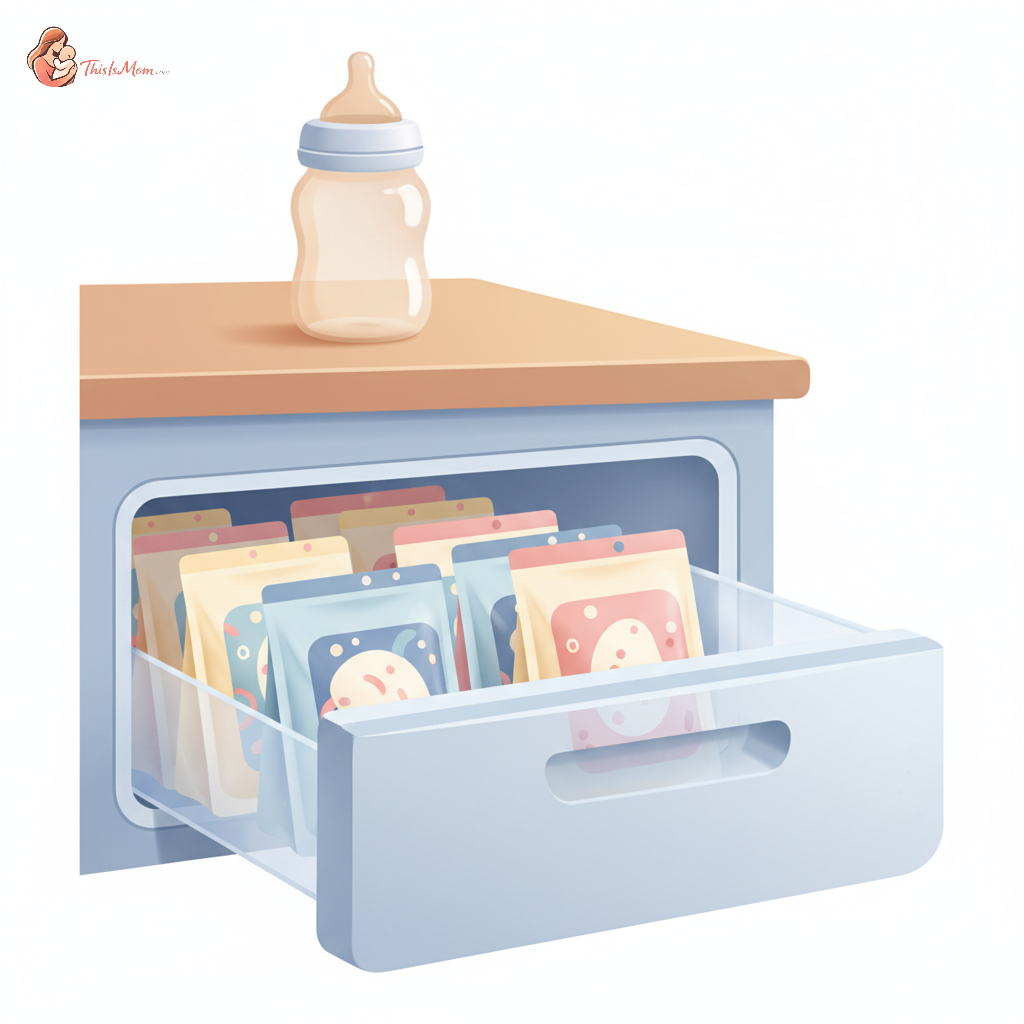
When freezing, use breast milk storage bags or BPA-free containers. Label each with the date you pumped it. It's a good idea to freeze milk in 2-4 ounce portions, as babies often drink this amount per feeding. This minimizes waste.
Here are some best practices for breast milk storage:
- Date everything: Always label with the date.
- Cool before freezing: If refrigerating first, cool the milk thoroughly before transferring it to the freezer.
- Freeze flat: Store milk bags flat in the freezer. This saves space and allows for faster thawing.
- Use the oldest first: This is how you rotate your freezer stash of breast milk. When you need milk, grab the bag with the earliest date.
Proper freezer for breast milk storage means keeping it in the deepest part of your freezer, away from the door, where the temperature is most consistent. Frozen breast milk can last up to 6-12 months, though it's often recommended to use it within 6 months for optimal quality.
When Your Body Says "Too Much"
Even with gentle strategies, sometimes your body has other plans. Recognizing the signs of oversupply is important for your comfort and your baby's health.
Some common signs you might be producing too much milk include:
- Frequent engorgement: Your breasts feel hard, painful, and extremely full between feedings or pumping sessions, even with regular nursing.
- Sudden let-downs: Your milk sprays out forcefully, potentially overwhelming your baby.
- Baby chokes or sputters: Your little one struggles to keep up with the flow of milk.
- Colic or gas: A fast flow can lead to your baby swallowing a lot of air. As you can see, managing a fast let-down can affect your baby's digestion, and you might find information on best formula for gas and reflux helpful.
- Plugged ducts or mastitis: These infections can be more common with oversupply due to milk stasis.
If you're experiencing uncomfortable fullness, try reducing your pumping sessions slightly in duration or frequency. You can also try hand expressing just enough milk to relieve pressure, rather than emptying the breast. If symptoms persist or worsen, reaching out to a lactation consultant is always a smart move. They can offer personalized strategies to help you find that sweet spot of a comfortable supply.