5 Tips: Maintain Consistent Routine Across Daycare & Home
Discover practical tips to maintain consistent routines across daycare and home. Learn how to align sleep, meals, and discipline for your child's well-being.
Daycare-to-Home: How to Maintain Consistent Routines
It’s 7:15 AM. I’m staring into the abyss of lukewarm coffee, trying to project calm while simultaneously packing lunches, locating a missing shoe, and mentally reviewing my first meeting agenda. My son, bless his newly-three-year-old heart, has just informed me that today’s preferred breakfast is a banana sliced into “tiny little circles. Just like the sun.” This is the reality of integrating a full-time job with full-time parenting, and when that job extends beyond our walls to a professional daycare setting, the math only gets more complex.
The idea of a perfectly seamless transition from daycare to home, with identical naps, meal times, and temperaments, is a mirage. But before you resign yourself to chaos, know this: establishing a consistent routine between daycare and home isn't about perfection; it's about reducing friction and fostering security for your child. The benefits run deeper than just an easier bedtime.
Why Consistency Matters (More Than You Think!)
We often think of consistency as a nice-to-have, a way to simplify our chaotic lives. But for young children, it’s foundational to their development. Predictability helps them understand the world around them and their place in it.
When the rules, expectations, and daily flow are roughly the same at daycare and at home, kids experience less anxiety during transitions. They know what to expect, and that knowledge is incredibly empowering. This predictability helps them build resilience because they aren't constantly grappling with new unknowns. It’s less about rigid schedules and more about a predictable rhythm that allows them to feel safe and secure, even when they’re navigating different environments.
Talk the Talk: Communicating with Daycare Staff
The absolutely critical first step in syncing your daycare-home routine is opening the lines of communication with your child’s caregivers. This isn’t a one-and-done conversation; it’s an ongoing dialogue.
Before your child even starts, or at your next convenient opportunity, have a detailed chat. Ask specific questions: "What is your nap schedule like? What are your strategies for handling meltdowns? What does your typical mealtime look like?" Understanding their existing structure will give you a clear picture.
Then, share your child’s home habits and preferences. "He usually has a small snack around 4 PM. We try to do baths between 7 and 7:30 PM. He finds comfort in this specific stuffed animal at bedtime." The more information they have, the better they can support your child’s needs.
Don't be afraid of regular check-ins and feedback. A quick chat at pickup or a brief email can solve minor issues before they escalate. You're partners in this, and open communication is paramount to syncing daycare and home schedules effectively. For instance, managing toddler meltdowns when parents use phones can be exacerbated if inconsistency between home and daycare is present.
Syncing Sleep: Daytime Naps to Nighttime Zzz's
Sleep. The holy grail. Getting it right at home is hard enough; aligning it with daycare adds another layer. Help your 6-month-old connect sleep cycles at night or managing overtiredness are common challenges.
First, understand their nap schedule. Does your child nap once or twice a day? For how long? If their daycare naps are significantly shorter than what your child is used to at home, talk to them about it. Sometimes they can accommodate a slightly earlier or later nap, or a second, shorter nap if needed, to better align with their nighttime sleep. Baby sleep in a noisy daycare environment can be particularly challenging and might require specific strategies.
The goal is to create consistent sleep cues at home and away. If daycare uses a specific song, a particular dimming of lights, or a quiet story for naps, see if you can incorporate similar elements at home. Even small, shared rituals can signal "sleep time" to your child, regardless of location. This extends to bedtime: establish your own consistent bedtime routine at home that loosely mirrors the daycare’s wind-down.
Discover your baby's phase
Now, let’s be real: perfection here is a myth. Some days, your child will nap brilliantly at daycare and then refuse to sleep at home. Other days, it’ll be the reverse. The key is to aim for a general alignment, not an identical minute-by-minute match. Embrace the flexibility.
Discipline & Behavior: Finding Common Ground
The "what happens at daycare stays at daycare" mentality doesn't do our kids any favors. Consistency in discipline and behavioral expectations is crucial for their understanding and compliance. Toddlers throwing things can stem from frustration with inconsistent boundaries.
Discuss rules and expectations with your child’s caregivers upfront. What are their primary classroom rules? How do they handle common misbehaviors like hitting, biting, or not sharing? Knowing their approach allows you to reinforce similar messaging at home. When they say, "We use gentle hands at school," you can echo that: "At home, we use gentle hands, too."
The idea of aligning discipline home and daycare means striving for consistent consequences for consistent behaviors. If a child consistently throws food at daycare and the consequence is a temporary removal from the table, and at home they do the same and you remove them from the table, that’s powerful consistency. It teaches them that the rule is universal.
When challenging behaviors arise, communicate with daycare. Is the behavior happening in both settings? Are there common triggers that daycare staff have observed? Sharing insights can help you both develop more effective strategies and support your child’s development.
Meal & Playtime Harmony: Making Transitions Smooth
Beyond sleep and discipline, the daily rhythms of eating and playing also benefit from a degree of harmony. If your toddler is a picky eater, understanding why they eat at daycare but not at home can be insightful, as covered in toddler only eats daycare food but not at home.
Try to mimic mealtime routines. If daycare encourages kids to sit at the table for a set amount of time, even if they don’t eat much, try doing the same at home. This helps normalize the experience of sitting down to eat. If they have a specific expectation around clearing their plate or helping tidy up, integrate that at home too.
Playtime is a bit more fluid, but there’s still room for synergy. Daycare often provides a balance of structured activities and free exploration. Talk to caregivers about what types of activities your child thrives on. You can then design your home playtime to complement this, perhaps offering more creative free play if daycare leans heavily on structured learning, or vice versa.
Creating a predictable evening wind-down is paramount. This signals to your child that the school day is over and the home-based routine is beginning. This might include a designated screen-free hour, reading books, or a quiet activity before dinner. For instance, resetting screen time after a vacation can be easier with a consistent evening routine.
Real-Life Hacks for Busy Parents
Let’s bring it back to reality. We’re not in a classroom; we’re juggling jobs, laundry, and the endless quest for snacks. The most important hack is understanding that a flexible routine is often more achievable and more beneficial than a rigid schedule. Life happens. Some days will be off. Focus on the overall rhythm. Considering affordable childcare options is also a crucial step for many parents.
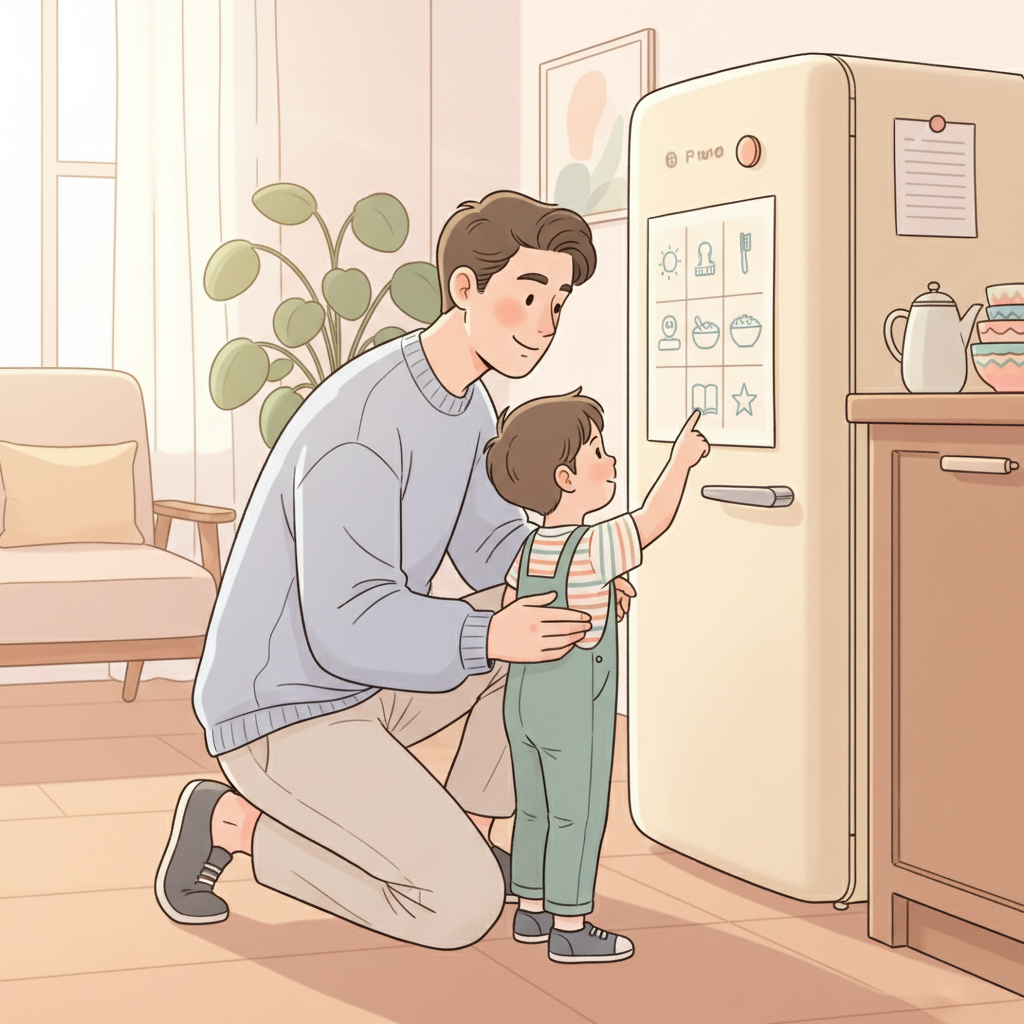
For younger children who don't yet grasp abstract concepts, visual cues can be game-changers. A simple picture chart showing the sequence of events (e.g., daycare pickup -> snack -> play -> bath -> books -> bed) can help them anticipate what’s coming next, both at home and when you explain what the daycare day looked like.