Making Your Own Baby Food: The Busy Parent's Guide
Discover how busy working parents can easily make nutritious homemade baby food. Learn batch cooking, storage tips, and recipes to simplify feeding and save money.
Making Your Own Baby Food: A Smart Guide for Busy Working Parents
It’s 7:03 AM. My Slack is pinging with what feels like a hundred urgent requests, my to-do list is a mile long, and my 7-month-old just attempted to wear his entire breakfast yogurt as a hat. This is the reality of making your own baby food as a busy working parent. It often feels like another impossible demand on already overstretched time.
But let's be real: the alternative – a constant stream of store-bought pouches – starts to feel expensive, and sometimes, a little less… vibrant. The math doesn't always math out for the time-starved among us. Yet, the desire to nourish our littlest ones with wholesome, nutrient-dense food persists. This isn't about perfection; it's about creating a manageable system that aligns with your values, even when your professional life is demanding.
The Working Parent’s Case for Homemade: It’s More Than Just Food
The initial decision to make your own baby food often stems from a desire to give your child the best. For working parents, this translates into tangible benefits that go beyond the baby’s bowl.
If you're considering this journey, you're likely asking yourself about the overall cost. The financial advantage of making your own baby food can be significant. While the initial investment in some tools might seem high, the cost per serving for homemade purees is substantially lower than pre-packaged options. Think about the price of a single pouch versus a bag of carrots or a bunch of spinach.
Customizing nutrition is another huge win. You control the ingredients – no added sugars, salts, or fillers you can’t pronounce. This allows for precise management of allergies or sensitivities and the ability to tailor meals to your baby's developing palate. You can introduce single ingredients as recommended by pediatricians and track reactions with confidence.
Then there's the peace of mind factor. In the whirlwind of deadlines and deliverables, knowing exactly what’s going into your baby’s body is a profound comfort. It’s a small, controllable victory in a day filled with variables you can’t influence. It’s a tangible way to nurture your child’s health, even when you’re physically apart.
Meal Prep Mastery: Your Secret Weapon for Baby's Kitchen
The thought of preparing baby food daily might induce instant fatigue. The game-changer for working parents is batch cooking baby food. This isn't about cooking every meal for the week, but about dedicating a few hours strategically to create a stockpile.
The Essential Arsenal for Efficient Food Prep
You don't need a professional kitchen. A few key tools make the process dramatically smoother:
- Steamer Basket or Pot: For gently cooking vegetables and fruits.
- Blender or Food Processor: A high-powered blender is ideal for smooth purees, but a good food processor works well. For very small batches or less frequent prep, an immersion blender can be a lifesaver.
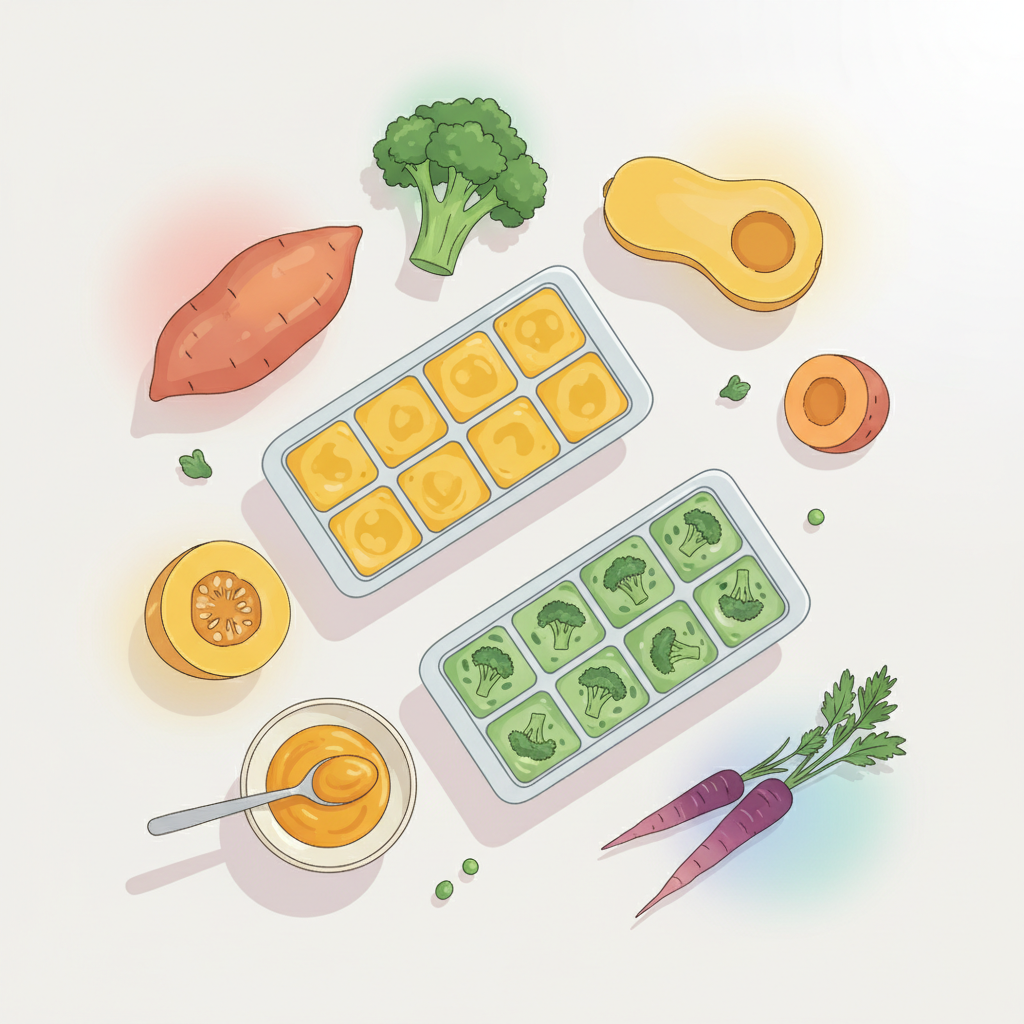
- Silicone Ice Cube Trays or Baby Food Storage Containers: These are crucial for portioning and freezing. Look for BPA-free options.
- Small Bowls and Spoons: For serving and tasting.
- A Reliable Timer: To avoid overcooking.
Pillars of First Purees (6+ Months)
When your baby is ready for solids, starting with single-ingredient purees is generally recommended. This helps identify any potential allergies. Focus on nutrient-rich, easily digestible foods.
Here are some fantastic easy baby food recipes for 6 months and up:
- Sweet Potato: High in Vitamin A, naturally sweet. Steam and puree with a little breast milk or formula.
- Butternut Squash: Similar to sweet potato, packed with vitamins.
- Peas: A good source of fiber and vitamins. Steam thoroughly to improve digestibility.
- Carrots: Another Vitamin A powerhouse. Steam and puree.
- Green Beans: Mild flavor, good source of vitamins. Steam until very tender.
- Avocado: No cooking required! Mash or blend ripe avocado. It’s creamy and full of healthy fats.
- Banana: Ripe banana can be easily mashed for a quick, naturally sweet option.
The Blending Blueprint: Texture Through the Ages
The consistency of your baby’s food should evolve as they grow and develop their oral motor skills.
- First Purees (6-7 Months): Aim for a very thin, smooth, runny consistency. You might need to add extra liquid (breast milk, formula, or water) to achieve this. Think baby applesauce consistency.
- Thicker Purees (7-9 Months): As your baby gets accustomed to swallowing, you can gradually thicken the purees. They should be smooth but with a bit more body, like a thick pudding.
- Lumpier Textures (9-12 Months): Introduce slightly mashed foods or purees with very small, soft lumps. This helps babies learn to manage different textures. You can slightly under-blend or mash with a fork.
- Soft Chunks (12+ Months): Transitioning to finger foods and softer, mashed table foods becomes the focus.
Storage Smarts & Safe Serving: Keeping Baby Fed and You Sane
Effective baby food storage tips are non-negotiable for busy working parents. Proper storage ensures safety and maximizes the time you can spend NOT cooking.
Freezing and Thawing: Your Go-To Strategy
Batch cooking is most effective when paired with smart freezing.
Discover your baby's phase
- Portion Control: Spoon purees into silicone ice cube trays for individual portions. Once frozen, pop the cubes out and transfer them into a labeled freezer bag or airtight container. This prevents freezer burn and makes it easy to grab just what you need.
- Airtight is Key: Always use airtight containers or freezer bags to prevent contamination and preserve freshness.
- Label Everything: Date, ingredients, and even the quantity (e.g., "2 oz Sweet Potato"). You’ll thank yourself later.
- Thawing Methods: The safest way to thaw is in the refrigerator overnight. For quicker thawing, gently warm a frozen cube in a small pot, bottle warmer, or a bowl of warm water. Never refreeze thawed baby food.
How Long Does Homemade Baby Food Last?
General guidelines, assuming proper storage:
- Refrigerator: 2-3 days in an airtight container.
- Freezer: 1-2 months for best quality. It remains safe longer, but flavor and nutrient degradation can occur.
Always use your senses. If it looks, smells, or tastes off, discard it.
The Safety Net: Introducing New Foods
When introducing new single foods, it's wise to follow the American Academy of Pediatrics (AAP) recommendations to watch for allergic reactions.
- The 3-Day Rule: For each new single-ingredient food, wait 3 days before introducing another new food. This allows you to easily identify the culprit if a reaction occurs. Common allergens include eggs, dairy, wheat, soy, peanuts, tree nuts, fish, and shellfish.
- Observe Closely: Watch for symptoms like hives, rash, vomiting, diarrhea, or fussiness. If you suspect a reaction, stop the offending food and consult your pediatrician. Remember that baby spitting up formula excessively can sometimes be a sign of intolerance, so it's good to be vigilant.
Beyond the Spoon: The Easy Ascent to Finger Foods
As your baby approaches their first birthday, the focus shifts from purees to more textured foods and the beginnings of self-feeding. This is where many homemade baby food for working parents strategies can adapt.
Simple Bites for Tiny Hands (9-12 Months)
At this stage, foods should be soft enough to mash easily between your fingers and cut into age-appropriate, manageable pieces.
- Soft Fruit Chunks: Ripe pear, peach, or banana cut into small, bite-sized pieces.
- Cooked Vegetable Pieces: Soft-cooked broccoli florets, steamed carrot sticks, or small cubes of baked sweet potato.
- Scrambled Egg: A good source of protein, easily mashed. Even if they eventually move to cow's milk, eggs are a great early protein source. how-to-transition-from-formula-to-cow's-milk-age-1.
- Lentils: Cooked until very soft, can be served as a side or mixed into other foods.
- Steamed O-Ring Pasta: Soft-cooked pasta shapes easy for tiny hands to grasp.
Quick Toddler Meals (12-18 Months)
Your baby is likely eating more family meals, but quick, nutritious options are still essential for those chaotic mornings or rushed evenings.
- Mini Meatloaf Muffins: Small, pre-portioned savory muffins made with ground meat, finely grated veggies, and oats.
- Quesadillas: Whole wheat tortillas filled with cheese and finely chopped soft veggies or beans, cut into strips.
- "Deconstructed" Meals: Think a plate with soft-cooked chicken pieces, steamed peas, and whole-grain crackers.
- Smoothie Packs: Pre-portioned bags of fruit, spinach, and yogurt (or milk alternative) in the freezer. Just dump into a blender with liquid in the morning. Don't forget to consider best-formulas-baby-milk-allergy-hydrolyzed-amino-acid options if allergies are a concern.
Making It Work: The Real-World Juggle
Parenting and professional life are rarely in perfect harmony. Making homemade baby food a sustainable practice requires acknowledging these realities and building flexibility into your system.
Knowing When to Get Help (& When to Chill Out)
There will be weeks when your workload is unmanageable, your child is teething, or you’re just plain exhausted. It is absolutely okay to rely on high-quality store-bought options during these times. This isn’t a failure; it’s a strategic trade-off. Your mental bandwidth is a finite resource.
Consider designating one or two days a week for fresh prep, and relying on the freezer stash for the rest. Or, perhaps your family can help out with a prep session on the weekend. Don't let the pursuit of homemade food become another source of stress. Give yourself permission to outsource or simplify when life demands it. Dealing with childcare-sick-policies-home-vs-center can add to the stress, so simplifying meal prep becomes even more crucial.
Packing Smarter: Daycare and Caregiver Lunches
Communicating your baby’s food needs to daycare providers or other caregivers is vital. You also need to be aware of strategies for managing their exposure to germs, especially during the first year. daycare-germs-infant-first-year-strategies can be a lifesaver.
- Clear Labels & Instructions: Ensure your frozen portions are clearly labeled with contents and the date. Include simple instructions on warming or serving.
- Quantity Guidance: Provide a general idea of how much your baby typically eats per feeding to help caregivers gauge portion sizes.
- New Food Alerts: If you're introducing a new food and following the 3-day rule, ensure the caregiver is aware and monitoring for reactions.
- Emergency Stash: Keep a few extra pouches or easily packable frozen portions at daycare for unexpected needs.
The journey of feeding your baby homemade food as a working parent is about creating a personalized system that works for your family. It's about identifying the non-negotiable elements for you, building boundaries around your time, and accepting that your version of success will look different from someone else's. It’s about making smart choices, not impossible ones. You've got this.