Manage Toddler Screen Time While WFH: A Parent's Practical Guide
Learn practical strategies to manage toddler screen time when working from home. Optimize your WFH schedule, use screens strategically, and ease transitions.
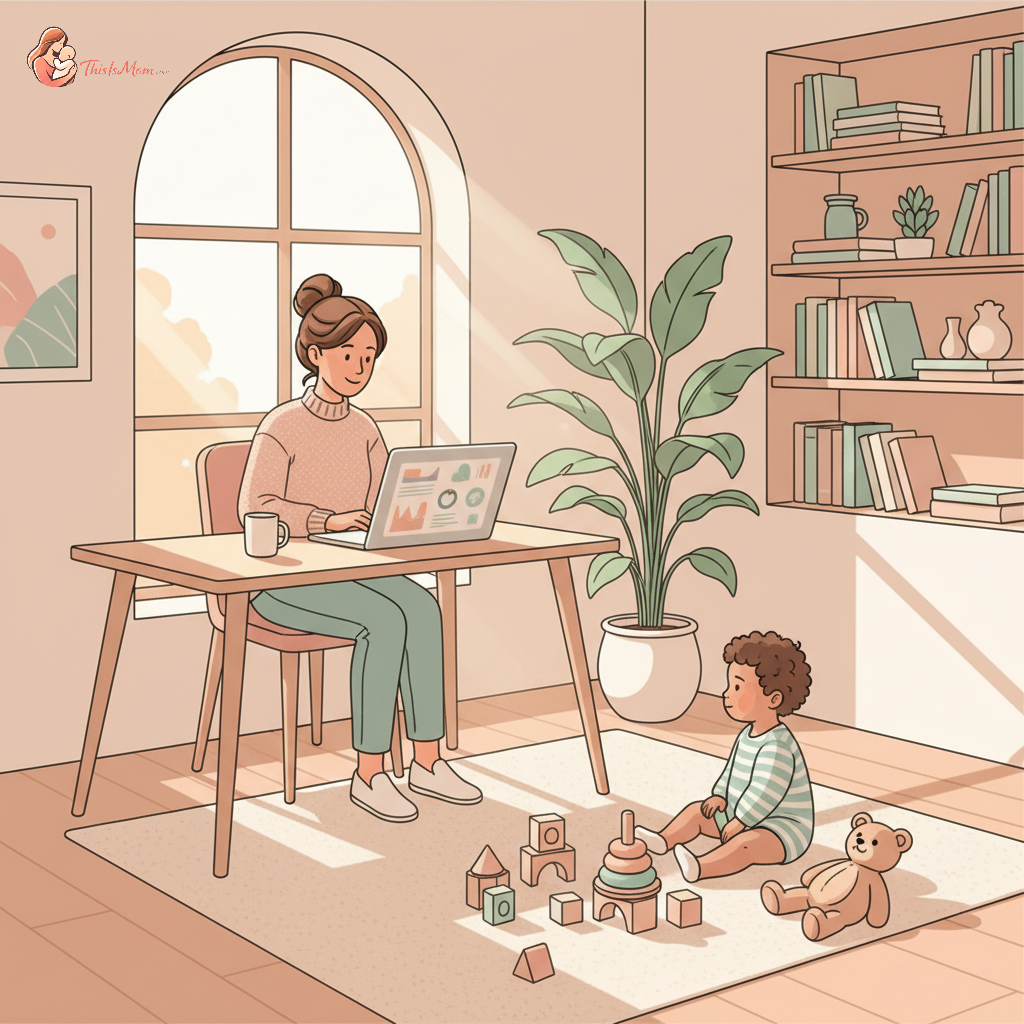
The Impossible Math of WFH Toddlers: Taming Screen Time for Sanity and Productivity
It’s 9:03 AM. I’m on a critical client call, and my three-year-old is attempting to “paint” the drywall with yogurt. This, my friends, is the very real, very unglamorous calculus of working from home with a toddler. The universe whispers promises of flexibility, and reality dangles a yogurt-smeared toddler in front of your most important meeting. The question isn’t how to achieve perfect balance, because that’s a myth. It’s how to architect a functional system that allows you to keep your job humming and your child engaged, even when the lines blur into a sticky, goopy mess.
We’re here to talk about how to manage toddler screen time when you absolutely need to work from home. Let's be honest, the guilt can be a heavy blanket. You want to be fully present, you want your child to have an enriching, screen-free childhood. But the inbox demands attention, deadlines loom, and sometimes, you just need a quiet thirty minutes to dial into a strategy session without a small human narrating your every keystroke. The real cost of constant interruption isn’t just missed work; it’s the erosion of your focus, the gnawing anxiety, and the feeling that you’re failing at both parenting and your career.
The reality is, screens can be a tool. A temporary, life-saving tool. Not ideal, no. But in the chaotic ecosystem of a WFH parent’s life, they serve a purpose. The key is to stop viewing them as a surrender and start seeing them as a strategic play in your daily operational plan. This isn't about letting go of your standards; it's about adapting them to your current reality.
Strategic Screen Time: Making it Work FOR You, Not Against You
When desperation sets in, any flashing cartoon will do. But if we’re aiming for competence, we need to be deliberate. This means moving beyond passive consumption and aiming for engagement.
Quality over quantity is your mantra here. Not all screen time is created equal. Opt for shows that encourage learning, have slower pacing, or prompt interaction (think programs where characters ask questions or invite kids to sing along). Documentaries about animals or nature, educational apps designed for toddlers, or even curated YouTube channels focused on age-appropriate crafts can be far more valuable than endless, mindless cartoons. The goal is to choose content that stimulates their minds, not just occupies their attention.
Then, timing is everything. Think about your workday. When are your most demanding meetings? When do you need deep, uninterrupted focus? Schedule screen time for these critical blocks. For me, Tuesdays and Thursdays have client presentations. That's when my son’s “special movie time” is unlocked. It’s a predictable reward for good behavior and a signal that Mom needs to concentrate. This also helps manage toddler screen time when WFH without it feeling like a constant battle.
Consider creating a 'screen time capsule.' This isn't a literal capsule, but a collection of pre-selected, trusted shows, movies, or educational apps. Load them onto a tablet or streaming device. This prevents last-minute scrambling and the temptation to click on something you haven’t vetted. It’s a curated library of sanity, ready to deploy when you need it most. This proactive approach helps foster healthier WFH screen time rules for toddlers by setting clear expectations for what they will watch. You might also want to find ways to explain screen time limits to a 2-year-old gently, especially as they get older.
The Art of the Transition: From Screens to Independent Play
The most challenging part isn't usually initiating screen time, but ending it. The meltdowns that follow are legendary. But with a little setup, you can smooth these transitions and pave the way for engagement that doesn’t require a power button.
The “warning shot” method is your best friend. Ten minutes before screen time ends, provide a verbal cue. “Five more minutes of watching!” Then, another five minutes later, “Okay, two more minutes!” This preps their brain for the shift. It’s not a surprise eviction, but a gradual wind-down. This is crucial for working from home with toddler screen time to prevent jarring changes. Having some transition activities after screen time for toddlers ready can also be a lifesaver.
Have bridging activities ready. As the screen powers down, immediately offer a pre-chosen, highly engaging activity. This could be a new small toy, a bin of playdough, or a favorite puzzle. The idea is to redirect their excitement and focus onto something tangible and beckoning, making the transition feel less like a loss and more like an exciting new chapter.
Discover your baby's phase
For longer work blocks, set up independent play stations. This requires some pre-planning. Think of it as a rotation of engaging, self-directed activities. One day it might be a sensory bin filled with dried beans and scoops. The next, a collection of building blocks in a designated corner. The key is to make these stations appealing and accessible. This fosters independent play for WFH parents and gives you genuine pockets of time for focused work. If managing your child's sleep is also a challenge, learning about ways to re-establish sleep schedule after holiday travel with baby might offer some helpful routine-building strategies.
Rethinking Your WFH Schedule: Integrating Toddler Needs
The traditional 9-to-5 structure is often an illusion for WFH parents. You need to embrace a more fluid, integrated approach.
Batching work and play is key. Identify periods where your toddler is naturally more occupied or when you anticipate fewer urgent demands. Group your most demanding work tasks into these windows or into the times your child is engaged in independent play. Conversely, slot in less cognitively taxing tasks (like responding to emails) for times when you are actively supervising and interacting with your child. This isn’t about sacrificing productivity; it’s about optimizing it for your current life.
Leverage nap times and early mornings/evenings. These are your golden hours. Maximize nap times for your most intense work. If your toddler is an early riser, can you dedicate the first hour of their awake time to focused play while you get a quick, important task done? Likewise, if your partner is home, can you carve out an hour after dinner for uninterrupted work while they handle bedtime stories and cuddles? If you find yourself struggling with your own energy levels or physical recovery, looking into pelvic floor exercises to reduce prolapse symptoms postpartum at home might be beneficial for your own well-being.
Don’t be afraid to involve your partner or support system. This isn't about delegating parenting entirely, but strategically dividing labor. If you have a critical call or a deadline, communicate this to your partner. Can they take the toddler for an hour so you can have a non-negotiable work block? This is essential for maintaining your career trajectory without burning out. It’s about acknowledging that this is a team sport. Surviving baby night wakings when your partner travels for work is a testament to this team effort.
Beyond the Screen: Alternative Strategies for Engaged Toddlers
While screens serve a purpose, a robust system relies on a diverse toolkit.
Sensory bins and ‘busy boxes’ are fantastic, low-tech ways to keep little hands and minds occupied. Fill a plastic tub with rice, beans, water beads, or even just shredded paper. Add scoops, cups, and small toys. These provide hours of exploration and fine motor skill development. DIY independent play doesn't need to be complicated; it needs to be interesting. Encouraging your toddler's gross motor skill development can also be a great way to channel their energy.
Outdoor breaks are crucial for everyone’s sanity. Even twenty minutes in the backyard or a quick walk around the block can reset your toddler’s energy and mood, and give you a much-needed mental reset. Fresh air is a powerful antidote to screen fatigue and cabin fever.
Consider audio stories and music. Podcasts for kids, audiobooks, or even just a curated playlist of engaging children's music can provide screen-free entertainment. Toddlers can listen while they play with blocks, draw, or engage in other quiet activities. This offers a form of engagement that doesn't require visual input, freeing you up to focus on your work.
This is a marathon, not a sprint. Building a functional system for managing screens and work with kids requires constant adjustment and a healthy dose of self-compassion. You are navigating a complex landscape, and there will be days when the screens are on longer than you’d prefer, and work tasks get delayed. The reality of toddler tantrums when screen time ends can be exhausting, but proactive strategies can help.
Give yourself permission. Permission to use the tools that help you survive. Permission to define what success looks like on your terms, which for many working moms, is simply getting through the day with everyone fed, reasonably happy, and your professional responsibilities met. You’re not aiming for perfection; you’re building resilience. And that, in itself, is a remarkable achievement.