7 Safe Overnight Remedies for Baby Stuffy Nose & Sleep
Discover effective and safe overnight remedies for a baby's stuffy nose, including saline drops, humidifiers, and safe sleep positions, to help your little one sleep better.
Overnight Remedies for Baby Stuffy Nose Disturbing Sleep
Your baby has a stuffy nose, and bedtime is fast approaching. You know what that means: restless nights for both of you. Understanding overnight remedies for a baby's stuffy nose disturbing sleep is key to helping your little one (and yourself) get some much-needed rest. While a stuffy nose is a common, albeit frustrating, part of infant care, knowing safe and effective approaches can bring peace of mind.
Why a Stuffy Nose Is Sleep's Worst Enemy for Babies (and Parents)
Babies' nasal passages are quite small, making them more susceptible to congestion. Even a tiny amount of mucus or swelling can feel like a major blockage to them.
Understanding Your Baby's Nasal Anatomy and Congestion
Infants breathe primarily through their noses, especially when feeding. Unlike older children or adults, they are not as adept at switching to mouth breathing. This means a blocked nose can directly interfere with nursing or bottle-feeding, making it harder for them to eat and then harder for them to settle down to sleep. The mucus itself can also be irritating. The fact that a newborn falls asleep feeding can be exacerbated by a stuffy nose making feeding efforts more tiring.
The Impact of a Stuffy Nose on Baby Sleep Patterns
When a baby's nose is blocked, they often wake more frequently. They may fuss, cry, and struggle to find a comfortable position. This disrupted sleep cycle can leave them overtired and irritable, creating a challenging period for everyone. Research consistently shows that any factor disrupting a baby's breathing can significantly impact sleep quality.
Safe Overnight Remedies for Your Baby's Stuffy Nose
Fortunately, several evidence-based methods can help ease a baby's congestion overnight. The American Academy of Pediatrics (AAP) emphasizes non-medicinal approaches for infants.
Saline Drops and Nasal Aspirators: Your First Line of Defense
Saline drops are essentially saltwater solutions that help to thin mucus, making it easier to remove. You can purchase them over-the-counter or make your own by dissolving 1/4 teaspoon of non-iodized salt in 1 cup of sterilized, lukewarm water.
After administering a few drops into each nostril, wait a moment. Then, use a nasal aspirator – bulb syringes or newer aspirator models – to gently suction out the loosened mucus. This is often the most effective way to clear their airways before sleep. The CDC recommends this as a safe and effective method for infants.
Humidifiers: Adding Moisture to the Air for Easier Breathing
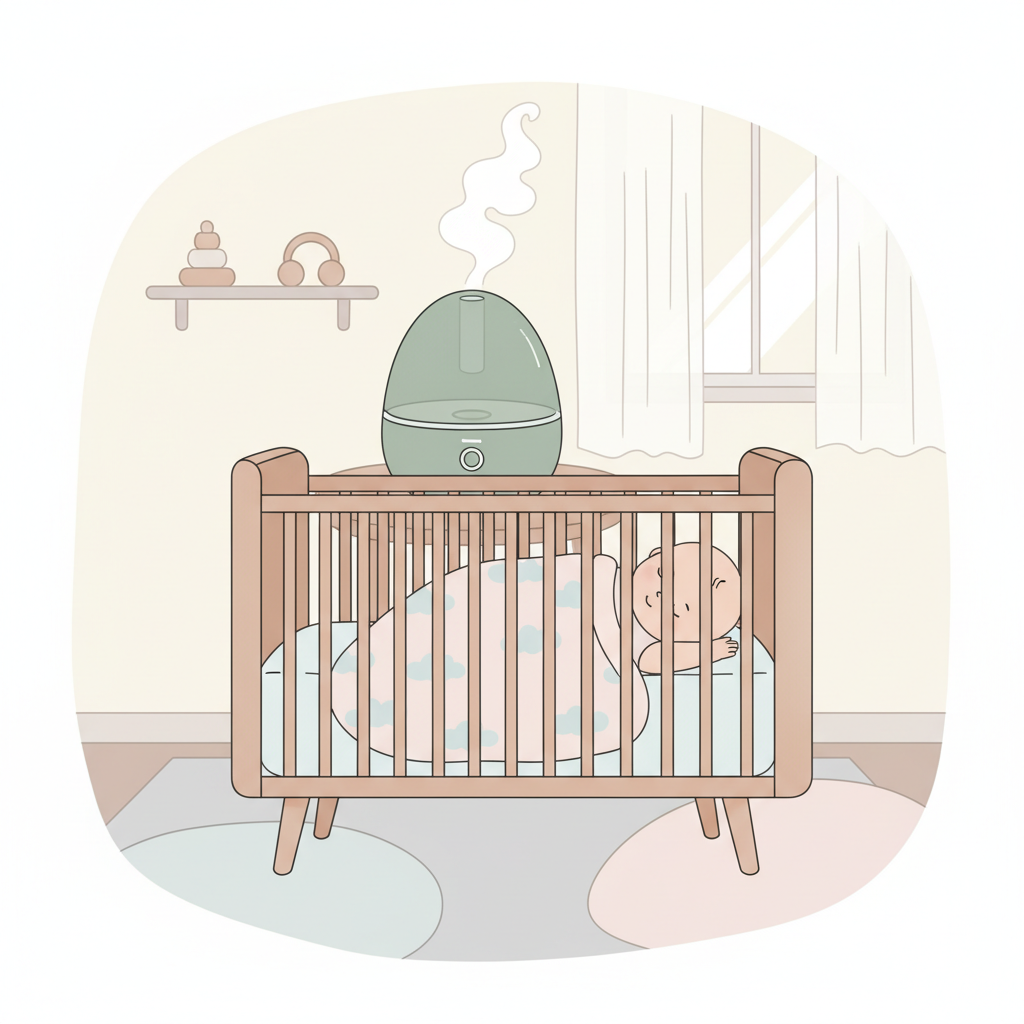
Dry air can exacerbate nasal congestion. Running a cool-mist humidifier in your baby's room can help keep their nasal passages moist and thin mucus.
- Choose a cool-mist humidifier: The U.S. Food & Drug Administration (FDA) advises against warm-mist humidifiers or vaporizers due to the risk of burns.
- Keep it clean: It’s crucial to clean the humidifier regularly according to the manufacturer’s instructions to prevent mold and bacteria growth. This is vital for maintaining healthy air quality in your baby's environment.
Elevating the Crib Mattress (Safely!)
The AAP has very specific guidelines on safe sleep for infants, primarily focusing on preventing Sudden Infant Death Syndrome (SIDS). While it's never recommended to place pillows or soft bedding in the crib, there is a method for safely elevating the head of the crib.
You can place a thin pillow or folded towel underneath the head of the mattress to create a slight incline. This is not about letting your baby sleep propped up, but rather a subtle tilt that can help mucus drain away from their nasal passages while they sleep. Always ensure the mattress remains firm and flat, with no loose bedding. Understanding alternatives for a Graco Pack 'n Play mattress while keeping safety in mind is also important for creating a safe sleep environment.
Gentle Chest Rubs and Warm Baths Before Bed
Sometimes, simple comfort measures can make a difference. A warm bath before bedtime can help to loosen mucus and relax your baby.
Following the bath, a gentle chest rub with a baby-safe chest balm (ensure it’s formulated for infants and free from camphor or menthol, which the AAP advises against for young children) can also be soothing. While not directly clearing the nose, it can help your baby feel more comfortable and ready to rest.
Optimal Sleeping Positions for a Baby's Stuffy Nose
When your baby is congested, you may wonder about sleeping positions. The safest sleep practices remain paramount.
Discover your baby's phase
Is It Okay to Let Baby Sleep with a Congested Nose?
Yes, it is generally okay to let your baby sleep with a congested nose as long as they are comfortable and breathing is not severely impaired. However, the goal is to make them as comfortable as possible to promote better sleep.
The Safest Sleep Guidelines with a Stuffy Nose
The foundational baby safe sleep guidelines from the AAP remain unchanged:
- Always place your baby on their back for sleep.
- Use a firm, flat sleep surface.
- Keep the crib free of soft bedding, blankets, pillows, and bumpers.
- Room-share (but don't bed-share) for at least the first six months.
These guidelines are critical for reducing the risk of SIDS and other sleep-related infant deaths. A stuffy nose does not negate these essential safety measures.
When to Consider Slightly Elevating the Head of the Crib
As mentioned, a slight elevation of the crib mattress can be beneficial. This is best achieved by placing a firm object, like a folded towel, underneath the entire mattress at the head of the crib. This creates a gentle slope that can aid drainage without compromising the flat, firm surface of the mattress. This is a technique that many parents find helpful when dealing with a baby blocked nose sleeping position concern.
Creating a Soothing Sleep Environment for Congested Infants
A calm and comforting environment can significantly aid a congested baby in settling down to sleep.
The Role of a Calm Routine in Comforting a Sick Baby
Consistency is key with infant sleep. A predictable bedtime routine signals to your baby that it’s time to wind down. For a congested baby, this routine might include:
- A warm bath.
- Gentle saline drops and aspiration.
- A short, calming story or lullaby.
- Comforting cuddles before being placed in their crib.
This structured approach can be very reassuring, especially when they are feeling unwell.
Monitoring Room Temperature and Air Quality
Ensure the room is at a comfortable temperature – generally between 68-72°F (20-22°C). Avoid overheating, as this can make congestion feel worse and is a SIDS risk factor.
Good air quality is also important. Regularly cleaning the baby’s room, especially the humidifier, helps prevent airborne irritants that could worsen congestion. This is a key aspect of creating an optimal sleep environment for a congested baby who can't sleep.
When to Call the Pediatrician About Baby Congestion
While home remedies are often sufficient, it’s essential to know when professional medical advice is needed.
Signs That Require Medical Attention
You should contact your pediatrician if your baby exhibits any of the following signs in conjunction with a stuffy nose:
- Fever: Especially in infants under 3 months, any fever of 100.4°F (38°C) or higher warrants a call. For older infants, consult your pediatrician's guidelines.
- Difficulty breathing: This includes rapid breathing, wheezing, grunting, or chest retractions (skin pulling in between the ribs or at the neck with each breath).
- Signs of dehydration: Fewer wet diapers than usual, dry mouth, no tears when crying.
- Lethargy or unusual sleepiness: If your baby is unusually difficult to wake or seems less responsive.
- Refusal to feed: If your baby is consistently turning away from the breast or bottle.
- Thick, discolored nasal discharge that persists for more than 10-14 days.
Understanding the 'When and Why' of Seeking Professional Advice
These symptoms, particularly difficulty breathing or dehydration, are important signals that your baby may need medical evaluation. When in doubt, always err on the side of caution and reach out to your pediatrician. They can assess your baby's condition, rule out more serious issues like ear infections or pneumonia, and provide tailored advice. For instance, concerns about a, toddler wakes up screaming, terrified of shadows might be related to discomfort from congestion causing sleep disturbances.