Return to Work with Pelvic Floor Weakness: 7 Desk Tips
Discover practical strategies for returning to a desk job with pelvic floor weakness. Learn about ergonomic adjustments, discreet exercises, and managing symptoms for comfort and confidence.
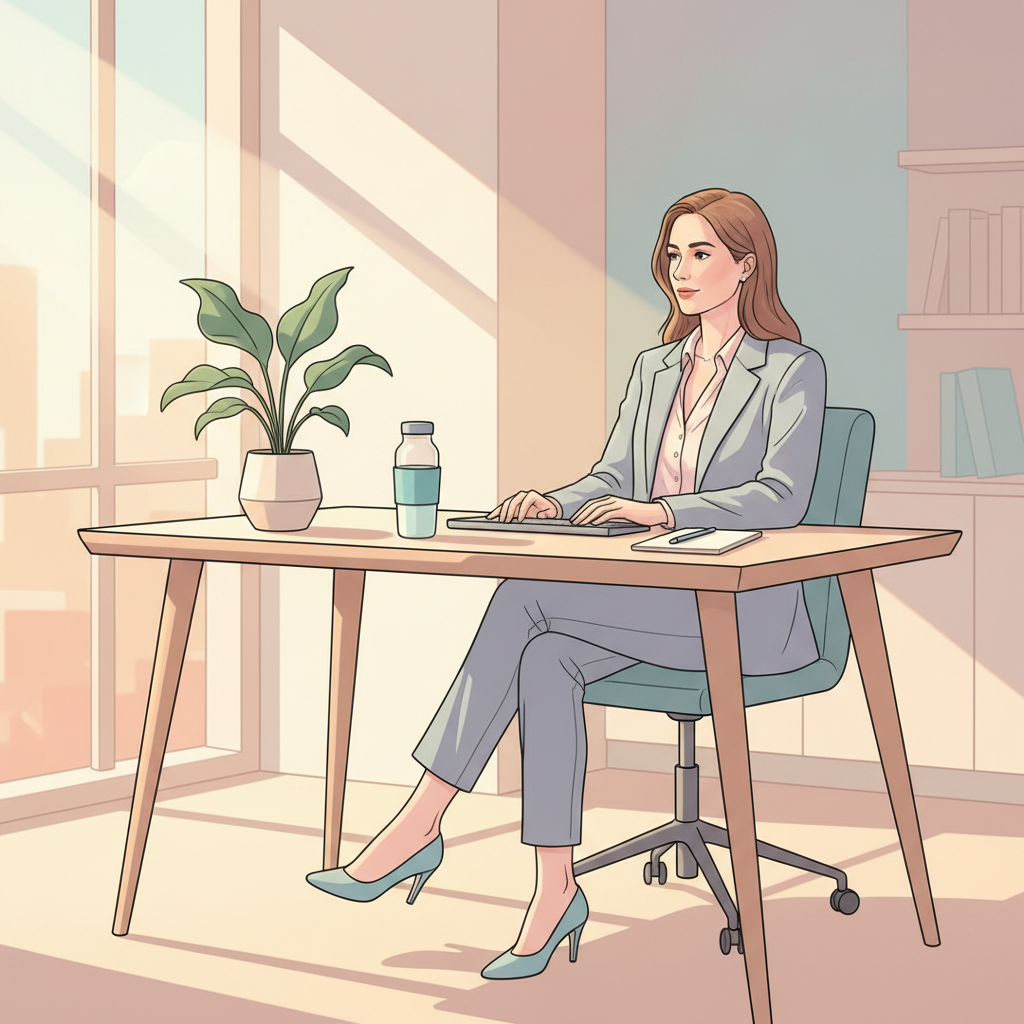
The Real Math of Returning to Work: Pelvic Floor Weakness and Your Desk Job
It’s 7:03 AM. My toddler is demanding a unicorn-shaped waffle, my laptop is still booting up, and I’m trying to discreetly adjust myself for the third time in as many minutes. This is the reality for so many of us: the seamless transition back to a desk job after baby is generally a myth. Let’s be real, the systems designed for the pre-kid, pre-pelvic floor-challenge version of ourselves often don't account for the new bodies we inhabit. When you’re returning to work with pelvic floor weakness after childbirth, the mental load feels even heavier. You’re juggling work deadlines, childcare logistics, and a very physical reality that impacts your comfort and confidence.
The cost of ignoring this can be significant. It’s not just about physical discomfort; it’s about the erosion of confidence, the anxiety around potential leaks, and the persistent feeling that you’re falling short, both professionally and personally. My own journey back to a demanding tech role after my son was born highlighted just how much the perceived “normal” of work life doesn’t intersect with the postpartum physical experience. The constant low-level hum of worry isn't sustainable.
So, how do we integrate this reality into our professional lives without sacrificing our careers or our sanity? It’s not about finding more time, but about building a practical, pelvic floor friendly office setup and a mindset that acknowledges what’s possible. This isn't about aiming for an impossible ideal; it's about finding your version of integration.
Recalibrating for the Office: Pelvic Floor Health After Baby
The immediate physical changes after childbirth are profound. Pregnancy and birth place immense pressure on your pelvic floor muscles. These muscles act like a hammock, supporting your bladder, uterus, and bowels. When they're stretched, weakened, or damaged, you can experience a range of issues, including incontinence (stress or urge), pelvic organ prolapse, and pain. For many, this weakness lingers long after the initial postpartum period, especially when returning to a desk job.
Why is My Pelvic Floor Feeling Weak After Baby?
Think of your pelvic floor muscles as part of your core. They work in conjunction with your diaphragm, deep abdominal muscles, and back muscles to stabilize your trunk and control various bodily functions. During pregnancy, hormonal changes can relax these tissues. The physical act of vaginal birth, or even the sustained pressure of a C-section recovery, can stretch, tear, or weaken these muscles. Even if you didn't experience a dramatic event, the sheer weight and pressure over nine months takes a toll. It’s a physiological response to a major life event, and it requires time and intervention to recover.
Common Challenges at a Desk Job for Moms with PFM
The sedentary nature of desk jobs can exacerbate pelvic floor issues. Prolonged sitting puts direct pressure on the pelvic region. Plus, the mental shift back to professional demands can make it easy to ignore bodily signals. You might find yourself:
- Experiencing leakage when coughing, sneezing, or laughing.
- Feeling pressure or discomfort in your pelvic area, especially after sitting for long periods.
- Experiencing increased urinary urgency.
- Feeling anxious about needing to use the restroom frequently or unpredictably.
- Struggling to maintain good posture, which can indirectly affect pelvic floor support.
These challenges are real, and they impact your ability to focus and perform. The incontinence returning to work can be a significant source of stress and embarrassment if not managed proactively. If you're dealing with issues like constipation alongside pelvic floor weakness, it can add another layer of discomfort, so seeking ways to manage toddler constipation starting solids naturally might be relevant for understanding bodily responses, though not directly linked to adult work scenarios.
Desk-Side Strategies: Discreet Pelvic Floor Support
The good news is that you don't need elaborate setups or obvious medical devices to manage pelvic floor weakness at your desk. Small, strategic adjustments can make a world of difference. The key is to make these actions discreet and habitual.
Ergonomic Adjustments for Pelvic Health
Your workstation can be a powerful ally, or an unwitting adversary. Small tweaks can alleviate pressure and promote better posture, which in turn supports your pelvic floor.
- Chair Height: Adjust your chair so your feet are flat on the floor, with your knees at about a 90-degree angle. This helps distribute pressure evenly and reduces strain on your lower back and pelvis. Avoid tucking your feet under the chair, which can create awkward angles and pressure.
- Lumbar Support: Ensure your chair has adequate lumbar support to maintain the natural curve of your lower back. If not, consider a small cushion or rolled towel. Good posture is foundational for core and pelvic floor engagement.
- Desk Height: Your elbows should be at roughly a 90-degree angle when typing. This promotes relaxed shoulders and a more upright posture, reducing downward pressure.
- Footrest (if needed): If your feet don't comfortably reach the floor even with the chair at its lowest setting, a footrest can help achieve proper leg positioning and reduce strain.
A pelvic floor friendly office setup is about making your environment work for your body, not the other way around.
Subtle Kegels and Core Engagement Throughout the Day
You don't need to be doing dedicated exercises during work hours to support your pelvic floor. Integrating subtle engagements into your routine is highly effective. Think of these as mental checkpoints.
- The "Stop" Signal: Imagine you are trying to stop the flow of urine midstream for a second. That gentle squeeze and lift is a Kegel. Practice this feeling.
- The Elevator Technique: As you stand up from your desk, imagine you are on an elevator that's going up. Gently contract your pelvic floor muscles as you ascend. As you "descend" or sit back down, relax.
- Breathing Integration: Your breath and pelvic floor are intimately connected. As you exhale, gently draw your pelvic floor muscles upward and inward. As you inhale, allow them to relax fully. Practice this during moments of focused work or while waiting for a meeting to start.
- Micro-Engagements: Set a subtle reminder (a specific email notification, a visual cue on your screen) to engage your pelvic floor for 3-5 seconds, then release. Repeat this 5-10 times throughout the day. The goal is not fatigue, but consistent, gentle activation.
These aren't about strenuous workouts; they're about re-establishing a mind-muscle connection and providing gentle, ongoing support. Research suggests that consistent, small efforts can yield significant improvements in muscle tone.
Clothing Choices for Comfort and Confidence
What you wear to work can directly impact your comfort and how you feel about managing pelvic floor weakness.
- Breathable Fabrics: Opt for cotton or moisture-wicking underwear. This helps prevent irritation and manage any minor leakage discreetly.
- Layering: Having a stylish cardigan or blazer can provide a sense of security and layering can be helpful if you experience temperature fluctuations.
- Well-Fitting Bottoms: Avoid overly tight waistbands that can put undue pressure on your abdomen and pelvis. Choose comfortable fabrics that allow for ease of movement.
- Absorbent Liners or Pads: For peace of mind, especially in the initial stages of returning to work, consider using discreet, high-quality absorbent liners or pads designed for light bladder leakage.
Choosing clothing that prioritizes comfort and support can significantly boost your confidence and reduce anxiety throughout the workday.
Discover your baby's phase
Hydration, Breaks, and Bathroom Logistics
Managing your fluid intake and bathroom breaks becomes a strategic play when dealing with pelvic floor weakness. It's about finding a sustainable rhythm.
Managing Fluid Intake Without Constant Bathroom Trips
Hydration is crucial for overall health and cognitive function, but it can feel like a Catch-22 when you're worried about constant trips to the restroom.
- Sip, Don't Gulp: Instead of drinking large amounts of water all at once, take small sips throughout the day. This allows your body to process fluids more gradually.
- Timing is Key: Try to front-load your fluid intake earlier in the day. Be mindful of how much you're drinking in the hour or two before you anticipate needing to leave work or before bedtime, if applicable.
- Limit Irritants: Be aware that caffeine and acidic beverages can sometimes irritate the bladder, potentially increasing urgency for some individuals. This varies greatly from person to person, so observe your own body's signals.
Planning Bathroom Breaks Strategically
This isn't about controlling your body, but about managing your environment and your time effectively.
- Know Your Bathroom Location: Familiarize yourself with the closest restrooms and perhaps a less-trafficked alternative. This minimizes travel time and potential encounters.
- The "Purposeful Walk": Combine your bathroom break with a short walk. This offers the dual benefit of relieving yourself and getting in some movement.
- Listen to Your Body: While strategic planning is helpful, don't ignore your body’s signal to go. Holding it in excessively can sometimes worsen urgency or create discomfort.
The Importance of Movement and Micro-Breaks
Sitting for prolonged periods is detrimental to everyone's health, but it can be particularly challenging for those managing pelvic floor weakness.
- The "Stand Up" Prompt: Set a timer to remind yourself to stand up and move for at least 60 seconds every hour. If you have young children, you know how important consistent routines are for their well-being, so maintaining a consistent routine across daycare and home is key. Similarly, establishing movement breaks is crucial for your own health.
- Pelvic Floor Friendly Stretches: Gentle stretches like cat-cow, child's pose, or a gentle pelvic tilt while standing can relieve pressure and promote better alignment.
- Mindful Walking: Even a short walk around the office floor or a quick trip to the printer can provide a much-needed reset. This promotes circulation and can help alleviate pelvic pressure.
Beyond the Desk: Integrating Pelvic Floor Care into Your Routine
Your life doesn't stop when you clock out. Effective management of pelvic floor weakness involves extending care beyond your immediate workspace.
Finding Time for Pelvic Floor Physical Therapy (PFPT)
If you suspect or know you have significant pelvic floor weakness, seeking professional help is often the most impactful step.
- Ask for Referrals: Talk to your OB-GYN or primary care physician about a referral to a pelvic floor physical therapist. Many women are surprised to learn this is a covered benefit. For advice on navigating postpartum care, asking the right questions about postpartum care at a birth center can be a good starting point for understanding comprehensive maternal health support.
- Flexible Scheduling: Many PTs offer early morning, late afternoon, or even virtual appointments to accommodate working schedules.
- Consistency is Key: PFPT isn't usually a quick fix. Commit to the recommended sessions and home exercises, and don't be discouraged if progress feels slow.
At-Home Exercises to Complement Desk Strategies
Consistency with dedicated exercises can significantly strengthen your pelvic floor and core.
- Kegels (Proper Technique): Ensure you're performing Kegels correctly. It's about a lift and squeeze, not bearing down. If unsure, a PT can guide you.
- Glute Bridges: Lying on your back with knees bent, lift your hips off the floor, squeezing your glutes. This also engages your pelvic floor.
- Bird-Dog: On hands and knees, extend opposite arm and leg while keeping your core stable. This requires significant pelvic floor stabilization.
- Deep Core Breathing: Focus on breathing deeply into your belly and consciously relaxing your pelvic floor on the inhale, and gently engaging it on the exhale.
These exercises, done a few times a week, can build a strong foundation to better manage symptoms during your workday.
When to Talk to Your Doctor or a Pelvic Floor Specialist
Don't tough it out indefinitely. Persistent or worsening symptoms warrant professional evaluation.
- Pain: Any new or worsening pelvic pain should be discussed with your doctor.
- Significant Leakage: If you're experiencing frequent or large amounts of leakage that impact your daily life.
- Visible Prolapse: If you feel a bulge or heaviness in your vaginal area.
- Discomfort During Intimacy: If intercourse is painful or uncomfortable.
A doctor or a specialist can rule out other issues and provide a personalized treatment plan, which might include exercises, managing parental leave when switching jobs while pregnant, or other interventions.
Finding Your Footing
Navigating the return to a desk job with pelvic floor weakness is a testament to your resilience. It requires a pragmatic approach, a willingness to adapt your environment, and the courage to ask for what you need—even if it’s just a more supportive chair or permission to take a micro-break.