Strategies for Non-Verbal Toddlers to Express Needs
Discover effective strategies for non-verbal toddlers to express needs. Learn about visual aids, ASL, PECS, and expert support to foster communication and reduce frustration.
Unlocking Their Voice: Strategies for Your Non-Verbal Toddler to Express Needs
Before you rush to a new developmental milestone chart, take a moment to truly observe your child. How do they show you they're hungry? What does their body say when they're tired? What do they reach for when they want something specific? For many of us, the journey of understanding our non-verbal toddlers begins not with words, but with keen observation.
The term "non-verbal" can sound daunting, but for toddlers, it often means they haven't yet developed spoken language skills, rather than a complete inability to communicate. Their "absorbent minds" are taking in everything, constantly trying to make sense of their world and their place in it. This intense desire to connect and be understood is a powerful motivator. When we can’t immediately understand their cues, frustration can bubble up for everyone involved. This is precisely why exploring effective toddler communication strategies is so vital for their emotional well-being and for fostering a stronger connection within the family.
Welcoming Their World: Understanding a Non-Verbal Toddler
For a toddler between 18 months and 3 years, "non-verbal" is a broad spectrum. It might mean they have a few single words, or perhaps no spoken words at all, but they are still actively communicating. They use their eyes, their gestures, their sounds, and their entire bodies to convey meaning. What it doesn't mean is that they have nothing to say or that they are not thinking and processing information deeply.
The frustration factor is very real. Imagine wanting a specific toy, or needing to tell someone you’re uncomfortable, and having no reliable way to do so. The child experiences this internal pressure daily. By offering them tools to express themselves, we're not just teaching them communication skills; we're helping them feel seen, heard, and understood. This dramatically reduces challenging behaviors that often stem from unmet needs or overwhelming emotions. Providing these tools is a foundational step in helping non-verbal toddlers communicate.
The Visual Advantage: Bringing Clarity Through Images
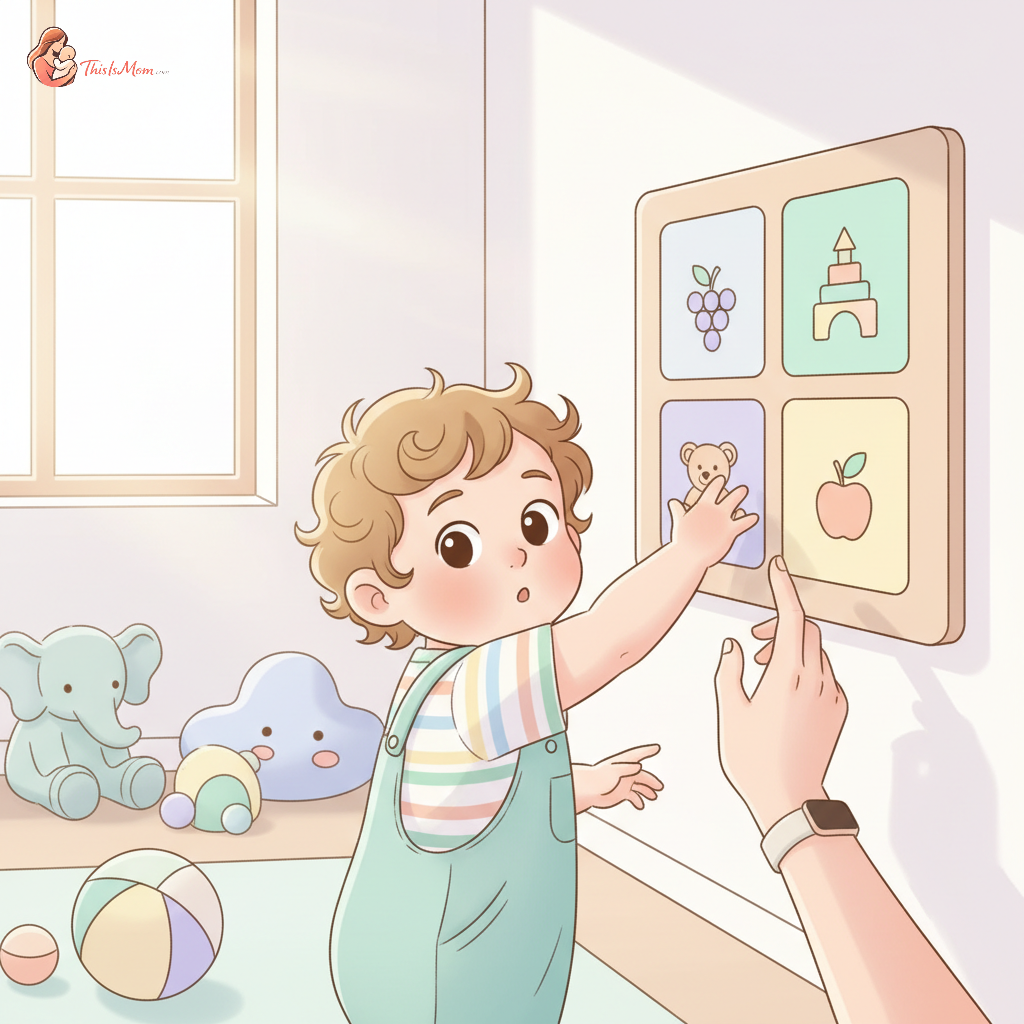
Children, especially those in their early years, are often visual learners. Preparing their environment with visual aids can be transformative, offering them a concrete way to navigate their day and make choices.
Visual Schedules: A Map for Their Day
A simple visual schedule, using pictures or photographs of daily activities (like waking up, eating breakfast, playing, napping, bath time), can bring immense predictability. For a toddler aged 2-3 years, seeing what comes next reduces anxiety and empowers them with a sense of control over their routine. You can arrange these on a piece of cardboard or tape them to a wall, moving a marker or a small object to indicate the current activity.
Choice Boards: Empowering Their Preferences
A choice board is a wonderful way for your toddler to express preferences. This could be a laminated sheet with pictures of available snacks, toys, or activities. For a child aged 18 months to 3 years, offering a choice between two or three items (e.g., "apple slices" or "banana slices") is manageable and effective. They can point to what they want, or later, even hand you the picture. This is a simple yet powerful tool for self-expression.
First-Then Boards: Gentle Guidance for Transitions
Transitions can be tough for any toddler. A "First-Then" board uses two images: "First, [less preferred activity]" and "Then, [preferred activity]." For example, "First, put away blocks," and "Then, go outside." This concrete visual helps the child understand the expectation and the reward, making transitions smoother. This can be particularly helpful for a child aged 2-3 years who is struggling with shifting focus.
Expanding Their Toolkit: Ways to Communicate Beyond Spoken Words
While visual aids are powerful, introducing alternative communication methods can further unlock your child’s ability to express themselves.
Essential ASL Signs for Everyday Needs
Introducing basic American Sign Language (ASL) signs is a fantastic strategy for toddlers with speech delays, or any child who is not yet speaking fluently. Start with high-frequency words that meet immediate needs. Signs like "eat," "drink," "more," and "all done" are incredibly useful for a child aged 12-24 months and older. You can find resources online from reputable ASL teaching sites. Model these signs consistently when you are performing the action.
PECS: The Picture Exchange Communication System
Discover your baby's phase
PECS offers a structured approach to communication. It involves teaching the child to exchange a picture of a desired item for that item. It typically progresses through six phases, starting with the child handing a single picture to a communicative partner, and moving towards building sentences. For a toddler aged 2-4 years, starting with Phase 1 (the physical exchange) can be a significant step. This system is designed to build functional communication skills.
The Language of the Body: Gestures and Cues
Don't underestimate the power of gestures and body language. A toddler will naturally use pointing, reaching, and their facial expressions to communicate. As parents, our role is to become fluent in their unique language. Watch for subtle shifts in posture, vocalizations, and eye gaze. Responding to these cues, even if they aren't perfectly clear, reinforces their attempts and shows them that their efforts are worthwhile.
Cultivating a Home Where Communication Flourishes
Creating an environment that is rich with communication opportunities is just as important as the tools themselves. It’s about building connection through consistent interaction.
Narrating Your Day: Constant, Gentle Input
Talk about what you are doing, seeing, and hearing throughout the day. Use simple, clear language. "Mommy is washing the dishes." "We are going to put on your blue shoes." "Look at the big, red car!" This constant stream of language provides context and exposure, even if the child isn't speaking yet. It helps build their comprehension and prepares them for future language development.
Patience and Observation: Your Superpowers
This is where the Montessori spirit truly shines. Be a detective of your child’s world. Observe their patterns, their interests, and their reactions. Patience is key. Understand that communication is a skill that develops over time, and each child has their own pace. When you notice a new gesture or sound, try to interpret it and respond. This consistent effort to understand is the most powerful form of communication preparation.
Celebrating Every Attempt: Positive Reinforcement
Acknowledge and celebrate every single communication attempt. When your toddler points to a cookie, say, "You want the cookie! Here you go." When they use a sign, respond enthusiastically and give them what they are asking for. This positive reinforcement encourages them to keep trying and builds their confidence. It’s about celebrating progress, not perfection.
When to Tune In Further: Seeking Expert Support
While many strategies can be implemented at home, there are times when seeking professional guidance is essential for supporting your child's communication journey.
Recognizing the Signs: A Conversation with Your Pediatrician
If you have concerns about your toddler's communication development, don't hesitate to bring it up with your pediatrician. They can offer initial guidance and, if necessary, refer you to specialists. It's important to consider their developmental milestones, but remember that every child is unique. Red flags might include a lack of babbling by 12 months, not using gestures like pointing by 18 months, or having significant difficulty being understood by familiar people.
Your Allies: Speech Therapists and Early Intervention
Speech-language pathologists (SLPs) are invaluable resources. They can assess your child's specific needs and develop personalized intervention plans, which may include strategies like PECS, ASL, or other tailored approaches. In the US, Early Intervention services are available for children from birth to three years old who have developmental delays. These services are often free or low-cost and can provide crucial support in your home.
Trusting Your Instincts: Advocating for Your Child
Ultimately, you know your child best. Trust your intuition. If something feels off, or if you feel your child isn't getting the support they need, continue to advocate for them. This might mean seeking a second opinion, or persistently asking questions until you feel confident in the plan. Your voice is their strongest advocate.
This journey of communication is a beautiful dance between you and your child. By offering them diverse ways to express themselves and by becoming attentive observers, you are laying a strong foundation for connection and understanding. Try introducing one new visual aid or a couple of basic ASL signs this week. See what unfolds.