Transition Toddler from Screen Time to Outdoor Play Smoothly
Learn gentle strategies to transition your toddler from screen time to outdoor play without meltdowns. Discover tips for smooth shifts and making outside irresistible.
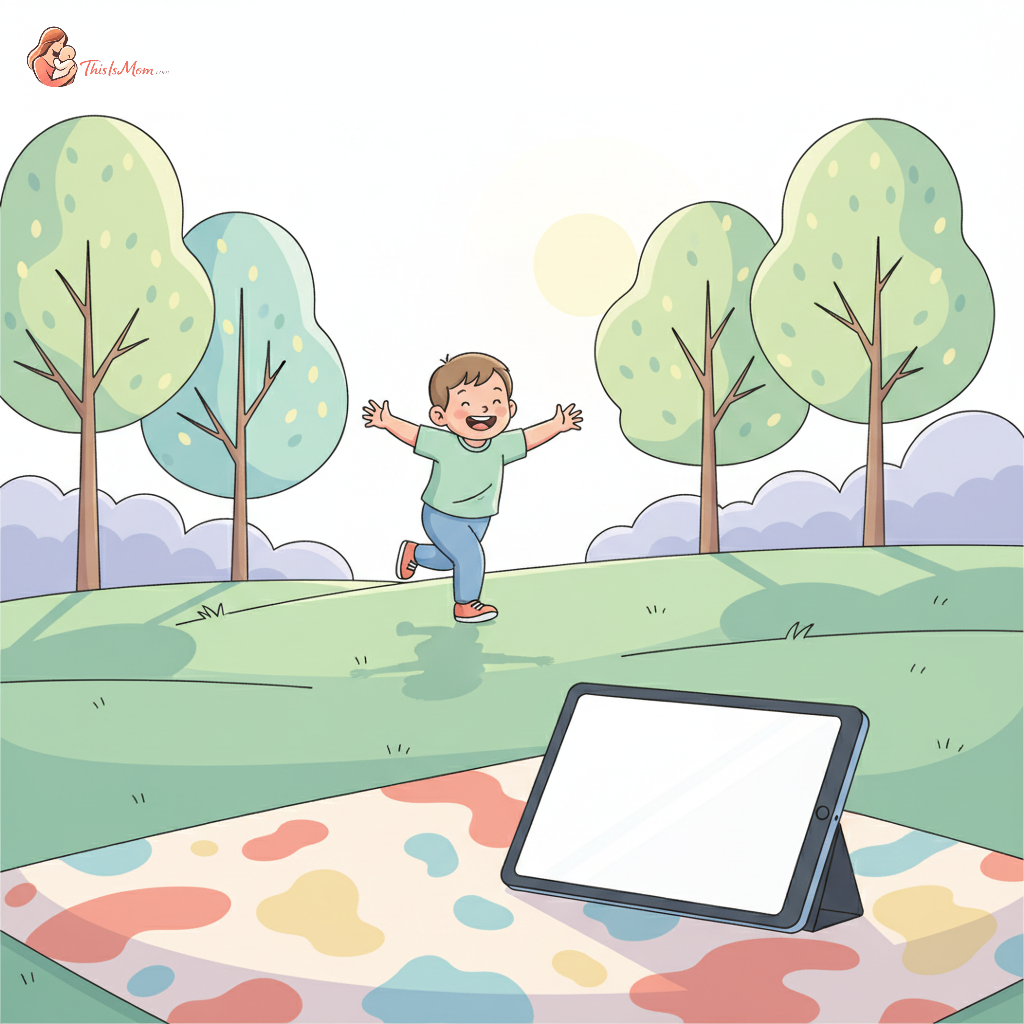
From Little Screen to Big Green: Smooth Screen Time to Outdoor Play Transitions
With my first, the moment the cartoon music stopped, it was like the sky fell. Cue the wails, the stomping, the absolute refusal to do anything but stare blankly at the dark screen. By my fourth, I've learned a few things. Looking back, the biggest shift wasn't about what I did, but how I approached the screen time to outdoor play transition.
The truth nobody tells you is that toddlers are little creatures of habit, and screens, with their immediate gratification and bright colors, are incredibly captivating. So, when you tell them it's time to switch gears, especially to something that might require a little more effort like tromping through the grass, their little brains can have a genuine moment of panic. It's not necessarily defiance; it's just their undeveloped executive function struggling to pivot. If I could tell my younger self one thing, it would be this: don't mistake resistance for a character flaw. It’s just a phase, and a manageable one at that.
Why Smooth Transitions Matter (And Why They're So Hard!)
Toddlers are wired for engagement. When they're absorbed in a video or game, their brains are in a high-stimulation zone. This can make the abrupt shift to a less immediately gratifying activity feel jarring. It’s like being pulled out of a thrilling dream.
Understanding this resistance is the first step. They’re not trying to be difficult; they're simply struggling with the sudden change. Their world is very much in the moment, and interrupting that flow can feel like a major disruption. This is where patience becomes your superpower.
Pre-Play Prep: Setting the Stage for Outdoor Fun
The trick to a good screen time to outdoor play transition often starts before you even turn the device off. With my eldest, I'd just yank it away. By my youngest, I learned the art of the gentle nudge.
My go-to is the "Five-Minute Warning." It’s a simple phrase, but it works wonders. "Hey sweetie, in five minutes, our show is going to be all done, and then we're going to go on an adventure outside!" I try to make the outdoor part sound exciting and specific, not just a generic "go play."
Involving your toddler in the next activity can also be a game-changer. Before turning off the screen, I might say, "Wow, that character found a big red ball! Do you think we can find a big red leaf outside?" This pre-commitment plants a seed for what's to come.
And the "off" button? Make it a shared moment. "Okay, let's press this together to say bye-bye to the screen!" This collaborative act can make it feel less like a punishment and more like a team effort.
Bridging the Gap: Creative Ways to Shift Focus
Sometimes, the best way to get toddlers outside is to use what they love as a springboard. Instead of just shutting down screen time, I try to connect it to the real world.
Discover your baby's phase
If they were watching a show about animals, I'll say, "That doggy was so cute! Let's go outside and see if we can hear any birds singing, just like in the video!" It’s about translating the digital world into tangible experiences. We can use screens as inspiration sometimes.
Sensory invitations are also incredibly effective. I might ask, "I wonder what sounds we'll hear outside today? Will it be windy? Will we hear a car? Or maybe a squirrel?" This sparks curiosity.
A quick, silly movement break can also do wonders. A "dance party to say goodbye to the screen" or a few minutes of jumping jacks before we open the back door can help burn off some of that contained energy and get their bodies ready for outdoor play.
Making Outdoor Play Irresistible (Even on a 'Meh' Day)
Let’s be honest, some days everyone feels a little ‘meh,’ including toddlers. On those days, getting outside requires a little extra magic. My secret weapon? The "mystery basket" of outdoor treasures.
Before we head out, I fill a small basket with things like a magnifying glass, a small container for collecting leaves, a crayon and paper, or even just a really cool-shaped stick I found. I don’t tell them what’s inside, just that it’s a surprise for our outdoor adventure.
Simple, open-ended play ideas are key. Don't overthink it. Let them dig in the dirt, splash in puddles (weather permitting!), or collect rocks. The goal is exploration, not a structured activity. For toddlers, simple is often best.
The power of observation is incredible, too. "Look at that ant carrying a crumb! What do you think it’s going to do with it?" or "Can you feel how soft the grass is?" Pointing out the little wonders can transform a routine outing into an exciting discovery mission.
Troubleshooting Common Toddler Transition Challenges
Even with the best preparation, tears happen. It’s part of toddlerhood, and if I could tell my younger self one thing, it would be to expect the meltdowns, not to dread them.
When tears strike, validate their feelings. "I know you're sad that the show is over, and you wanted to keep watching. It's okay to feel sad." Then, gently redirect. "But remember our adventure outside? We can talk about the show while we look for interesting leaves." The goal is to acknowledge their emotions without giving in to the demand to go back to the screen.
Consistency is key for establishing screen time routines for toddlers. Predictability helps them feel secure. Knowing that after X, Y will happen (like screen time followed by outdoor play) reduces anxiety.
And sometimes, you just have to call it a day. If the resistance is too fierce, or if you're feeling completely depleted, it's okay to say, "We're going to try again tomorrow," and retreat. Pushing too hard can backfire and create more resistance in the long run. Sometimes, giving them space and trying again later, or even the next day, is the wisest course of action.