AAP: When to Start Educational TV for Toddlers by Age
Unsure when to introduce educational TV? Learn the AAP's screen time recommendations for toddlers, including age guidelines, quality content, and co-viewing tips.
When Does AAP Recommend Educational TV for Toddlers? A Guide
Your toddler is reaching for the remote, and you're wondering when it's okay to introduce them to the world of "educational" television. It’s a common question, balancing modern life with expert advice. The American Academy of Pediatrics (AAP) offers clear guidance on screen time for young children, and understanding it can help you make informed decisions. This article will break down what the research suggests about when and how to introduce educational television, focusing on quality and interaction, rather than just the clock. We'll explore the AAP's core recommendations for toddlers and address some common concerns parents have.
Understanding the AAP's Stance on Screen Time for Young Children
The American Academy of Pediatrics (AAP) takes a generally cautious approach to screen time for very young children. This isn't to say all screen time is bad, but rather that evidence shows a strong link between early, excessive, or unmonitored screen exposure and potential developmental impacts.
Why the AAP Takes a Cautious Approach
The early years are a critical period for brain development. During this time, children learn best through active, hands-on exploration and direct interaction with their caregivers. The AAP's stance is rooted in ensuring that screen time doesn’t displace these crucial developmental activities.
They emphasize that passive consumption of media can limit opportunities for language development, problem-solving, and social-emotional growth. The focus is on protecting the foundational stages of learning.
Key Takeaways from Their General Screen Time Guidelines
The AAP's guidelines are tiered by age, acknowledging that developmental needs change rapidly. The core principles remain consistent:
- Prioritize real-world interaction and play.
- Ensure media content is high-quality and age-appropriate.
- Co-view and engage with children during screen time.
- Create a media-free environment in bedrooms and during meals.
These recommendations are designed to help families find a healthy balance in a digitally integrated world. They aim to provide a framework for responsible media use.
Decoding 'Educational TV' for Toddlers: What the AAP Says
When we talk about "educational TV" for toddlers, the AAP's recommendations become quite specific, especially regarding the youngest age groups.
The Critical Age: Screen Time Recommendations for Under 18 Months
According to the AAP, for babies under 18 months of age, screen media should be avoided entirely, with the exception of video chatting with family members. The guidelines suggest that this age group learns best through direct sensory experiences and interaction with people.
This means that even content marketed as highly educational isn't generally recommended for babies younger than 18 months. The focus should be on tummy time, exploring textures, and interacting with caregivers.
Screen Time for 18-24 Months: A Carefully Guided Introduction
For children between 18 and 24 months of age, the AAP suggests that parents can introduce high-quality programming. However, this introduction should be done with careful supervision.
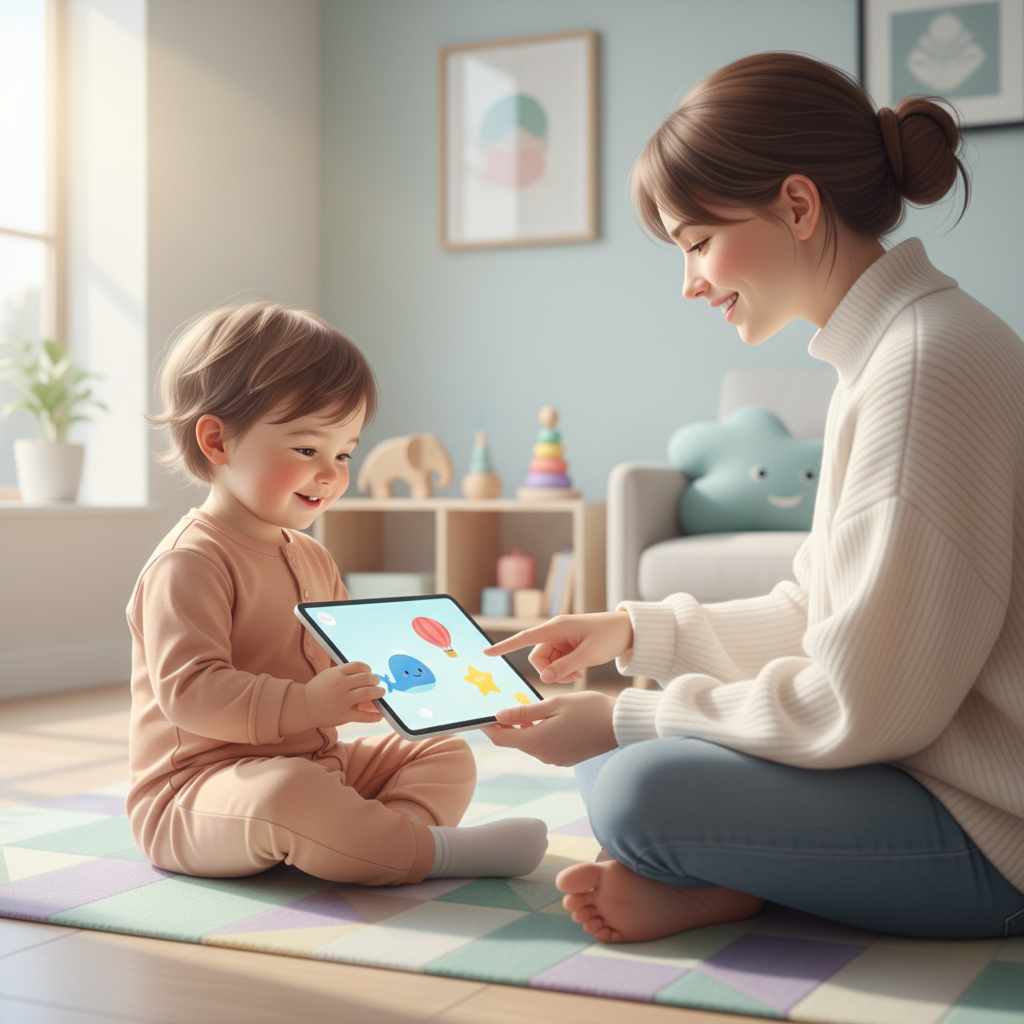
It’s recommended that parents co-view the media with their children. This means watching together, explaining what is happening on screen, and connecting it to their real-world experiences. This interactive approach helps children understand and benefit from the content.
Educational Screen Time for 2-5 Year Olds: Quality Over Quantity
Once children reach 2 to 5 years of age, the AAP recommends limiting screen use to 1 hour per day of high-quality programming. Again, co-viewing is strongly encouraged.
The emphasis shifts to the quality of the content. Parents should choose programs that are specifically designed to teach children, feature slow pacing, and present clear learning messages.
Beyond the Clock: What 'Quality Content' Really Means
The AAP's advice goes beyond just setting a timer; it delves into the very nature of the content your child consumes.
Identifying Truly Educational Programs
What makes a program "educational" in the eyes of the AAP? It's about content that is:
- Age-appropriate: Content that matches a child's developmental stage.
- Engaging: Programs that hold a child's attention without being overstimulating.
- Slow-paced: Allowing children time to process information.
- Purposeful: Designed to teach specific concepts, like letters, numbers, or social skills.
Programs like "Sesame Street" and, more recently, those featuring characters like "Ms. Rachel" (specifically the "Songs for Littles" series), are often cited by parents as examples of content that aligns with these principles due to their interactive nature and focus on early childhood development. These often incorporate repetition, clear language, and opportunities for imitation.
The Importance of Co-viewing and Interaction
Simply turning on the TV isn't enough; active participation is key. The AAP stresses that parents should watch with their children. This co-viewing allows you to:
- Explain concepts: Clarify what’s happening on screen.
- Extend learning: Connect what they see to their own lives.
- Encourage dialogue: Ask questions and foster comprehension.
- Ensure age-appropriateness: Monitor content and your child's reaction.
This collaborative approach transforms passive viewing into an active learning experience.
Discover your baby's phase
What to Avoid in Children's Programming
Not all media is created equal. The AAP advises parents to steer clear of content that is:
- Fast-paced: Rapid scene changes and loud sounds can be overstimulating.
- Violent or aggressive: Even cartoonish depictions can be upsetting or confusing.
- Full of advertising: Young children have difficulty distinguishing between programs and commercials.
- Lacking educational or social value: Mere entertainment without a learning component.
Choosing wisely ensures that screen time is a positive addition, not a developmental obstacle.
Navigating Common Concerns About Toddler Screen Time
Many parents worry about the potential downsides of screen time for their little ones. Let's address some of these concerns based on current research and AAP recommendations.
Potential Side Effects of Too Much Screen Time for Babies and Toddlers
The primary concern highlighted by the AAP and supported by research relates to displacement. When screen time takes the place of essential activities, there can be impacts on development.
Excessive screen time may be linked to:
- Delayed language development: Less face-to-face interaction means fewer opportunities for vocalization and language acquisition.
- Attention issues: Fast-paced content might affect a child's ability to focus on slower, real-world tasks.
- Behavioral problems: Some studies suggest a correlation between high screen exposure and increased irritability or acting out.
- Poorer sleep quality: The blue light emitted from screens can interfere with melatonin production.
These are potential risks, and the extent to which they manifest often depends on the amount, type, and context of the screen use.
Addressing the 'Babies Watching TV at 3-6 Months' Question
As noted in the AAP guidelines, screen time is not recommended for babies under 18 months, with video calls being the exception. Therefore, intentionally allowing babies at the 3-6 month stage to watch TV is generally advised against.
During these early months, the AAP emphasizes the importance of direct interaction for cognitive, social, and emotional development. Screen time at this age offers little benefit and can potentially interfere with crucial bonding and learning experiences.
Can Screen Time Cause Autism? Setting the Record Straight
It's important to clarify that the AAP and scientific research do not state that screen time causes autism. Autism spectrum disorder (ASD) is a complex neurodevelopmental condition with genetic and environmental factors at play, the origins of which are still being studied.
However, some research has explored correlations between very early, high levels of screen exposure and later diagnoses. It's crucial to understand that correlation does not equal causation. The AAP's guidelines are about promoting optimal development for all children, and their recommendations on limiting screen time are rooted in this principle, independent of specific diagnoses like autism.
Practical Tips for Parents: Implementing AAP Guidelines
The AAP's recommendations offer a solid framework, but translating them into daily life with a toddler can be a learning process.
Creating a Family Media Plan
The AAP strongly encourages families to develop a family media plan. This involves discussing and agreeing upon rules for media use within your household. Consider questions like:
- When and where can media be used?
- What types of content are acceptable?
- How much time is allotted for screen use?
- What will you do to ensure co-viewing and interaction?
Having a plan can help ensure consistency and set clear expectations for everyone. You can find resources and templates on the AAP's website.
Prioritizing Interactive Play and Real-World Interactions
Remember, screen time should complement, not replace, essential childhood experiences. Make a conscious effort to prioritize:
- Active play: Running, jumping, building, imaginative games.
- Reading together: Books are a fantastic tool for language development and bonding.
- Social interaction: Playdates with peers and quality time with family.
- Outdoor exploration: Connecting with nature and the environment.
These activities are foundational for healthy development.
When to Consider Exceptions
While the AAP provides core guidelines, there are situations where a slight deviation might be understandable and even beneficial for a child.
- Video calls: Connecting with distant loved ones is a valuable use of screen time.
- Travel: In-flight entertainment or long car rides can be lifesavers. how-to-safely-introduce-peanuts-baby-eczema-mp9d9bqz
- Learning specific skills: Some apps or programs might offer unique learning opportunities that are hard to replicate otherwise.
The key is to remain mindful and intentional about these exceptions, ensuring they are controlled and balanced with other activities.
Navigating the world of screens with young children involves ongoing learning and adaptation. By grounding your approach in the evidence-based recommendations from organizations like the AAP, you can make choices that support your child's healthy development while still embracing the technological realities of our time. Always remember, your pediatrician is your best partner in understanding what's right for your specific child.