Best First Finger Foods for Baby with No Teeth at 7 Months
Discover safe, mashable finger foods perfect for your 7-month-old teething baby. Learn what to offer and what to avoid for healthy, confident self-feeding.
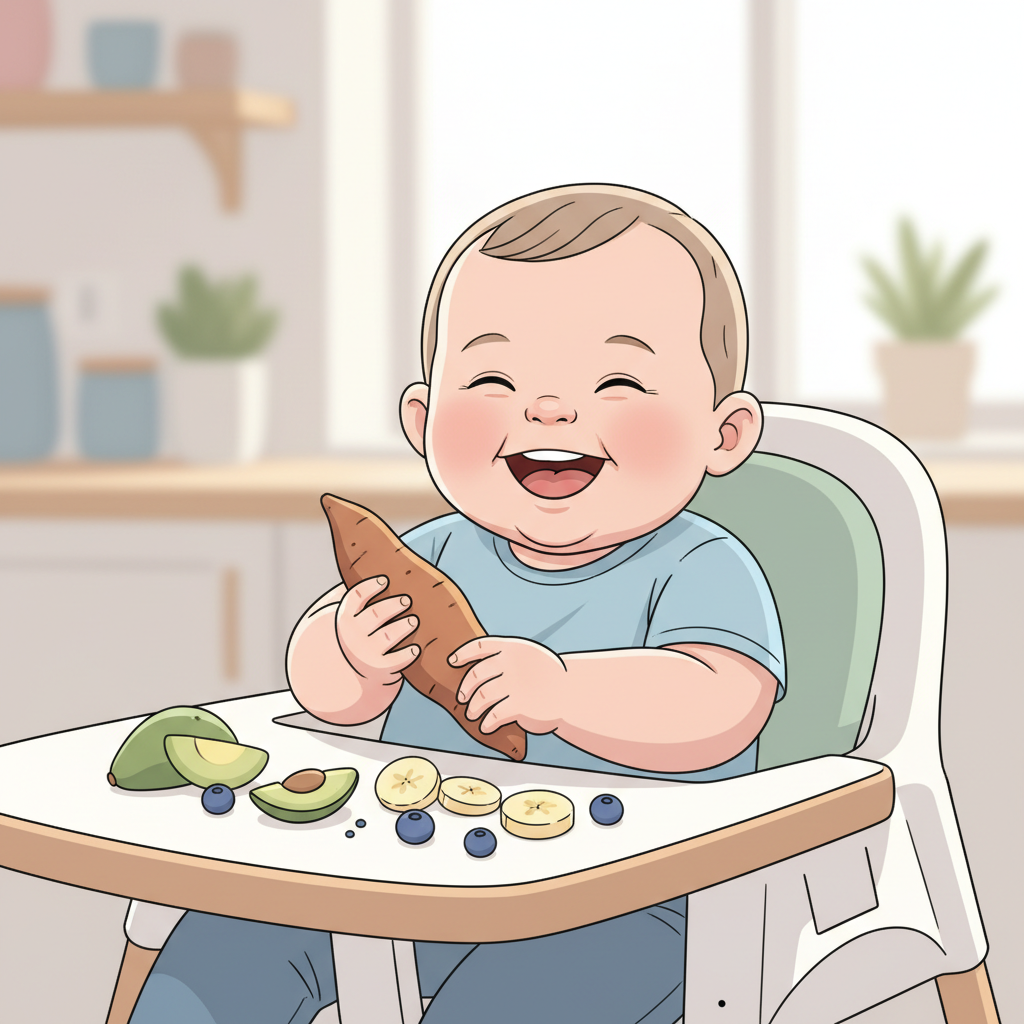
Feeding Your Toothless 7-Month-Old: The Best First Finger Foods
Your baby is around seven months old and beginning to interest in food. Many parents wonder if the absence of teeth means their baby can't enjoy finger foods. Thankfully, a lack of teeth doesn't prevent your baby from exploring the exciting world of self-feeding. This guide will help you navigate this process with confidence, focusing on safety and nutrition.
Is Your 7-Month-Old Ready for Finger Foods?
Before diving into specific food choices, assess your baby's readiness for self-feeding. The American Academy of Pediatrics (AAP) suggests that babies are generally ready to start solids around six months of age, but individual development varies.
Signs Your Baby is Ready for Self-Feeding
The AAP outlines several developmental milestones indicating readiness for solid foods, which also apply to finger foods:
- Good head and neck control: They can hold their head up steadily and sit independently with support.
- Loss of the tongue-thrust reflex: This reflex, which naturally pushes food out of the mouth, has diminished, allowing them to move food to the back of their throat.
- Interest in food: They watch you eat, reach for food, or open their mouth when food is offered.
- Ability to grasp objects: They can reach for and pick up small items, crucial for self-feeding.
Understanding Baby-Led Weaning Basics
For many families introducing finger foods, baby-led weaning (BLW) is a popular approach. BLW involves offering babies whole, appropriately prepared foods that they can feed themselves, rather than spoon-feeding purees. Research suggests that BLW can help babies develop fine motor skills and explore different textures and tastes from the start. It prioritizes offering nutrient-dense foods in shapes and sizes that babies can manage safely.
Can You Offer Finger Foods to a Baby With No Teeth?
Absolutely. Teeth are not a prerequisite for eating finger foods. Babies have surprisingly strong gums and can manage many soft textures, even without teeth.
Why Teeth Aren't Necessary for Finger Foods
The primary mechanism babies use to manage food is not chewing with teeth, but rather mashing it against their gums and the roof of their mouth. Their tongue also plays a significant role in breaking down and moving food. As long as the food is prepared to a soft consistency, babies without teeth can effectively process it.
The Importance of Safe Textures
The key to offering finger foods to a toothless baby lies in selecting the right textures. Foods need to be soft enough to be easily mashed. The Centers for Disease Control and Prevention (CDC) emphasizes choking prevention as a top priority when introducing solids and finger foods. This means avoiding hard, round, or sticky foods that pose a higher risk.
Best First Finger Foods for Baby With No Teeth at 7 Months
When selecting the best first finger foods for baby with no teeth at 7 months, prioritize soft, easily mashable options cut into appropriate sizes. Here are some excellent choices to get you started:
Soft Fruit Heroes: Bananas, Avocados, and Berries
Fruits are often a natural starting point due to their inherent softness and appealing sweetness.
- Bananas: Cut into thick, finger-sized strips, ripe bananas are incredibly soft and easy for babies to gum.
- Avocados: This creamy fruit is packed with healthy fats. Offer ripe avocado cut into wedges or diced into small, manageable pieces.
- Berries: Larger berries like strawberries can be quartered or halved. Raspberries are naturally small and soft. Blueberries should be smashed or quartered to prevent choking.
Tender Veggie Stars: Sweet Potatoes, Peas, and Broccoli
Cooked vegetables can be a nutrient powerhouse. The goal is to make them tender enough to mash.
- Sweet Potatoes: Roasted or steamed sweet potato chunks are wonderfully soft. Ensure they are cooked until fork-tender.
- Peas: Soft-cooked peas can be offered whole or slightly mashed for easier handling.
- Broccoli and Cauliflower Florets: Steamed until very soft, these florets offer a handle for babies to grasp. You can also mash them slightly.
Protein-Packed Options: Lentils, Eggs, and Soft Meats
Discover your baby's phase
Introducing proteins is essential for growth and development. If your toddler is constipated, check out these natural fixes when starting solids.
- Lentils: Well-cooked and mashed lentils are a great source of iron and protein.
- Eggs: Scrambled eggs or hard-boiled egg yolks, mashed or crumbled, are easily digestible and nutrient-rich.
- Soft Meats: Finely shredded or ground chicken or beef, cooked until very tender and moist, can be offered.
Grain & Carb Choices: Pasta, Toast, and Oatie Fingers
These provide energy and are often favorites with babies.
- Pasta: Cooked pasta shapes (like rotini or penne) can be offered. Ensure they are cooked well beyond al dente, until very soft.
- Toast: Whole-wheat toast, lightly toasted and cut into strips, offers a slightly firmer texture that babies can gum.
- Oatmeal: Thick, cooked oatmeal can be spread thinly onto a tray or shaped into "oatie fingers" for babies to pick up.
Choking Hazards: What to Avoid and How to Prepare Foods Safely
Choking is a significant concern when introducing finger foods, regardless of whether your baby has teeth. Following these guidelines can significantly reduce the risk.
The 'Squish Test': Your Go-To for Food Safety
A simple rule of thumb is the "squish test." When you pick up a piece of food, can you easily squish it between your fingers? If it holds its shape or is hard and difficult to break down, it's likely not safe for your baby. All foods should be cooked until soft and easily mashed.
Mastering the Right Size and Shape
Properly sized and shaped food helps prevent choking.
- Size: Foods should generally be cut into pieces no larger than your fingertip or about the size of your pinky nail.
- Shape: Long, finger-like shapes (about the size of an adult finger) are often easiest for babies to grasp and maneuver into their mouths. Round foods like whole grapes, cherry tomatoes, or hot dog pieces are considered high-risk choking hazards and should be avoided or carefully prepared (e.g., quartered lengthwise).
Foods to Absolutely Avoid for Babies Under One
Certain foods pose a higher risk of choking or are not recommended for babies under 12 months according to the CDC and AAP. These include:
- Whole nuts and seeds
- Chunks of meat or cheese (unless very finely minced or shredded)
- Raw hard vegetables (like carrot sticks)
- Popcorn
- Suckers and hard candies
- Grapes, cherry tomatoes, and other small, round fruits or vegetables (unless quartered lengthwise)
- Peanut butter in large globs (can be spread thinly on toast or mixed into other foods)
Making Mealtime Fun and Messy (in a good way!)
Introducing solids and finger foods is an adventure for both you and your baby. Embrace the mess as a sign of exploration.
Setting Up a Safe Eating Space
Ensure a safe environment for feeding. This means your baby should always be seated upright in a high chair with a secure harness. Never allow them to eat while lying down, in a car seat, or unsupervised. Consider maintaining a consistent routine across daycare and home.
Encouraging Exploration and Independent Eating
Let your baby lead the way. Offer a variety of safe finger foods and allow them to explore textures, tastes, and smells at their own pace. It's okay if they play with the food or don't eat much initially. The goal is exposure and building a positive relationship with food.
When to Offer Water with Meals
While milk (breast milk or formula) remains the primary source of nutrition for babies under one, offering a small amount of water with solid meals is appropriate. According to the AAP, water helps with hydration and can aid in digestion. Offer it in an open cup or a sippy cup designed for water.
This journey of introducing finger foods for your 7-month-old baby with no teeth is one of discovery. By prioritizing safety, understanding textures, and offering a variety of nutrient-dense options from sources like the AAP and CDC, you can help your baby develop healthy eating habits from the very beginning.