Introduce Screen-Free Calm Down Corners for Toddlers
Learn how to create and introduce an effective screen-free calm down corner for your toddler to help them manage big emotions and develop self-regulation skills.
How to Introduce Screen-Free Calm Down Corners for Toddlers
Your toddler is having a meltdown over a blue crayon when all the others are red. Big emotions are swirling, and you're looking for a way to help them navigate the storm. This is where a screen-free calm down corner can become a game-changer for both your toddler and for you.
Research clearly indicates that early childhood is a crucial period for developing self-regulation skills. A designated calm down spot provides a tangible tool for teaching toddlers how to manage big feelings independently.
The Science of Big Feelings and Little People
Toddlers experience the world with incredible intensity. Their brains are still developing the pathways for emotional control. When a toddler feels overwhelmed, frustrated, or angry, they often lack the skills to calm themselves down.
The American Academy of Pediatrics (AAP) emphasizes that supportive environments can help children learn to manage their emotions effectively. A calm down corner offers just that – a safe, predictable space designed to soothe and reset.
This approach aligns with positive discipline principles, focusing on teaching and guiding rather than punishing. It's about equipping your child with coping strategies, not just stopping a behavior.
Crafting Your Toddler's Peaceful Nook
The goal is to create a sanctuary that invites calm, not one that feels like another imposed rule. Think soft, comforting, and engaging without being overstimulating.
Location, Location, Location
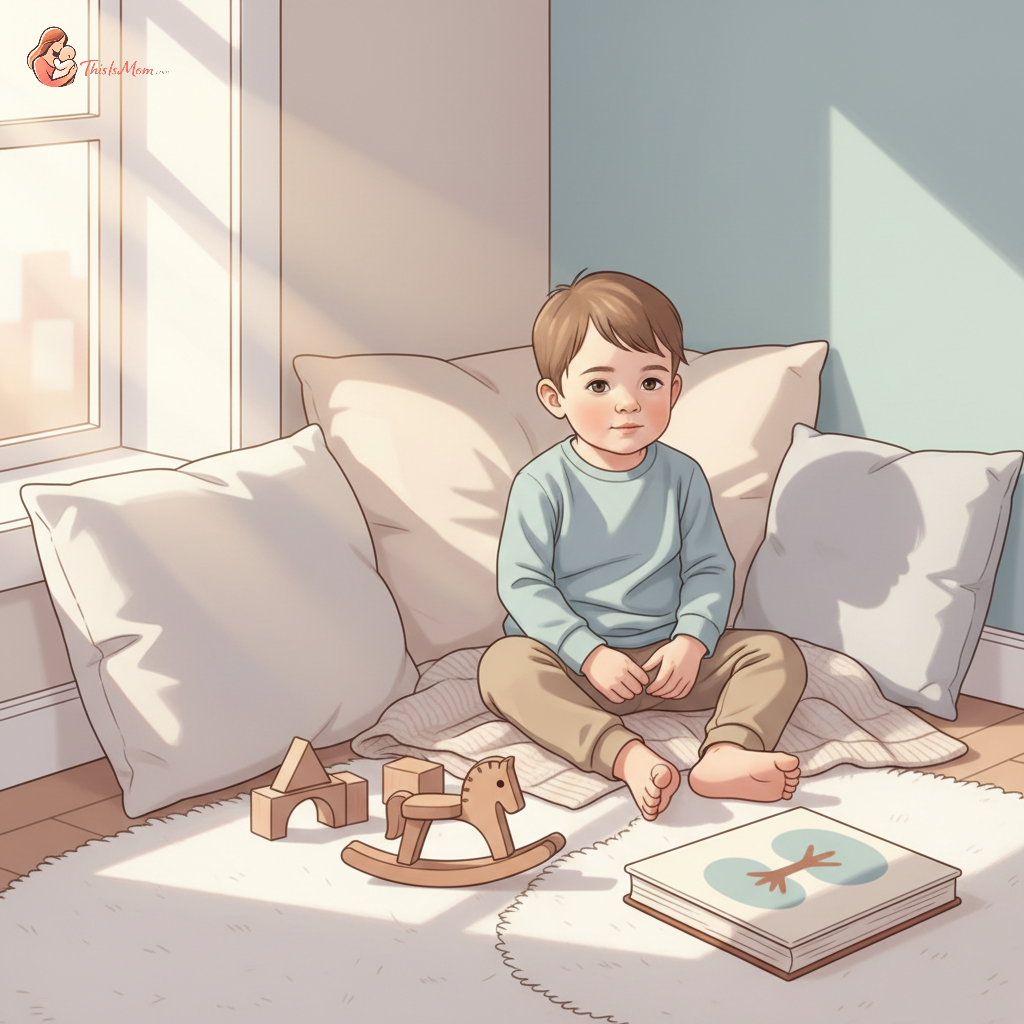
Choose a spot that's relatively quiet, away from the main hustle and bustle of the house. It should be safe, easily accessible for your toddler, and ideally, visible to you so you can offer support when needed. A corner of their bedroom, a quiet nook in the playroom, or even a cozy spot in the living room can work.
Sensory Delights, Minus the Screens
The "screen-free" aspect is key here. Instead of a tablet, think about what truly soothes and engages young children:
- Tactile Tools: Soft blankets, plush pillows, beanbags, a weighted lap pad, or textured sensory balls can offer comfort and grounding.
- Visuals: Age-appropriate books with calming illustrations, soft stuffed animals, or a small lava lamp (supervised) can provide a gentle focus.
- Auditory: A small, battery-operated music box with quiet melodies or a gentle chime. Avoid anything that makes loud or sudden noises.
- Olfactory (with caution): A subtle, child-safe essential oil diffuser with calming scents like lavender, used sparingly and with guidance from your pediatrician, can add another layer of sensory input.
Comfort is Paramount
What makes a space feel truly restful? For a toddler, it often includes familiar and comforting items:
- A favorite soft blanket or lovey.
- A few picture books about feelings or calming activities.
- Pillows for leaning or cuddling.
- Simple, quiet toys like building blocks (soft ones are great!) or dolls.
Adaptability for Life on the Go
While a dedicated corner is wonderful, sometimes life requires flexibility. Consider creating a "calm down kit" in a small basket or box. This portable version can include a few favorite sensory items and a book, ready to be brought to another room or even on a short trip.
Bringing the Calm Down Corner to Life
Introducing this new space requires a gentle, positive approach. It’s not about telling your toddler they must use it when upset, but rather inviting them to explore its benefits.
The Gentle Introduction
Introduce the calm down corner during a relaxed, happy time. Avoid bringing it up when your toddler is already upset or having a meltdown.
Explaining the "Why"
How you explain its purpose matters. Use simple, positive language. You can say something like: "This is your special cozy spot where you can go when you have big feelings, like when you're feeling mad or sad. It's a place to feel calm and happy again."
Show them the items inside and talk about how they can help. "This soft pillow is for cuddling when you need a hug from yourself," or "This book has quiet stories to help your body feel still."
Discover your baby's phase
Practice and Positive Reinforcement
Practice using the space when your toddler is calm. You can role-play: "Let's pretend we're feeling a little bit frustrated. Where can we go to feel better?" Gently guide them to the corner and explore the items together.
Offer praise when they use it voluntarily or when you guide them there and they engage positively. "I see you're using your cozy corner to take some deep breaths. That's a great way to help your body feel calm!"
Setting Gentle Boundaries
When to guide and when to observe is a balance. If your toddler is having a difficult moment, you can suggest, "It looks like you're having some big feelings. Would you like to go to your cozy corner to help yourself feel better?"
If they go willingly, let them explore. If they resist, don't force it. The goal is to associate the space with positive coping, not with punishment.
Ensuring Lasting Comfort and Coping
A calm down corner is most effective when it's a consistently available resource, not just a last resort for meltdowns.
The Power of Routine
Consistency is your best friend. Regularly mention the calm down corner as a positive option during calm moments. Point out its benefits: "Wow, it's noisy in here! Maybe we can take a quiet moment in our cozy corner." This helps build the association with peace and self-soothing.
Safety First
Toddler-proofing your chosen space is essential. Ensure there are no small objects that could be choking hazards, no accessible electrical cords, and that any furniture is stable. For young toddlers, consider padding corners.
Growing with Your Child
As your child grows, their needs will evolve. What’s calming for a two-year-old might not be for a three-year-old. Periodically reassess the contents of the corner:
- Younger toddlers might benefit from sensory bottles, soft toys, and simple board books.
- Older toddlers might enjoy drawing supplies, more complex picture books, or even a simple puzzle.
The core concept of a safe, quiet space remains the same, but the tools within it can adapt.
Knowing When to Seek Support
While a calm down corner is a powerful tool for teaching toddlers self-regulation, it’s not a substitute for professional guidance. If your toddler experiences frequent, intense tantrums, significant emotional distress, or if you have concerns about their behavior, it’s always wise to consult with your pediatrician or a child development specialist. They can offer personalized strategies and support.
Frequently Asked Questions About Screen-Free Calm Down Corners
What if my child refuses to go to the corner?
This is common! Forcing a child into the space can make them associate it with negativity. Instead, try modeling. Go to the corner yourself and say, "Mommy needs a quiet moment to feel calm." You can also try "pairing" – sit near the corner with a preferred toy and invite them to join you there for a few minutes. The goal is to make it inviting, not obligatory.
How long should a toddler stay in the calm down corner?
The duration is less important than the intention. It's not a timeout where a clock is ticking. A toddler might spend a minute, or five, or even ten minutes. The key is that they are using the space to regulate their emotions. When they emerge looking calmer and more centered, that's the signal they're ready. There's no set time limit.
Can a calm down corner help with screen time transitions?
Absolutely. Many children find it difficult to disengage from screens. A calm down corner can serve as a designated "reset" space after screen time. "Okay, screen time is finished. Let's go to our cozy corner for a few minutes to help our brains switch gears and feel calm." This can create a smoother transition and help them wind down from the stimulation of the screen. This is a valuable strategy when you need to manage toddler screen time in various situations.