Screen Time Alternatives for Toddlers Indoors
Discover engaging, screen-free activities for toddlers when outdoor play isn't an option. Foster creativity, learning, and connection with these indoor ideas.
When the Sky Says No: Screen-Free Toddler Activities Indoors
Before reaching for the tablet, take a moment to observe your child. What are their hands naturally drawn to? What sparks a flicker of curiosity in their eyes? On days when bad weather keeps us cooped up, it's easy to default to screens. However, the richest learning often happens through active engagement, not passive consumption. Let's explore how to fill those indoor hours with engaging, screen-free toddler activities, especially when outdoor play isn't an option. These alternatives foster genuine connection and development.
The Heart of Indoor Play: Why Screen-Free Matters
Limiting screen time for toddlers, particularly during their formative years, offers a wealth of benefits that ripple through their development. The American Academy of Pediatrics (AAP) often highlights how excessive screen exposure can impact a child's language acquisition, attention span, and social-emotional growth. Instead, engaging in hands-on, interactive play is crucial for their growth. The impact of screen light on toddler sleep and aggressive behavior is a concern for many parents.
Indoor play provides a vital outlet for toddlers to explore their environment safely and develop essential skills. It's where they begin to understand cause and effect, refine fine motor skills, and build their first understanding of spatial relationships. This active engagement nurtures their absorbent minds, allowing them to construct knowledge through direct experience. When we offer rich indoor environments, we're not just passing the time; we're actively supporting their journey of discovery.
Invitations to Create: Low-Prep Play for Little Hands
One of the most beautiful aspects of Montessori-inspired parenting is the belief that children are inherently capable and driven to learn. This philosophy shines through in simple, low-cost activities that can be prepared with minimal fuss, perfect for those rainy day indoor activities.
Sensory Bins and Playdough Adventures
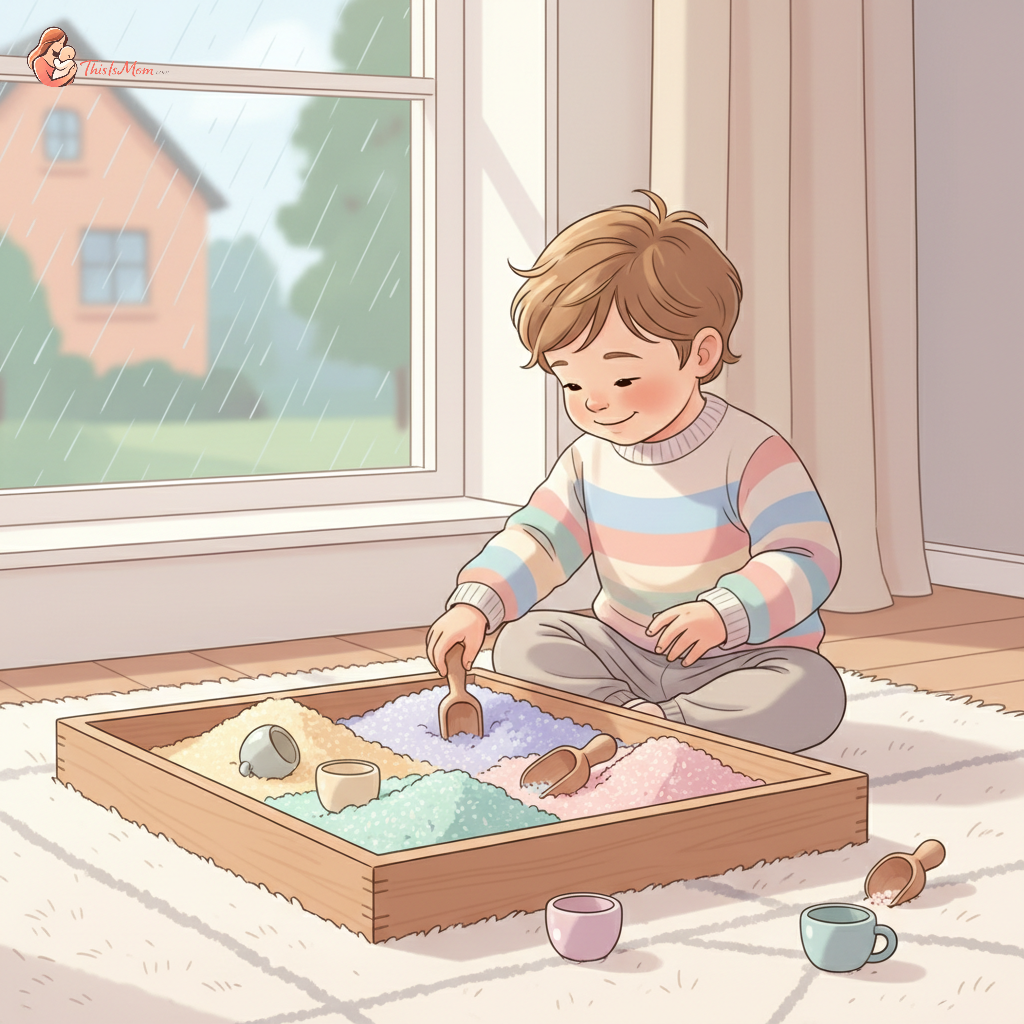
Sensory bins are a marvel for toddlers, offering a contained space for exploration that can be tailored to almost any theme. For a rainy day, consider filling a bin with dried pasta, rice, or oats. Add scoops, small containers, and toy animals. The act of scooping, pouring, and sifting engages their senses and develops fine motor control.
Homemade playdough is another incredible tool. You can make a batch with flour, salt, water, and a touch of oil, adding food coloring for vibrant hues. Provide child-safe tools like cookie cutters, plastic knives, or even just rolling pins. This tactile experience is wonderfully calming and sparks creativity. The exploration of texture and manipulation helps build hand strength, preparing them for writing later on.
Building Forts and Blanket Tunnels
There's something magical about a fort. With just a few chairs, some blankets, and maybe a clothespin or two, you can transform your living room into an enchanted castle or a cozy den. This activity encourages imagination and problem-solving as the child navigates their new space.
Draping blankets over furniture creates tunnels and enclosed areas that toddlers love to crawl through. This provides fantastic gross motor practice and a sense of adventure within the safety of your home. It’s a simple way to encourage movement when the weather keeps you inside.
Sticker Art and Chunky Crayon Masterpieces
While painting can be messy, stickers offer a less-involved artistic outlet. Provide a large sheet of paper and a variety of stickers. The act of peeling and placing stickers helps develop the pincer grasp, essential for fine motor development. This is a wonderful screen-free toddler play activity that requires little supervision.
Chunky crayons are perfect for little hands to grasp. Offer large sheets of paper and let the child explore. Don't focus on the outcome; instead, celebrate the process. They are learning to make marks, experiment with color, and express themselves in a concrete way. This is a foundational step in their creative journey.
Music and Movement Dance Parties
Turn up some music and let loose! Toddlers have an innate rhythm and a love for movement. A spontaneous dance party is a fantastic way to burn energy and express joy. It also helps with coordination and listening skills.
You can add props like scarves or ribbons to make it even more engaging. Try different types of music—classical, folk, children’s songs—and observe how their movements change. This is a joyful way to connect and provides excellent toddler activities for cold weather when outdoor running isn't possible.
Everyday Objects, Extraordinary Play
One of the most rewarding aspects of a Montessori-inspired approach is recognizing the potential for learning in the most ordinary items around our homes. You don't need a dedicated playroom filled with specialty toys; everyday objects can become the most engaging invitations for your toddler.
Laundry Basket Adventures: Sailing, Sorting, and Hiding
A laundry basket can be so much more than a place for dirty clothes! It can transform into a boat sailing on imaginary seas, a car for a teddy bear, or a cozy resting spot. The child can push it, climb in and out of it, and fill it with other objects.
Sorting toys, clothes, or even different types of balls into and out of the laundry basket provides a practical life skill disguised as play. This simple activity helps with categorization and fine motor skills. It's a perfect example of a no-screen toddler play activity that uses what you already have.
Cardboard Box Transformations: Cars, Houses, and Tunnels
Cardboard boxes are a treasure trove of imaginative possibilities. A large box can become a car, a rocket ship, a playhouse, or a tunnel to crawl through. Provide child-safe markers or crayons and let them decorate their creation.
Discover your baby's phase
This encourages problem-solving and spatial reasoning as they envision what the box can become. Even smaller boxes can be stacked to build towers or used for various sorting and filling activities. These are fantastic for creative indoor play for 2-year-olds and older.
Kitchen Utensil Percussion and 'Cooking' Play
The kitchen offers a goldmine of safe, engaging items for toddlers. A collection of plastic bowls, wooden spoons, and whisks can become a symphony orchestra. Let them experiment with different sounds and rhythms.
Similarly, a designated area with empty food containers, safe utensils, and perhaps some water can become a 'kitchen' for pretend cooking. This allows for imitation of adult activities, which is a crucial part of their learning. It’s a natural way for them to engage with practical life skills.
Quiet Engagement for Little Minds
While active play is essential, so too are moments of quiet focus. Providing opportunities for calmer, more introspective activities supports cognitive development and concentration. These can be some of the most effective indoor activities for toddlers when weather prevents outdoor play, offering a change of pace.
Age-Appropriate Puzzles and Shape Sorters
Puzzles designed for toddlers, with large, chunky pieces and simple knob handles, are excellent for developing problem-solving skills and fine motor coordination. Shape sorters, where the child must match a shape to its corresponding hole, teach geometric concepts and spatial reasoning.
The repetition involved in these activities is not boredom; it's how the absorbent mind consolidates learning. Watching the child persist with a puzzle, trying different pieces, is a beautiful display of their innate drive to master new skills.
Reading Nooks and Storytime Adventures
Creating a cozy reading nook with soft cushions and a small bookshelf can make storytime even more inviting. Toddlers learn language, develop listening comprehension, and build a lifelong love of reading through shared book experiences.
Allow the child to choose books and encourage them to "read" to you, pointing at pictures and making up their own stories. This empowers them and builds confidence. Even a simple pile of books on the floor can become an invitation to explore.
Simple Matching Games and Color Sorting
You don't need fancy materials for these engaging activities. Use colorful blocks, pompoms, or even different colored socks. Ask your toddler to sort them into groups by color. This helps develop their ability to classify and recognize patterns.
Simple matching games, where you lay out a few objects and ask the child to find the pair, also support cognitive development and visual discrimination. These activities are grounding and can help transition a child from more boisterous play to a calmer state.
Embracing the Pace of Indoor Play
There will be days when the energy feels high, and the desire for independent play is strong. Other days, your toddler might stick close, seeking more connection and guidance. Both are perfectly normal.
Embracing Independent Play (and Knowing When to Step In)
The goal isn't to have your child entertained every second. Offering a prepared environment with engaging materials allows them the space to explore and problem-solve on their own. Observe when they are deeply engaged, and resist the urge to interrupt unless invited or they show signs of frustration that they can’t overcome.
However, connection is also key. If you see your child struggling or seeking you out, be present. Join their play for a few minutes, offer a word of encouragement, or simply sit beside them. This balance of independent exploration and connected presence is vital.
The Power of Observation: What Your Toddler is Really Learning
When we step back and truly observe, we see what our children are absorbing from their environment and their play. That toddler meticulously pouring water from one container to another for the tenth time? They are mastering fine motor control, understanding volume, and developing focus. The child who spends 20 minutes arranging blocks by size? They are building early mathematical understanding.
These quiet moments of exploration are rich with learning. Trust that when you offer thoughtful invitations and a safe space, the child will engage in the activities that meet their developmental needs.
The Reset: Fresh Air When Possible
Even on the coldest or rainiest days, sometimes a short burst of fresh air can work wonders. If it's not actively dangerous, bundling up for a quick walk around the block, standing on the porch, or even just opening the windows wide can be a refreshing reset.
The change of environment, the new sights and sounds, can revitalize a child who is feeling restless. It’s a reminder that even when confined indoors, the world outside is still there, waiting for our return.