Stroller Wagon vs. Double Stroller: For Toddlers Under 2
Deciding between a stroller wagon vs. double stroller for toddlers under 2? This guide breaks down the pros & cons to help you choose the best fit for your family's needs and lifestyle.
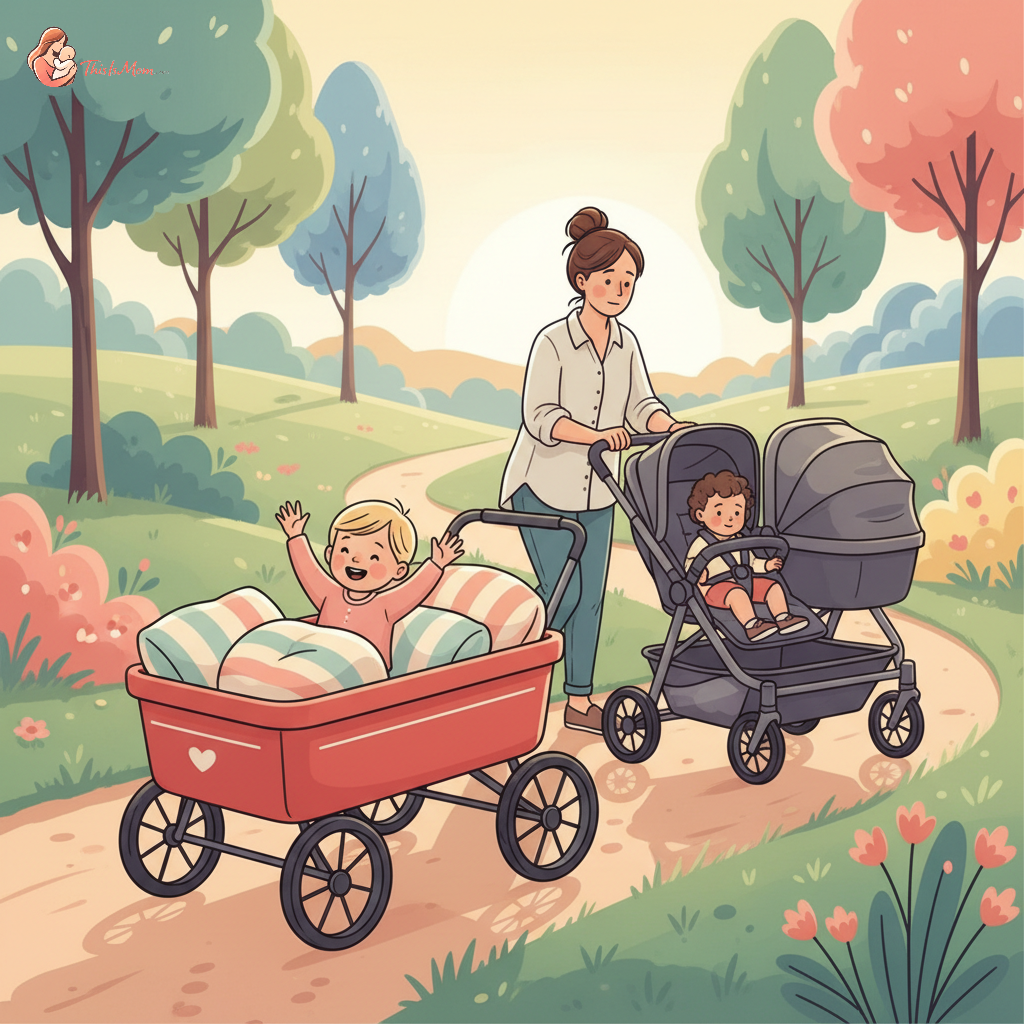
Stroller Wagon vs. A Double Stroller for Toddlers Under 2: Your Decision Guide
In just 5 minutes, you'll know exactly which to buy when navigating the stroller wagon vs. double stroller for toddlers under 2 decision. I've spent countless hours wrestling these rides through grocery store aisles, up curbs, and across parks with my own pair of under-two maniacs. The choice isn't as simple as which looks cooler. It’s about which one actually makes your life easier.
This guide cuts through the marketing fluff to give you the real-world pros and cons. Forget endless Reddit threads; I’ll show you precisely what to consider.
The 'Two Under Two' Challenge: Decoding Stroller Wagons Versus Double Strollers
Having two little ones under the age of two is less a phase and more an Olympic sport. Every ounce of your energy is focused on logistics, and your gear is your primary tool. This decision matters because the wrong choice means more frustration, less freedom, and plenty of regret.
When considering a double stroller or wagon for infant and toddler, think about these key factors:
- Age and Stage: Are both kids infants, or is one a mobile toddler? Infant inserts, car seat compatibility, and adequate support are critical.
- Daily Routine: Will you be navigating crowded city streets, suburban sidewalks, or bumpy park trails?
- Storage Space: Where will this behemoth live when it’s not in use? Garages, apartments, and car trunks all have different needs.
- Travel: How often do you take your stroller/wagon on public transport or into an airplane? For specific city travel needs when a car isn't involved, a comparison like Doona vs Nuna PIPA urbn might be helpful.
- Budget: These are significant investments, and you want one that lasts.
Double Strollers: The Reliable Workhorse for Your Dynamic Duo
The question boils down to: should I get a double stroller for 2 under 2? For most families, especially those with a very young baby or frequent need for secure, forward-facing transport, the answer is often yes. Double strollers have been the standard for a reason.
The Upside: Why Double Strollers Shine
- Unmatched Safety: Most offer robust 5-point harnesses that are essential for infants and wiggly toddlers alike. They are designed with stability and structured seating in mind.
- Infant Integration: Many models accept infant car seats via adapters, allowing seamless transitions from car to stroller without disturbing a sleeping baby. Some offer bassinet attachments. For safe sleep alternatives when transitioning from a bassinet, exploring options like the Graco SnuggleSwaddle Bassinet can be informative.
- Maneuverability: Tandem (in-line) models are often surprisingly agile, navigating tight corners and narrow aisles better than wider side-by-side options.
- Structured Support: The upright seating is ideal for newborns (with proper support) and toddlers who still need a secure place to sit.
The Downside: Where Double Strollers Can Struggle
- The Bulk Factor: They are almost universally larger and heavier than single strollers, making them a workout to push and a challenge to store.
- Storage Woes: Folding them can be a multi-step process, and they take up significant real estate in a car trunk or hallway.
- Terrain Limitations: Older or less robust models can struggle on uneven surfaces like sand, gravel, or thick grass.
Stroller Wagons: The Attention-Grabbing Newcomer
So, what is best for a 2 year old and an infant, a double stroller or wagon? This is where the lines blur. Stroller wagons offer a different approach, blending utility with a more relaxed, playground-like experience.
Can a 1 Year Old Sit in a Wagon?
Yes, absolutely. Most modern stroller wagons are designed with this in mind, offering padded seats with 5-point harnesses. They are often a comfortable and engaging option for babies and toddlers who can sit up independently. For younger infants, look for models that offer bassinet attachments or allow for a car seat to be secured.
The Upside: What Parents Love About Wagons
- Supreme Versatility: They can often handle rougher terrain much better than many double strollers, transitioning from pavement to park paths with ease.
- Passenger Capacity: Beyond just two kids, many wagons have ample space for bags, toys, and even a larger child. They feel more like a mobile play area.
- The Fun Factor: Kids often love the open-air feel and the ability to see each other or interact more easily. It feels less confining.
- Storage Convenience: While bulky, some fold more compactly or in a more user-friendly way than traditional double strollers.
The Downside: Where Wagons Fall Short
- Harness Concerns: While most now include 5-point harnesses, they may not always feel as secure or adjustable as those on a dedicated stroller. Always double-check the harness system.
- Maneuverability: Steering can be less intuitive than a stroller. Pushing a heavily loaded wagon, especially over dips or bumps, can be challenging.
- Public Transport & Indoor Navigation: Their wider stance and sometimes awkward handling can make tight turns, elevators, and crowded public transport a nightmare.
- Lack of Sun/Weather Protection: Many come with basic canopies, but they often offer less comprehensive coverage than a double stroller’s built-in solution, requiring additional accessories.
Discover your baby's phase
Stroller Wagon vs. Double Stroller: The Down-and-Dirty Comparison for Under-Two Siblings
Let's break down the differences that actually matter when you're living the wagon vs. double stroller 2 under 2 daily reality.
Safety Harnesses: The Non-Negotiable
- Double Strollers: Almost universally feature deep, adjustable 5-point harness systems engineered for maximum security and comfort for infants and toddlers.
- Stroller Wagons: Most now include 5-point harnesses, but the quality and adjustability can vary significantly. Some feel less secure or might not offer the same range of motion as a stroller harness.
Comfort and Seating: Tiny Humans, Big Needs
- Double Strollers: Offer structured, often reclining seats. Tandem strollers allow parents to see both children, while side-by-side models let kids face forward or backward depending on the configuration. Excellent for newborns with proper inserts or car seats.
- Stroller Wagons: Seats are typically bench-style, often with a padded floor. Good for children who can sit upright. Some models are better suited for infants with specific insert options, but it’s rarely as seamless as a double stroller.
Pushing Power: Navigating the World
- Double Strollers: Tandem models generally offer better maneuverability in tight spaces. Side-by-side strollers can be wider but offer easier steering. Both are designed for stroller-like pushing.
- Stroller Wagons: Require a different technique – often a push, sometimes a pull. Can be more challenging to push on uneven terrain or when heavily loaded. Turning radius can be larger.
Cargo Capacity: Beyond the Kids
- Double Strollers: Storage baskets are often integrated but can be difficult to access when both seats are occupied. Some have parent consoles or attached bags.
- Stroller Wagons: Excellent cargo space. The open bed design means you can often toss in diaper bags, coolers, toys, and anything else you’d normally leave at home.
Making the Call: Your Family, Your Life
Which one is right depends entirely on your family's typical adventures.
Urban Explorer vs. Suburban Trailblazer
- Best for Urban Families: A nimble double stroller (especially tandem) is often superior for navigating crowded sidewalks, public transport, and tight store aisles. Their structured nature also provides better security in busy environments.
- Best for Suburban Adventures: A stroller wagon often excels here. If your life involves park visits, farmers' markets, beach trips, or walks on less-than-perfect paths, the wagon's ruggedness and capacity are a huge advantage.
Future-Proofing Your Purchase
- Considering Family Size: If you plan on having another child soon, or if you frequently transport friends' children, a wagon's higher capacity can be a benefit. If you are managing a growing family and need to reduce tablet reliance, exploring creative screen-free activities for toddlers can be a good strategy.
- Longevity: A high-quality double stroller, particularly one that can convert to a single, might offer more longevity if your needs change. However, rugged stroller wagons are also built to last.
The Bottom Line on Budget
Both stroller wagon pros and cons need to be weighed against cost. High-end double strollers and premium stroller wagons can cost upwards of $700-$1000+. Consider how often you’ll use it, if it will replace other gear, and if you anticipate needing it for future children. A wagon might be more versatile for young children and might appeal to older toddlers more.
Your Path Forward
This stroller wagon vs. double stroller analysis isn't about finding a single "winner." It's about identifying the best fit for your family.
If your primary concern is safely transporting infants and navigating tight urban spaces with ease, a well-built double stroller is likely your best bet. If you prioritize a more open, versatile ride that handles varied terrain, accommodates more gear, and offers a fun experience for your toddlers, then a stroller wagon might be the way to go.