2-Year-Old Not Putting Words Together? What to Know & Do
Is your 2-year-old not combining words into phrases? Learn what's typical for language development at this age and discover engaging activities to encourage speech at home.
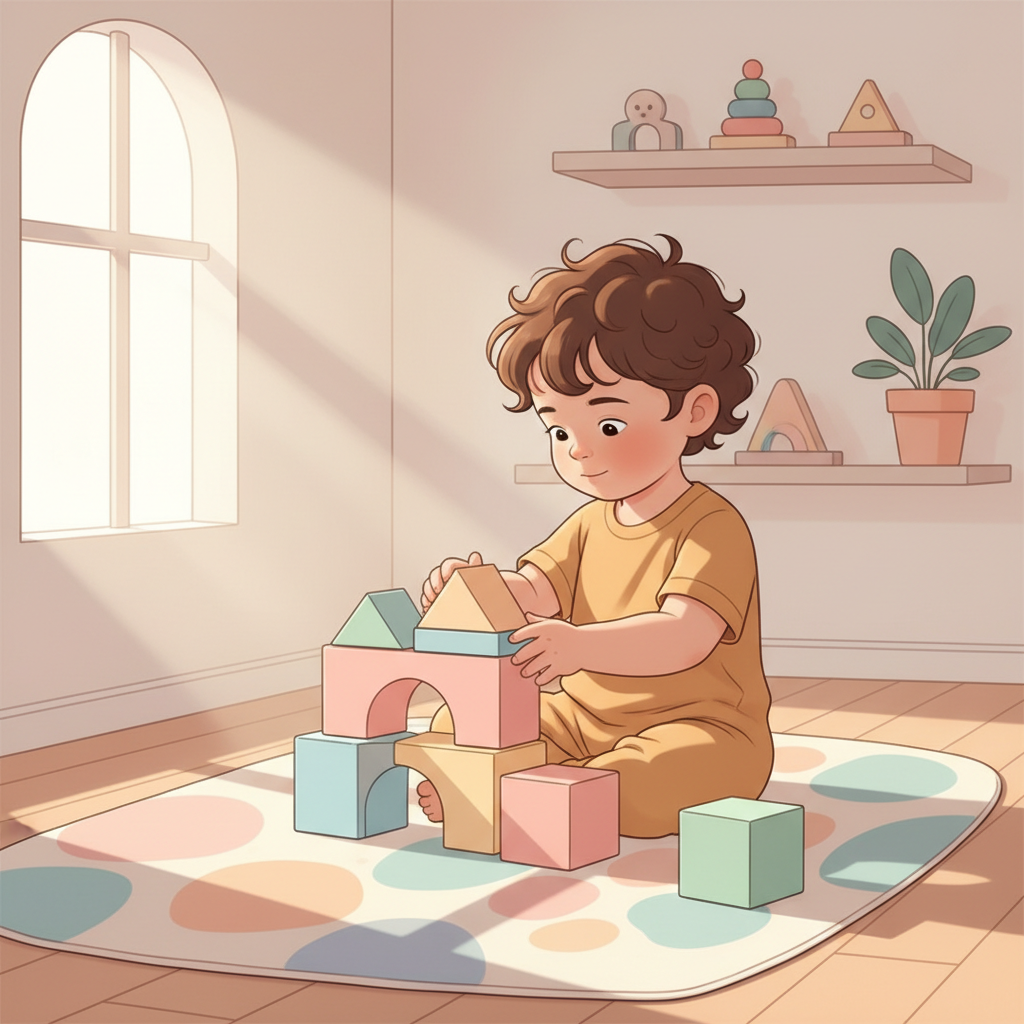
Your 2-Year-Old Isn't Putting Words Together? What to Know & Do
Is your 2-year-old not putting words together in a sentence yet, while other toddlers around them are forming short phrases? It's a common parental concern, and understanding typical development can bring peace of mind. The journey of language development is unique for every child, but there are clear benchmarks. Let’s break down what’s considered typical for a 2-year-old and explore easy ways to encourage language growth at home.
Is Your 2-Year-Old Not Combining Words? Here's What's Normal
You might be wondering, "Why is my 2-year-old not putting words together?" This question often stems from observing peers or comparing your child's progress to developmental charts. It's important to remember that development isn't a race, and there's a wide range of what’s considered normal.
When Do Toddlers Typically Put Two Words Together?
The landscape of toddler speech is fascinating. While some children readily combine words, others take a bit longer. Generally, guidelines suggest that by around 18-24 months, many toddlers begin to combine two words. This might sound like "mama ball," "more juice," or "bye-bye car."
However, if your 2-year-old is only saying single words or very few two-word combinations at this stage, it doesn't automatically signal a problem. The Centers for Disease Control and Prevention (CDC) notes that developmental milestones are averages, and children can reach them at different times within a given range.
Communication Benchmarks for 2-Year-Olds: What to Look For
Understanding what speech and language milestones are typical for a 2-year-old can help you assess your child's progress. It’s not just about the number of words, but also how they use them.
How Many Words Should a 2-Year-Old Use?
By their second birthday, a 2-year-old typically has a vocabulary of at least 50 words. They are often beginning to use 2-word combinations regularly. These early phrases are built from the significant vocabulary they’ve been absorbing.
The CDC’s developmental milestones indicate that by 24 months, toddlers may be able to:
- Use 2-3 word phrases.
- Follow two-step commands (e.g., "Pick up your toy and give it to me").
- Name familiar things and people.
Is It Normal for a 2-Year-Old to Speak in Full Sentences?
Generally, no. While some exceptionally advanced children might string together three or more words, it’s not the norm for a 2-year-old to speak in complex, full sentences. Their language is still emerging, and short phrases are a significant and exciting step.
The focus at this age is on functional communication: getting needs met, naming things, and beginning to express simple ideas through word combinations. If your 2-year-old is speaking in single words but understands a lot and is a good communicator in other ways (pointing, gesturing, showing), that’s often a positive sign.
Everyday Fun: Activities to Encourage Two-Word Phrases
Fostering language development doesn't require elaborate setups or formal lessons. Many everyday activities can be transformed into opportunities for your child to practice and expand their vocabulary, including by encouraging 2-word combinations.
Discover your baby's phase
Make it a Game: Simple Ways to Build Language
Turn playtime into a language-rich environment. The key is to be engaging and follow your child’s lead.
- Narrate your day: Talk about what you’re doing, what you see, and what your child is doing. "You’re pushing the car," "We are washing the dish," "Mommy is opening the door."
- Read together daily: Point to pictures and name objects. Ask simple questions like "What’s that?" or "Where’s the doggie?" Encourage them to repeat words or short phrases.
- Sing songs and recite rhymes: Songs like "Old MacDonald Had a Farm" or "Wheels on the Bus" provide repetitive language and opportunities to practice animal sounds or actions.
- Expand on their words: If your child says "ball," you can respond by expanding: "Yes, a big red ball!" or "You want the ball!" This models slightly longer phrases.
Two-Word Combination Speech Therapy Activities for Home
You can informally incorporate strategies often used in speech therapy into your daily routine.
- Offer choices: Instead of asking "What do you want?", offer two clear options: "Do you want milk or water?" or "Do you want the doll or the car?"
- Use simple directives: Combine an action with an object. "Put shoe on," "Eat apple," "Sing song."
- Play pretend: Use toys to act out scenarios. If playing with a teddy bear, you might say, "Bear eat honey" or "Bear sleep now."
- Comment on their play: Observe what your child is doing and make simple comments or requests. If they’re building with blocks, you might say, "Build high!" or "More blocks."
Beyond Two Words: What About Three-Word Combinations?
As children continue to develop, their language skills expand beyond simple two-word phrases. It’s a natural progression.
When Do Toddlers Put Three Words Together? A Quick Look Ahead
While 2-year-olds are often working on two-word combinations, many begin to string three words together closer to their third birthday. This might look like "Daddy go bye-bye," "Me want more juice," or "Baby sleep now."
This three-word stage marks a significant leap in their ability to express more complex thoughts and ideas. Research suggests that this ability to combine multiple words is a critical step toward developing more sophisticated sentence structures. However, if your child is still primarily using single words or two-word phrases at 30 months, it's still within a broad range of normal for many.
When to Talk to Your Pediatrician About Speech Development
It's natural to have questions about your child's development, and knowing when to seek professional advice is important. While there's a wide range of normal, there are indicators that suggest a conversation with your pediatrician is warranted.
The Importance of 'Wait and See' vs. Early Intervention
Developmental pediatricians and organizations like the American Academy of Pediatrics (AAP) often advocate for balancing a "wait and see" approach with the benefits of early intervention. Many children who seem to be slightly behind on language milestones will catch up on their own. However, for children who do have a speech or language delay, early identification and intervention are crucial for their long-term development.
Here are some general points to consider that might prompt a discussion with your pediatrician, beyond just the number of words or phrases:
- Understanding: Does your child seem to understand what you say, even if they aren't yet speaking much themselves? A significant gap between receptive language (what they understand) and expressive language (what they say) can be a reason for concern.
- Social Interaction: Does your child use language (or attempts at language) to communicate socially, or do they rely almost exclusively on gestures and pointing?
- Other Developmental Areas: Are there any concerns in other developmental areas, such as motor skills, play skills, or social interaction with peers?
- Hearing: Have they had a recent hearing evaluation? Hearing loss is a common cause of speech delays.
Your pediatrician is your best partner in monitoring your child's development. They can conduct screenings, offer guidance, and refer you to specialists if necessary.