Best Car Seat for Compact Car: 3 Across Capability (US)
Find the best car seats for fitting three across in a compact car. Discover top narrow options like Diono Radian, Graco SlimFit3 LX, and Clek, plus expert installation tips.
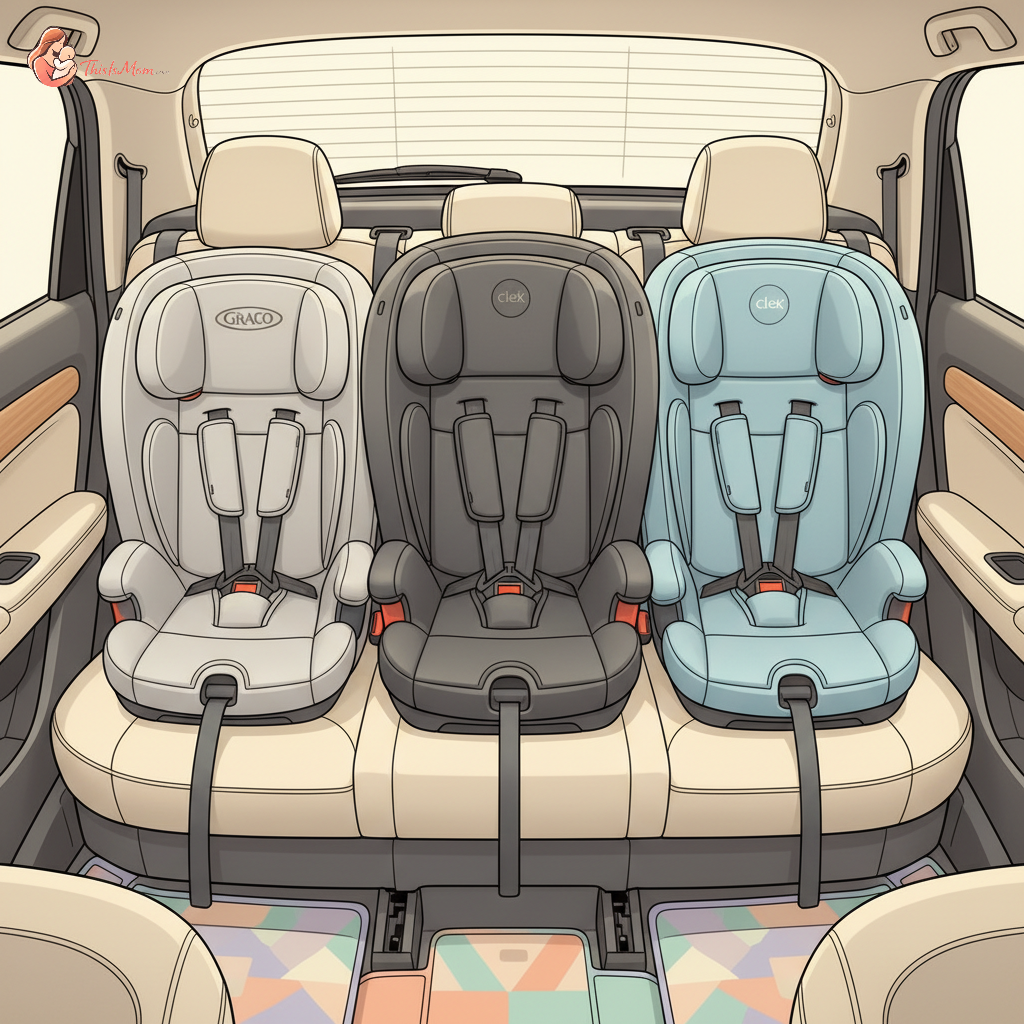
Why Fitting Three Car Seats Across a Compact Car Matters
Let's be honest: most compact car backseats are designed for two adults or two car seats comfortably. Squeezing three seats across requires a special kind of automotive Tetris. The challenge isn't just about width; it's about seat belt buckles, LATCH anchor placement, and the actual shape of your car's interior. Getting this wrong can lead to unsafe installations, where seats aren't flush with the vehicle seat, or buckles are inaccessible or buried.
- Safety is Non-Negotiable: A poorly installed car seat, or one that's too wide, can compromise your child's protection in a crash. Finding the safest infant car seat for a compact car is often the first step for parents.
- Practicality Matters: You need to be able to buckle your children in without contorting yourself into a pretzel or digging under seats.
- Vehicle Compatibility: Not all cars are created equal. What works in a Honda Civic might not in a Toyota Corolla.
Understanding Car Seat Types and Their Widths
Before diving into specific models, let's clarify the types of car seats and what makes a car seat "narrow."
Infant Seats vs. Convertible vs. Booster
- Infant Seats: These are rear-facing only and typically have a separate base. They are often the widest due to their carrier design. Many parents opt out of fitting three infant seats across, instead using one infant seat and two slimmer seats for older children.
- Convertible Seats: These can be used rear-facing and forward-facing. They are generally narrower than infant seats and are the workhorses for achieving three-across. Many parents use two convertibles and a booster, or one convertible and two boosters.
- Booster Seats: Designed for older children who have outgrown a convertible seat, these raise the child to ensure a proper seat belt fit. Many high-back boosters are surprisingly slim, making them excellent candidates for the third spot in a three-across setup. Some backless boosters are exceptionally narrow.
Key Features of Narrow Car Seats
When looking for car seats that fit three in a row, focus on these design elements:
- Slim Profile: The most obvious feature. Manufacturers design some seats with a narrower shell or a more streamlined harness system.
- Contoured Sides: Seats with less bulk or sharp angles on the sides are more likely to fit side-by-side.
- Positioned Harness Adjusters: Some seats have harness adjusters or headrest mechanisms that don't protrude significantly.
- Seat Belt Routing: Clear and accessible seat belt paths are crucial for safe installation, especially when seats are close together.
Top Contenders: Car Seats Proven to Fit Three-Across
This is where we get down to brass tacks. These seats have a reputation for being slim enough to allow for three-across configurations in many popular compact cars. Remember: "fits" can vary based on the specific car model and the combination of seats used.
1. Graco SlimFit3 LX 3-in-1 Car Seat
This seat is a strong contender specifically designed with a narrower profile for situations like fitting three across. It transitions from a forward-facing harness to a high-back booster and then a backless booster, offering longevity.
- Pros:
- Purposefully designed for a slimmer fit.
- One of the most budget-friendly options that still performs well.
- Easy-to-adjust harness and headrest.
- Good for families needing a 3-in-1 solution that’s narrow.
- Cons:
- Can feel less plush than more expensive options.
- Installation, while manageable, might require more effort than a premium brand.
- Best for: Budget-conscious families needing a versatile, narrow convertible seat that can be part of a three-across setup.
- Skip if: You prioritize the absolute highest-end materials and don't have a strict budget.
2. Diono Radian 3RXT SafePlus
The Diono Radian line is legendary in the car seat world for its ability to fit three across. These are all-steel reinforced convertible seats that are surprisingly slim for their robust build. They are designed for rear-facing, forward-facing harness, and booster modes.
- Pros:
- Incredibly slim design. Often cited as the seat for three-across.
- Robust steel frame for superior safety.
- Long lifespan from birth through booster.
- Excellent for travel and small planes due to its profile.
- Cons:
- Can be a bit heavier due to the steel frame.
- Installation can be tricky for some parents, especially rear-facing, and may require angle adjusters for infants. Many parents look for guidance on how to reset baby sleep after daylight saving time change to make transitions easier, but car seat installation is a different challenge altogether.
- Less padding compared to some competitors.
- Best for: Families who prioritize the three-across capability above all else and need a super-safe, long-lasting convertible.
- Skip if: You want a super plush seat or have difficulty with slightly more complex installations.
3. Clek Foonf / Fllo Convertible Car Seat
Clek offers two excellent narrow options: the Foonf and the slightly slimmer Fllo. Both are known for their advanced safety features, including a rigid-shell design and REACT (Rapid Energy-Absorbing Crumple Technology) system. They are narrower than many competitors, making them strong contenders for three-across.
- Pros:
- Superior safety engineering with rigid LATCH connectors and crumple technology.
- Sleek, modern design.
- Narrow enough for many three-across situations.
- Comfortable padding and good headrest support.
- Cons:
- Significant splurge; these are premium-priced seats.
- Foonf's rigid LATCH can sometimes be harder to use if you need to switch seats often. Fllo uses a traditional belt lock-off which is easier.
- Can be heavier than plastic-only seats.
- Best for: Families willing to invest in top-tier safety and a premium, slim design for their three-across needs.
- Skip if: Budget is a primary concern or you need a seat that's exceptionally lightweight.
Alternative/Booster Option: UPPAbaby Knox Convertible Car Seat
Discover your baby's phase
While the UPPAbaby Knox is a convertible seat, its success as a narrow option for three-across configurations often shines more as a booster. If you're using it as a high-back or backless booster for your oldest, it's a fantastic, relatively slim option. For families with very young children, ensuring they have safe snack options for baby led weaning 9 months is a priority, and so is finding the right car seat.
- Pros (as a booster):
- Comfortable and well-padded.
- Easy to adjust headrest.
- Relatively easy installation and belt guides.
- Good aesthetic appeal.
- Cons (as a convertible):
- Can be wider than the top three contenders for three-across convertible setups.
- Best for: Families needing a comfortable and stylish booster seat for their oldest child in a three-across situation, or potentially as one seat in a mixed setup.
- Skip if: You need all three seats to be narrow convertible seats and are starting from scratch.
Factors Beyond Width: Installation and Compatibility
Just because a seat fits doesn't mean it's installed correctly or easily.
LATCH vs. Seatbelt Installation: What Works Best for 3-Across?
- LATCH (Lower Anchors and Tethers for Children): Many parents prefer LATCH for perceived ease of use. However, LATCH systems have weight limits (usually around 65 lbs combined for the child and the seat itself). For three-across, you might run out of LATCH anchors, or the anchors might be too close together, making installation impossible. Many families end up using seat belts for at least one, if not all, seats in a three-across configuration.
- Seatbelt Installation: This is the most reliable method for achieving three-across when LATCH isn't feasible or ideal. You'll need to ensure the seatbelt locks (either by using the vehicle's locking clip, switching the vehicle belt to "locked" mode, or using the car seat's built-in lock-off if it has one).
Real-World Parent Tips for Installation
- Install from the Outside In: Often, installing the two outer seats first makes it easier to maneuver the middle seat.
- Check for Movement: After installation, grab the car seat at the belt path (not the top of the seat) and try to move it side-to-side. It should move less than one inch.
- Buckle Placement: Ensure no seat belt buckles are buried or inaccessible. This is a safety hazard.
- Seat Overlap: Make sure the vehicle seat belts don't overlap in a way that compromises their function.
Checking Your Car's Manual: Tether Anchors and Seat Belt Overlap
- Vehicle Manual: This is your bible for car seat installation. It will tell you:
- Where LATCH anchors are located.
- How your seat belts lock.
- If there are any restrictions on using LATCH and seat belts together.
- The location of tether anchors (essential for forward-facing seats).
- Tether Anchors: Always use the top tether for forward-facing seats, even with LATCH. Ensure the tether strap isn't rubbing against another seat in a way that could damage it.
Choosing the Right Combination for Your Family and Vehicle
This is where it gets personal. There's no single "magic" combination.
Mixing and Matching Seat Types
- Two Slim Convertibles + One Booster: This is a very common and often successful approach. For instance, two Diono Radians with a slim high-back booster.
- One Convertible + Two Boosters: If your oldest children are ready for boosters, this is often the easiest route. Look for very slim boosters.
- Three Slim Convertibles: This is the most challenging but achievable with seats like the Diono Radian.
Measuring Your Backseat: What You Need to Know
- Measure the Width: Use a tape measure from the edge of the seatbelt buckle on one side to the edge of the seatbelt buckle on the other side. This is your usable width.
- Consider Seat Shape: Some seats have a wider base than the top. Measure the widest point of the car seat and compare it to the usable width of your backseat.
- Seat Belt Buckle Accessibility: Ensure the buckles aren't too deep or too high for easy access, especially with multiple seats in place.
When to Call a Certified Car Seat Technician (CPST)
If you're struggling, or if you've achieved a three-across setup and want peace of mind, find a Certified Passenger Safety Technician (CPST). They are invaluable for checking installations, teaching you how to install correctly, and advising on specific vehicle-seat combinations. You can find one through Safe Kids Worldwide or your local hospital/fire department.
Prioritizing Safety and Comfort for Every Child
Ultimately, fitting three across in a compact car is about compromise, but safety must never be compromised. Ensure that each seat is installed snugly, that harness straps are at the correct height, and that all buckles are accessible and properly fastened.
- Slim is good, Safe is mandatory.
- Consider the longevity of your car seats.
- Don't be afraid to mix seat types.
The verdict is that achieving a safe and functional three-across setup in a compact car is absolutely possible, but it requires research, careful selection, and often a bit of trial and error. The Diono Radian 3RXT is a top performer for its width, closely followed by the Graco SlimFit3 LX for value and the Clek Foonf/Fllo for premium safety. Combining these with slim boosters for older children often yields the best results.
This puzzle can be solved. With the right seats and a bit of patience, you can safely transport your trio, even in the tightest of spaces.