Homemade Baby Food: Storage & Thawing Tips for Parents
Master homemade baby food storage and thawing tips for working parents. Learn batch prepping, safe freezing, quick thawing, and on-the-go strategies.
Beyond the Puree: Smart Homemade Baby Food Storage & Thawing for Busy Parents
It’s 7:15 p.m., my inbox is still pinging, and my toddler is meticulously deconstructing a graham cracker into a fine dust on the kitchen floor. This is the reality for many working parents: the mental load of a career colliding with the very physical reality of feeding a tiny human. For those of us venturing into homemade baby food, the thought of more tasks can feel overwhelming. However, the benefits often outweigh the perceived complexity. Mastering homemade baby food storage and thawing tips for working parents isn't about adding another item to your never-ending to-do list; it’s about creating a micro-system that saves you time, money, and the mental energy of daily meal prep. The real advantage? You control the ingredients, avoid additives, and can tailor nutrition to your child’s evolving tastes and needs.
The Batch-Prep Dividend: Invest Time Now, Save Sanity Later
The secret weapon for working parents tackling homemade baby food is batch prepping. It’s the corporate equivalent of a sprint – intense bursts of activity that yield significant future dividends. Instead of spending precious minutes every single day wrestling with blenders and steaming vegetables, dedicate a few hours once or twice a week. This transforms what could feel like a constant obligation into a manageable, strategic task.
What Baby Foods Are Prime for Batch Prepping?
You don’t need to prep everything. Focus on nutrient-dense staples that are easy to cook and freeze well.
- Single-ingredient purees: Sweet potatoes, butternut squash, peas, carrots, applesauce, pears, bananas. These are your foundational building blocks.
- Well-cooked grains: Oatmeal, quinoa, brown rice – cooked until very soft and then pureed or mashed.
- Lean proteins (cooked thoroughly): Chicken, turkey, lentils, black beans. Ensure they are cooked until very tender and pureed smoothly.
- Combinations (once baby has tried most individual ingredients): Avocado and spinach, chicken and sweet potato, apple and cinnamon.
Foods like ripe bananas or avocado are best mashed fresh or prepped in smaller, immediate quantities, as their texture and color can change quickly upon freezing or exposure to air.
Your Essential Toolkit for Effortless Prep
A few strategic tools make batch prepping significantly less of a chore. You don't need a professional kitchen, just smart choices.
- Food processor or high-powered blender: Essential for achieving a smooth puree. Immersion blenders can also work for softer ingredients.
- Steamer basket or microwave steamer: A quick and efficient way to cook vegetables and fruits.
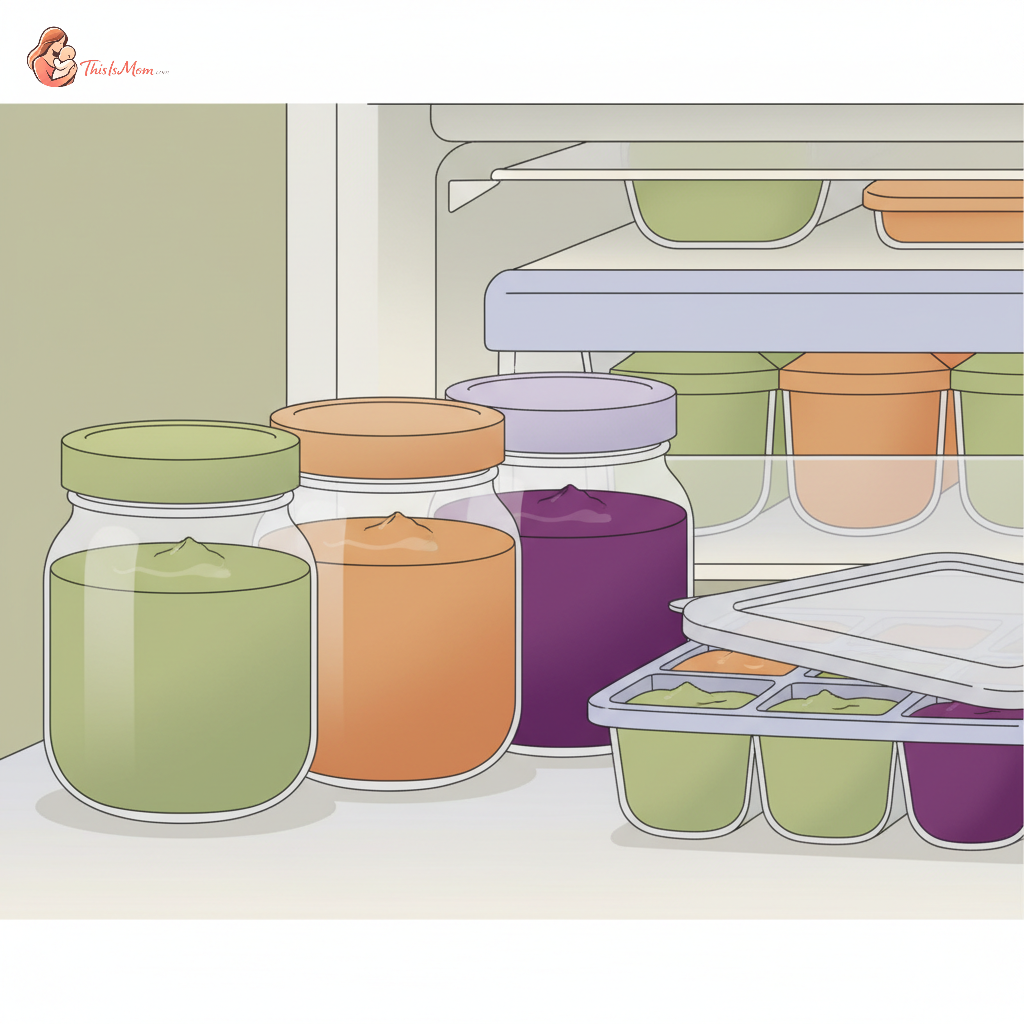
- Ice cube trays (BPA-free): The MVP of baby food storage. Silicone trays with lids are ideal for easy removal and stacking.
- Small, airtight containers: For larger portions or if you prefer not to use ice cube trays. Glass is a great option.
- Freezer-safe bags: For storing pre-portioned cubes or larger batches, minimizing freezer burn.
- Labels and a permanent marker: Non-negotiable for tracking contents and dates.
Sorting Out Safe Storage: Fridge, Freezer, and Best Practices
Once you’ve prepped, proper storage is key to maintaining safety and freshness. This is where homemade baby food storage guidelines become your best friend.
Fridge Life: How Long Does Homemade Baby Food Last?
When stored in an airtight container in the refrigerator, most plain homemade baby food purees are safe for 2 to 3 days. If you've mixed in breast milk or formula, err on the side of caution and consume within 24 to 48 hours, as these liquids are more perishable. Always use your senses: if it smells off, looks discolored, or the texture has changed significantly, it’s time to toss it.
Freezer Power: Storing and Portions
The freezer is a working parent’s best friend for baby food. This is where how to store homemade baby food in the freezer comes into play.
- Ice Cube Trays: This is a top method. Spoon your purees into BPA-free ice cube trays. Once frozen solid (typically 4-6 hours), pop the cubes out and transfer them to labeled freezer bags or airtight containers. This method allows for easy portioning.
- Freezer Bags: Pour purees directly into freezer-safe bags, seal, and lay flat to freeze. Once frozen, you can break off portions or store as is. This method can be more prone to freezer burn if not well-sealed.
- Small Containers: Dedicated baby food containers or small glass containers work well for larger portions.
How long does homemade baby food last in the freezer? Generally, plain fruit and vegetable purees can be stored for 6 to 8 months. Purees containing meats or proteins are best consumed within 1 to 2 months for optimal quality and safety. Always label with the contents and the date of preparation.
Formula and Freezing: A Careful Consideration
Can you freeze baby puree with formula? While technically possible, it's generally not recommended by most pediatric experts. Formula is designed to be consumed immediately after mixing. Freezing and thawing can alter its nutritional composition and potentially lead to bacterial growth if not handled perfectly. If you must mix formula with solid food, it's best to do so just before serving, using fresh, refrigerated portions.
Texture and Storage Depth
Different textures require slightly different approaches:
- Smooth Purees: These freeze and thaw beautifully and are ideal for early eaters.
- Thicker Mashes: For babies transitioning to more textured foods, mashes can be frozen in larger cubes or portions. They might require a bit more defrosting time.
- Finger Foods (for older babies): Cooked, cooled, and cut pieces of soft vegetables or fruits can be frozen on a baking sheet until solid, then transferred to a freezer bag.
Discover your baby's phase
Thawing with Confidence: Quick and Safe Methods
The goal is to thaw baby food without compromising its safety or nutritional value.
Safest Methods for Thawing
- Refrigerator Thawing: This is the safest and most recommended method. Transfer frozen cubes or portions from the freezer to an airtight container in the refrigerator. This can take several hours or overnight, depending on the quantity.
- Quick Thawing (Stovetop or Microwave): For immediate needs, you can gently heat frozen baby food.
- Stovetop: Place frozen cubes in a small saucepan with a tablespoon of water or breast milk/formula over low heat. Stir gently until thawed and heated through.
- Microwave: Place frozen cubes in a microwave-safe bowl and heat on a low power setting, stirring frequently, until thawed and warm. Crucially, test the temperature thoroughly before serving. Microwaves can create hot spots.
Never thaw baby food at room temperature for extended periods. Once thawed, it should be treated as a fresh food.
The Refreezing Rule: A Firm NO
Can you refreeze homemade baby food after it has thawed? The answer is a resounding no. Once food has thawed, it enters the "danger zone" for bacterial growth. Refreezing can accelerate this process, making the food unsafe for your baby. Plan your portions carefully to avoid waste. Only thaw what you anticipate using within the safe timeframe.
On-the-Go Feeds & Other Burning Questions
For working parents, life doesn't stop at the office door. Navigating feeding outside the home is part of the equation.
Carrying Homemade Baby Food to Daycare/Outings
Storing homemade baby food for outings requires careful planning.
- Daycare: Most daycares have strict guidelines. You’ll likely need to provide pre-portioned, thawed food. If formula is mixed in, it should be done immediately before packing, and the food should be kept cold via an insulated lunch bag with an ice pack. Confirm their specific policies.
- Outings: For shorter trips, pre-portioned frozen cubes in a well-insulated lunch bag with an ice pack can remain cold for several hours. Once thawed, keep them chilled and consume within a few hours, or by the end of the day if kept consistently cold.
Room Temperature Exposure: A Low Threshold
How long does homemade baby food last at room temperature? This is where safety is paramount. Once thawed or heated, homemade baby food should ideally be consumed within 1 hour if the ambient temperature is warm. If you are in a cooler environment, you might have a bit more leeway, but it’s best to err on the side of caution and keep it chilled if not serving immediately.
When to Toss It: Signs of Spoilage
Your senses are your best defense against spoiled baby food. Look out for:
- Off odors: A sour, rancid, or otherwise unpleasant smell.
- Discoloration: Unexpected changes in color (e.g., browning, mold spots).
- Texture changes: Sliminess, excessive separation, or a foamy appearance.
- Mold: Visible fuzzy or colored spots.
When in doubt, throw it out. Your baby’s health is not worth the risk.
Making it Work: Real-Life Implementations
The theory is great, but how does this apply in the trenches?
- Sunday Sit-Down: Block out 2-3 hours on a Sunday afternoon. Stream your favorite podcast or let your partner handle bedtime while you steam, blend, and freeze.
- Weekend Warrior's Strategy: If Sundays are chaos, a Saturday morning session can work just as well. Get it done before the weekend truly kicks off.
- Ice Cube Tray Rotation: Keep a stash of frozen cubes labeled for the week ahead. Monday might be sweet potato, Tuesday peas, etc.
- The "Defrost" Reminder: Set a daily reminder on your phone for 8 p.m. to pull the next day’s food from the freezer to the fridge.
- Embrace Imperfection: Some weeks, the batch prep might be smaller or less frequent. That's okay. Supplement with high-quality store-bought options if needed. It’s about consistency, not perfection.
This journey is less about achieving some mythical state of "balance" and more about building systems that support your family's well-being and your professional life. By investing a little time strategically in homemade baby food storage and thawing tips, you're investing in your own capacity to manage the beautiful, messy integration of work and motherhood. It’s about making choices that empower you, not exhaust you.
What works for your family is your unique creation. This is your motherhood, and you get to define what success looks, and tastes, like.