Making Baby Food Purees Without a Blender: 9 Simple Ways
Learn how to make healthy homemade baby food purees without a blender or food processor! Discover easy techniques using common kitchen tools and save money.
No Blender? Easy Baby Food Purees Without a Food Processor!
That late-night pantry stare-down, realizing your little one needs dinner and your blender is out of commission – it's a familiar scene for many parents. What if you knew that making nutritious baby food purees doesn't require a high-tech blender or food processor? It's true! You can discover a world of low-tech ways to create homemade baby food purees that are just as good, if not better, than anything a fancy appliance can churn out.
This guide is for anyone who thinks they need a dedicated baby food maker or a top-of-the-line blender to get started with homemade purees. The reality is, you probably already have everything you need right in your kitchen.
Beyond the Blender: The Simplicity Factor
While kitchen gadgets have their place, sometimes simplicity is key. Using everyday tools for making baby food purees without a blender or food processor encourages a more mindful approach. There’s something incredibly satisfying about engaging your hands and senses, connecting with the food you're preparing for your baby.
Saving Money & Space: The Practical Perks
Baby gear expenses can quickly add up, and storage space is often at a premium. If you're hesitant about investing in a blender attachment or a dedicated food processor just for baby food, know that you don't need expensive gear. Opting for mashed baby food no blender methods means you’re already saving money. Plus, you’re not adding another bulky appliance to your crowded countertops. Your existing kitchen staples are about to get a promotion.
Your Tool Kit: Everyday Items for Perfect Purees
So, what do you need? Turns out, not much. You might be surprised at what can transform into a smooth, delicious puree with a little effort.
The Mighty Fork: Easy Mashing
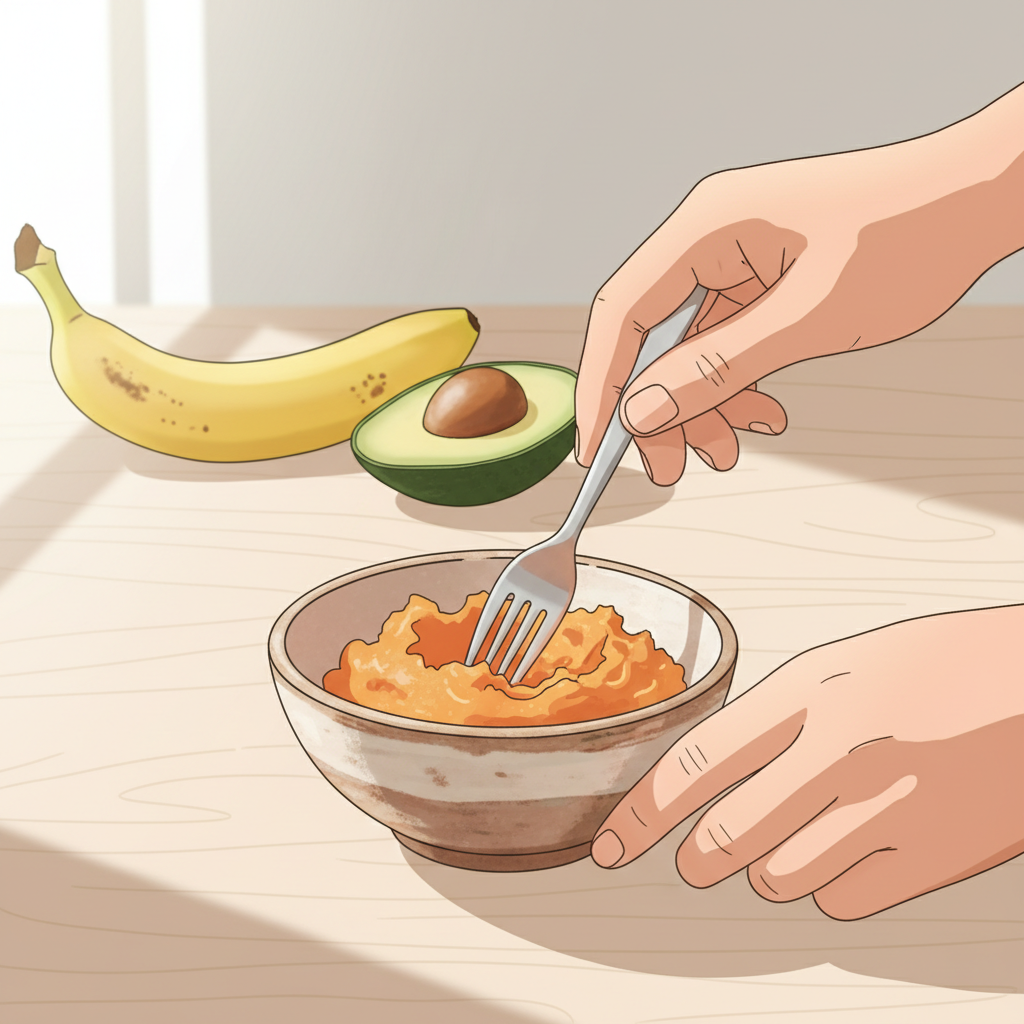
This is your first line of defense. A good old-fashioned fork is surprisingly effective for pureeing baby food by hand.
It's perfect for softer cooked ingredients like sweet potatoes, ripe bananas, and well-cooked peas. Just mash away until you achieve the consistency you're aiming for. For very young babies, if you want an ultra-smooth consistency, you might consider pushing the mashed food through a fine mesh sieve to remove any fibrous bits.
Fine Mesh Sieve/Strainer: For Ultra-Smoothness
If you're aiming for a super-smooth texture, especially for younger babies or those transitioning from thin purees, a fine mesh sieve is your secret weapon.
You'll cook your food until it’s very soft, then push it through the sieve with the back of a spoon or a spatula. This little trick removes any fibrous bits or stubborn lumps, giving you a silky-smooth result without relying on a blender.
Potato Masher: A Puree Powerhouse
Forget potatoes – this tool is a game-changer for baby food! A potato masher can quickly break down even slightly firmer cooked vegetables.
It’s faster than a fork and can achieve a finer texture with less effort. It’s a DIY baby food puree low-tech hero.
Other Handy Helpers: Graters, Mortar & Pestle
- Box Grater: The fine side of a box grater can ‘shred’ certain soft fruits (like tender cooked carrots) into tiny pieces, which can then be further mashed with a fork.
- Mortar and Pestle: If you have one of these, it’s fantastic for smaller batches. You can grind cooked grains or very soft cooked vegetables into a fine powder or paste.
Step-by-Step: Making Purees Without Big Appliances
Discover your baby's phase
Ready to get started? It’s surprisingly straightforward.
Prep Your Produce: Steaming, Boiling, or Roasting
The key to successful hand-pureeing is cooking your ingredients until they are exceptionally soft. You want them mushy and yielding.
- Steaming: This method retains the most nutrients. Chop your fruits or veggies, place them in a steamer basket over boiling water, and cook until fork-tender. For iron-rich options, consider pureeing recipes suitable for baby-led weaning once your baby is ready.
- Boiling: Simple and effective. Boil diced ingredients in a little water until very soft. Drain well.
- Roasting: For veggies like sweet potatoes, squash, or carrots, roasting brings out their natural sweetness. Roast cut pieces until they are easily pierced with a fork.
The Mashing and Straining Method
Once your food is cooked and has cooled slightly (but is still warm), it's time to get mashing.
- Mash: Place the cooked food in a bowl. Use your fork or potato masher to break it down thoroughly. The warmer the food, the easier it will be to mash.
- Strain (For Smoother Texture): If you’re aiming for ultra-smooth, place a fine-mesh sieve over another bowl. Spoon the mashed food into the sieve and use the back of a spoon or a rubber spatula to push it through. Scrape the clean puree from the underside of the sieve.
Achieving the Right Consistency
For thinner purees, you can add a little of the cooking liquid (water, breast milk, or formula) to loosen things up.
However, many fruits (like bananas and avocados) and well-cooked veggies are naturally moist enough on their own. Start with no added liquid and only add a teaspoon at a time if needed. You’re aiming for a consistency that’s smooth enough to swallow easily but thick enough to hold its shape on a spoon. Foods that are too thick might be challenging for some babies to manage, potentially leading to issues similar to toddler constipation if not properly hydrated.
Top Foods That Puree Beautifully By Hand
Not all foods are equally suited for low-tech pureeing. Stick to these winners for your easiest easy homemade baby food purees:
- Soft Cooked Veggies:
- Sweet Potato: Roasts or steams beautifully tender.
- Butternut Squash: Similar to sweet potato, easy to mash.
- Peas: Cook until very soft, then mash. Strain for a smoother texture if your baby is young.
- Carrots (cooked very well): Steam or boil until extremely soft.
- Zucchini (steamed or boiled): Gets quite mushy.
- Ripe Fruits:
- Banana: The easiest! Just mash with a fork.
- Avocado: Mash with a fork. No cooking required.
- Pears (ripe and soft): Steam or poach until very soft, then mash.
- Peaches/Plums (ripe): Similar to pears, cook until soft and mash.
- Grains & Legumes:
- Cooked Lentils: Cook until very soft, then mash. They break down well.
- Oatmeal: Cook according to package directions (or even softer) and mash any lumps with a fork.
Storing Your Homemade, Hand-Pureed Goodness
Making baby food doesn't have to be a daily task. You can definitely prep ahead!
Fridge & Freezer: Best Practices
- Fridge: Store freshly made purees in airtight containers in the refrigerator for up to 2 days.
- Freezer: This is where you can stock up. Use small, freezer-safe containers or silicone ice cube trays. Once frozen, transfer the cubes to a freezer bag for longer storage, up to 1-2 months.
Portioning Tips for Less Waste
Silicone ice cube trays are perfect for single-serving portions. Once frozen, pop out a cube or two for a meal.
If using larger containers, try to only thaw what you think your baby will eat in one sitting. Reheating and refreezing purees isn't recommended due to potential bacterial growth.
You don't need a fancy gadget to give your baby nutritious, homemade meals. Your hands, a fork, and some soft-cooked food are all it takes. You've got this!