Assess Toddler Fine Motor Skills: 15 Household Item Activities
Easily assess and boost your toddler's fine motor skills using everyday household items. Discover fun, age-appropriate activities and learn key developmental milestones.
Unlocking Tiny Hands: Assessing Your Toddler's Fine Motor Skills with Everyday Treasures
Before you consider a fancy toy or a developmental assessment kit, take a moment to simply observe the child in your life. Watch their hands at work. How do they grasp a passing toy? How do they manipulate a spoon? This quiet observation is a potent tool, revealing much about their developing fine motor skills. Understanding how to assess toddler fine motor skills using household items is less about formal testing and more about integrated play, turning everyday moments into opportunities for growth and connection.
The Groundwork: What These Little Movements Mean
Beyond the Basics: What We Mean by Fine Motor Skills
When we talk about fine motor skills, we're referring to the precise movements of the small muscles in the hands, fingers, and wrists. It's the ability to manipulate objects with dexterity – think about how a child learns to pinch a tiny crumb, unscrew a lid, or hold a crayon. These aren't just isolated actions; they are intricate dance steps involving hand-eye coordination, bilateral coordination (using both hands together), and sensory feedback.
The Big Picture: Why These Skills Are Key for Your Toddler's Future
These seemingly small movements build the foundation for so much later learning and independence. From holding a pencil for writing to buttoning a shirt, tying shoes, and even using cutlery, fine motor skills are essential for daily life. Research suggests that early development in this area can positively influence academic readiness and self-care skills. For the child, mastering these abilities fosters a sense of accomplishment and autonomy, crucial for their growing confidence.
Ready, Set, Play! Gentle Ways to Observe Fine Motor Skills at Home
The Toddler-Friendly Approach: Making Observation Fun, Not Stressful
The beauty of observing fine motor skills in toddlers lies in its simplicity. It doesn't require special equipment or structured tests. Instead, it’s about embedding opportunities for exploration into their natural play. We aren't trying to test them; we are providing environments where their developing abilities can naturally emerge and be observed.
Grab & Pinch: Invitations for Young Toddlers (12-24 Months)
At this stage, we're looking at developing the pincer grasp (thumb and index finger working together) and the ability to hold objects.
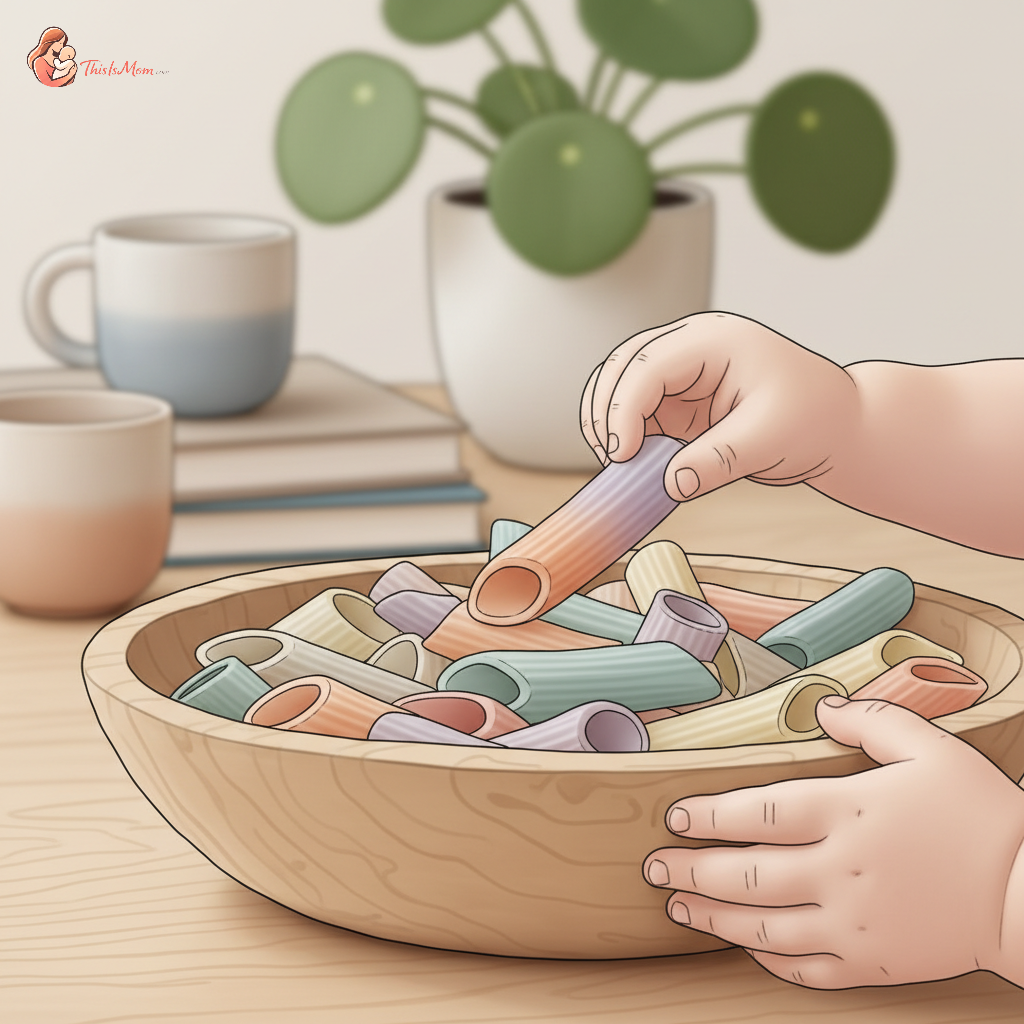
- From the Kitchen: Offer a small bowl with a few large, colorful pasta shapes (like penne or rotini) and a shallow dish. Let the child practice transferring the pasta from one to the other. Observe how they grasp each piece.
- Sensory Bin Exploration: Fill a shallow bin with large pom-poms or cotton balls. Invite the child to pick them up one by one. This naturally encourages the pincer grasp.
- Book Handling: Simple board books with thick pages are perfect. Observe how they turn the pages – do they use their whole hand, or are they beginning to isolate a finger?
Stack & Sort: Activities for Emerging Toddlers (18-30 Months)
As the child’s grasp strengthens, they begin to show more control and intention.
- Building Towers: Simple stacking rings or large wooden blocks are ideal. Note how the child stacks them – do they line them up carefully, or are they more about the crashing? Both are developmental stages.
- Peg Puzzles: Puzzles with large knobs or pegs encourage grasping and placing. Observe their precision in fitting the pieces into their slots.
- Coin Drop: A small container with a slit (like a clean, empty coffee can) and large craft sticks or chunky "coins" (cardboard circles) allows the child to practice inserting objects.
Cut & Create: Activities for Older Toddlers (30-48 Months)
This age range shows more refined control and an emerging interest in creating.
- Playdough Fun: Offer playdough with child-safe scissors (designed for little hands). Observe how they hold the scissors and if they can make an open-and-close motion. Even just pinching and rolling the dough is fantastic practice.
- Sticker Art: Chunky stickers are easier for little fingers to peel and place. This refines the pincer grasp and hand-eye coordination.
- Bead Stringing (Large Beads): Thick yarn with large, wooden beads (with holes big enough not to be a choking hazard) is a classic. Watch how they thread the bead onto the string.
Discover your baby's phase
Your Everyday Toolkit: Transforming Household Items
The most magical part of this journey is realizing that your home is already a rich environment for developing fine motor skills. You don't need a store-bought item to foster these abilities.
Kitchen Fun: Pasta, Cereal, and Colanders
- Pasta Transfer: As mentioned, large pasta shapes are wonderful for pincer grasp practice. Use tongs designed for children or even just their own fingers to transfer them into different containers.
- Cereal Sorting: Puffed cereal pieces (like Cheerios) can be sorted into muffin tins or egg cartons. This encourages picking up small items.
- Colander Play: Give the child larger pasta shapes or pom-poms and a colander. Let them try to fit the items into the holes or push them through.
Laundry Day Play: Socks, Pegs, and Buttons
- Sock Matching and Rolling: A basket of clean socks offers a tactile experience. The child can practice unfolding them, trying to match them, and rolling them into balls, all of which require coordination.
- Clothespin Fun: Wooden clothespins are excellent for strengthening hand muscles. Let the child clip them onto the edge of a cardboard box or a sturdy bowl.
- Button Sorting: For older toddlers (with very close supervision due to small parts), large buttons can be sorted by color or size into separate containers.
Office Supplies: Stickers, Paper, and Pipettes
- Sticker Peeling and Placing: Giant, easy-to-peel stickers are a fantastic fine motor workout. Observe how they manage to lift them from the sheet and position them on paper.
- Tearing Paper: Provide child-safe scissors or simply let the child tear strips of construction paper. This strengthens hand muscles and bilateral coordination. You might consider using this activity when discussing how to manage toddler's picky eating habits around sugary cereals, as it can be a way to engage them in a non-food related activity that still requires fine motor skills.
- Pipette Play: If you have droppers or pipettes (often found in art supply stores or even some medication packaging), provide shallow dishes of colored water. The child can practice squeezing and transferring the liquid, a sophisticated skill for their age.
Observing Your Toddler: What to Look For
As you offer these simple invitations, observe with a gentle, curious eye. You're not grading; you're understanding. Notice how the child interacts with the materials. Do they use their whole hand or just a few fingers? Is their grip firm or loose? How do they approach a new texture or shape?
Developmental Red Flags: When to Seek Advice
While every child develops at their own pace, there are certain indicators that might warrant a conversation with your pediatrician. If the child consistently avoids using one hand, has a very weak or unusual grasp, struggles to pick up small objects by 18-24 months, or shows significant difficulty with age-appropriate tasks like stacking a few blocks by age 3, it’s worth discussing. Trust your instincts. Pediatricians and early intervention specialists are valuable partners in supporting your child's development. For instance, understanding developmental milestones is key, such as when an 18-month-old starts pointing.
Trusting Your Gut: Parental Instincts Are Valid
You know your child best. If something about their fine motor development concerns you, even if it doesn't fit a specific "red flag" perfectly, don't hesitate to bring it up with your pediatrician or a child development specialist. Your observations are invaluable when seeking professional guidance.
Nurturing Growth: Simple Ways to Support Their Journey
Setting Up for Success: Creating an Engaging Environment
Prepare a low shelf or basket with accessible activities. Rotate them periodically to maintain interest. Ensure materials are safe, age-appropriate, and offer a variety of textures and challenges. An environment that invites exploration is key. This is similar to how providing a visual timer for toddler screen time can help create a structured and engaging environment, reducing meltdowns.
The Power of Patience: Supporting Their Journey
Remember that fine motor development is a gradual process. Celebrate small successes and offer encouragement without pressure. The goal is to foster a love of exploration and a sense of capability. Your patient presence and the opportunity to practice are the most powerful tools you have. For example, patience is also crucial when considering gentle sleep training methods for anxious parents.