Balancing Remote Work with Baby at Home: No Childcare Guide
Discover practical strategies for balancing full-time remote work with an infant at home and no childcare. Master fragmented days, manage expectations, and protect your sanity.
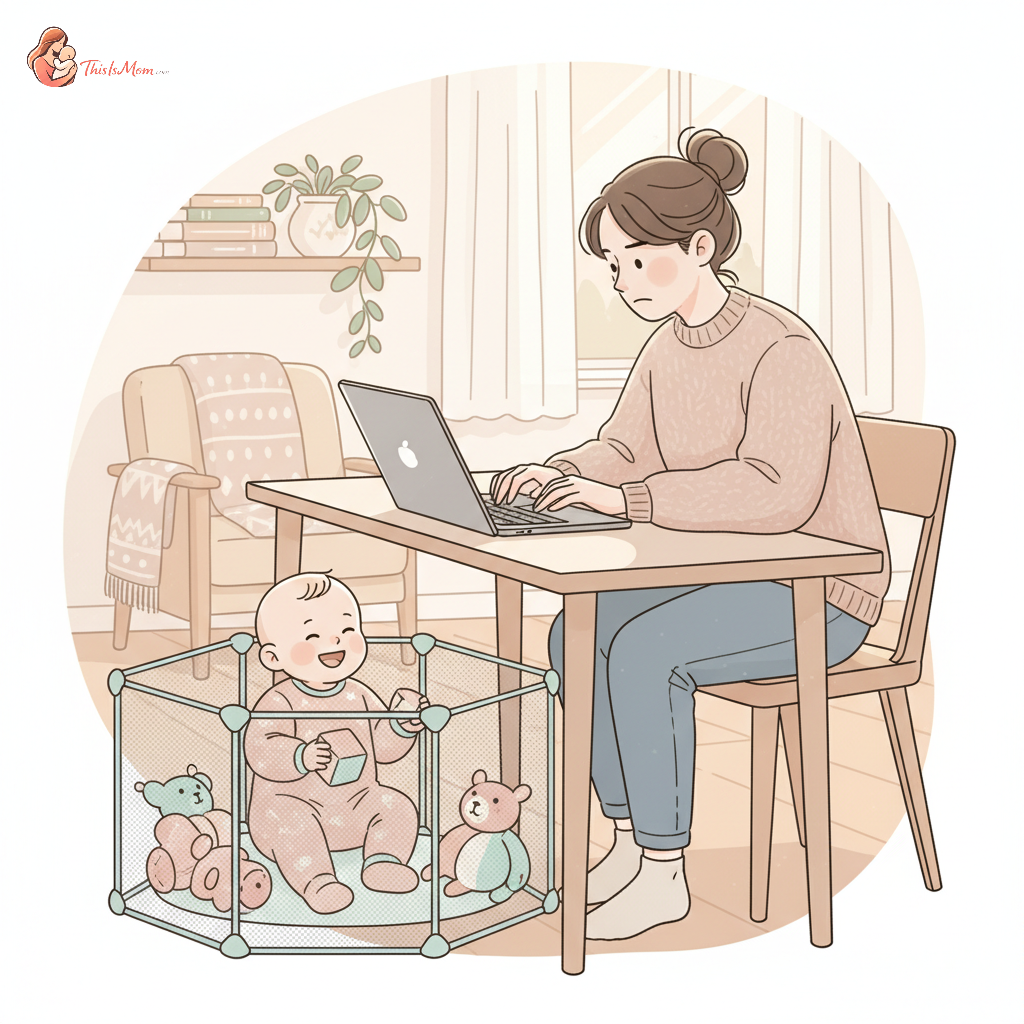
The Math Doesn't Math: Full-Time Remote Work with a Baby at Home, No Childcare
It’s 7:15 a.m. My baby is happily gumming a soft toy on the floor, seemingly unaware that my caffeine is still brewing and my first meeting is in precisely 45 minutes. This is the reality of balancing full-time remote work with a baby at home with no childcare. It’s not about perfect balance; it’s about a relentless, deeply personal integration, often fueled by ambition and necessity.
The people who tell you it’s easy haven't tried to negotiate a critical contract with a six-month-old attempting to scale your face. Let's be real: the current remote work model, a post-pandemic adaptation, was rarely designed for the seismic shift of adding an infant to the equation. So, you build your own system.
There's no denying the allure of working from home with a baby. The intimacy of catching every gummy smile, the flexibility to nurse on demand, the sheer relief of skipping the daycare drop-off dash. But the equation of full-time remote work with an infant at home, no childcare, presents a formidable challenge. It’s not just about logistics; it carries a significant cost—financial in terms of lost income if one parent reduces hours or leaves a job, emotional in the constant mental load, and professional in the perceived or actual impact on career trajectory.
The "is it illegal?" question often pops up: generally, no, it's not illegal to work from home with a baby, provided your work performance doesn't suffer and your child is in a safe environment. But legality isn't the same as feasibility. And if both parents are working from home with a baby, the math becomes even more critical.
Building Your 'Good Enough' Day
Forget the curated Instagram feeds of perfectly organized home offices. Your reality is likely a corner of the living room, a kitchen table, or perhaps a hastily cleared spot on your bed. The key to making WFH with a baby work is to set expectations that align with the current chaos. This isn't your pre-baby work life. You are not going to have eight uninterrupted hours of deep focus. The goal is progress, not perfection.
The practical application of working from home with a baby often boils down to structuring your day around their biological rhythm. Think sleep, feed, play, repeat.
- Early Mornings: Leverage the post-feed wake window before your baby gets fussy. This might be your prime time for focused tasks, responding to urgent emails, or participating in a meeting where you’re mostly listening.
- Mid-Day Slumps: When your baby is napping, that's your golden hour. Prioritize tasks that require concentration. If naps are shorter or unpredictable, break tasks down into more manageable chunks. Maybe you'll need to sterilize breast pump parts during a longer nap.
- Evening Rallies: This is where the "split shift" for partners becomes invaluable. One partner tends to the baby while the other logs in for a focused work block, and then you switch. This is crucial for remote work with an infant and no childcare; it allows for shared responsibility and dedicated work time for both.
- Flexible Work: If your company offers any flexibility, use it. Can you shift your hours slightly? Can you take a longer lunch to connect with your baby? Negotiating this upfront can be a game-changer.
Trying to apply rigid productivity rules designed for child-free professionals to an infant-filled day is a recipe for burnout. The widely cited 3-6-9 and 10-10-10 rules often imply a level of structured time and attention that's simply not available when you’re simultaneously managing deadlines. You’re in survival mode, and that’s okay.
The Art of the Interruption
Discover your baby's phase
Maximizing those tiny pockets of uninterrupted time is a skill honed through sheer necessity.
- Batch similar tasks: Answer emails in one go. Schedule calls back-to-back if possible.
- Leverage movement: Work while baby is in a bouncer or swing, or during supervised floor time. A baby carrier for plus-size parents can be a lifesaver for tasks that require you to be mobile or just need to soothe a fussy infant.
- Create safe zones: Designate areas where your baby can safely explore independently for short periods. A playpen or a securely gated room can offer a few minutes of focus.
- Embrace the 'done is better than perfect' mantra. Sending a good-enough report is infinitely better than sending no report because you were trying to achieve an impossible level of polish while juggling a colicky baby.
The "essentials" for a WFH with baby setup often extend beyond just physical items. They include a robust wi-fi connection, noise-canceling headphones, and a reliable charging station. But more importantly, it’s about mental preparation: accepting that your workday will be fragmented and that multitasking is less about doing two things at once and more about quickly switching between them.
Setting Expectations Like a Pro
Communicating your reality is key, both professionally and personally. When talking to your employer, you don’t need to overshare the minute-by-minute details of your childcare situation. Focus on your output and your commitment to your role. If you need flexibility (e.g., starting earlier, shifting hours), present it as a solution.
If your child's noises are occasional and brief during calls, most reasonable employers will understand. If it becomes a consistent issue, transparency about seeking a structured solution (like the split shift) can be helpful. For parents heading back to work or considering platonic co-parenting, clear communication is key.
With your partner and support network, open and honest conversations are non-negotiable. Clearly define roles, responsibilities, and the "rules of engagement" for when one person is "working" versus "on baby duty." This prevents resentment and ensures both partners have some dedicated time, even if it's just for a shower or a five-minute breather. If you have family or friends who can help, even for an hour or two a week, explore those options.
Managing client expectations is about setting realistic delivery times and being proactive. If you anticipate a delay, communicate it early. Be clear about your availability, but avoid over-apologizing for your home life. Most clients value reliability and clear communication over a perfectly silent Zoom background.
Finding Your Own Bottom Line
Protecting your sanity is paramount. The constant demands of full-time remote work with a baby at home, no childcare, can feel like an unrelenting marathon. Finding micro-moments for yourself isn’t a luxury; it’s a survival tactic. This could be five minutes with a cup of tea after the baby is asleep, a quick walk around the block, or listening to a podcast during a commute (if you ever get one!).
The concept of "good enough" is truly good enough. Your home might not be spotless, your meals might be simpler, and your career progress might not be linearly climbing at the speed you’d envisioned. This might mean exploring toddler screen time alternatives or rethinking screen time limits altogether with a 3-year-old. That’s okay. This period is temporary. You are doing an incredible job navigating an immensely challenging situation.
If the current setup is consistently overwhelming, consider re-evaluating. Is it possible to bring in even a few hours of part-time help? Could one partner temporarily adjust their hours or workload? Sometimes, the bravest thing you can do is admit that the math, on this particular day or week, just doesn't math, and ask for support or adjust your approach. Your version of success right now involves keeping everyone safe, reasonably happy, and your career afloat. That’s a monumental achievement.