DIY Postpartum Abdominal Stretching for Diastasis Recti
Learn safe DIY postpartum abdominal stretches and gentle exercises to help heal diastasis recti. Includes a self-check guide and movements to avoid.
DIY Postpartum Abdominal Stretching: Safe Stretches for Diastasis Recti
Your body has just done something incredible. After months of carrying and birthing a baby, you're likely noticing changes, and for many, that includes their abdominal muscles. A common postpartum concern is diastasis recti, and you might be wondering about safe abdominal stretching. The good news is that with the right approach, many can safely work towards healing.
What Is Diastasis Recti?
Diastasis recti, often referred to as abdominal separation, is a condition where the two parallel bands of muscles that run down the middle of your abdomen (the rectus abdominis) separate. This separation is a normal part of pregnancy for many, as the growing uterus pushes outward. After childbirth, these muscles typically begin to knit back together. However, for some, the separation persists.
The American College of Obstetricians and Gynecologists (ACOG) acknowledges that mild abdominal muscle separation is common after pregnancy. While not inherently dangerous, a significant diastasis can affect core strength, contribute to back pain, and impact pelvic floor function.
When to Seek Professional Guidance
While this guide offers information on safe at-home practices, the guidelines from the Mayo Clinic emphasize that it’s always wise to consult your healthcare provider, especially if you have concerns. They can offer a personalized assessment. For persistent issues or before embarking on a rigorous exercise program, a referral to a pelvic floor physical therapist is often recommended. They are specialists in postpartum recovery and can provide tailored exercises.
Checking for Diastasis Recti at Home
Before diving into any exercises, it’s helpful to understand if you might have diastasis recti. A simple self-check can give you a general idea.
The Self-Check: Finding Your Gap
According to many physical therapy resources, here's how to perform a basic self-assessment:
- Lie on your back with your knees bent and feet flat on the floor.
- Place two fingers (index and middle) just above your belly button.
- Gently press your fingers down into your abdomen.
- Engage your abdominal muscles by lifting your head and shoulders slightly off the floor, as if doing a mini crunch.
- While holding this contraction, feel for the gap between your rectus abdominis muscles.
- Repeat this test by moving your fingers: just below your belly button, and directly over your belly button.
Interpreting Your Findings
What you're feeling for is a softening or a gap. The Mayo Clinic suggests that a gap of more than two finger-widths might indicate diastasis recti. You might also feel a bulge or doming in the midline of your abdomen when you engage your core. Remember, this is a basic check; a professional can provide a more precise measurement and assessment of your core.
Safe Stretches and Gentle Exercises for Diastasis Recti Recovery
The goal with diastasis recti exercises is to strengthen the deep core muscles, particularly the transverse abdominis, and improve overall core stability without widening the gap.
Foundational Breathing Techniques: The Transverse Abdominis Connection
Your transverse abdominis is like an internal corset. Activating it is fundamental to postpartum recovery. If you are feeling overwhelmed, remember that preparing for baby's arrival is just one aspect of this time.
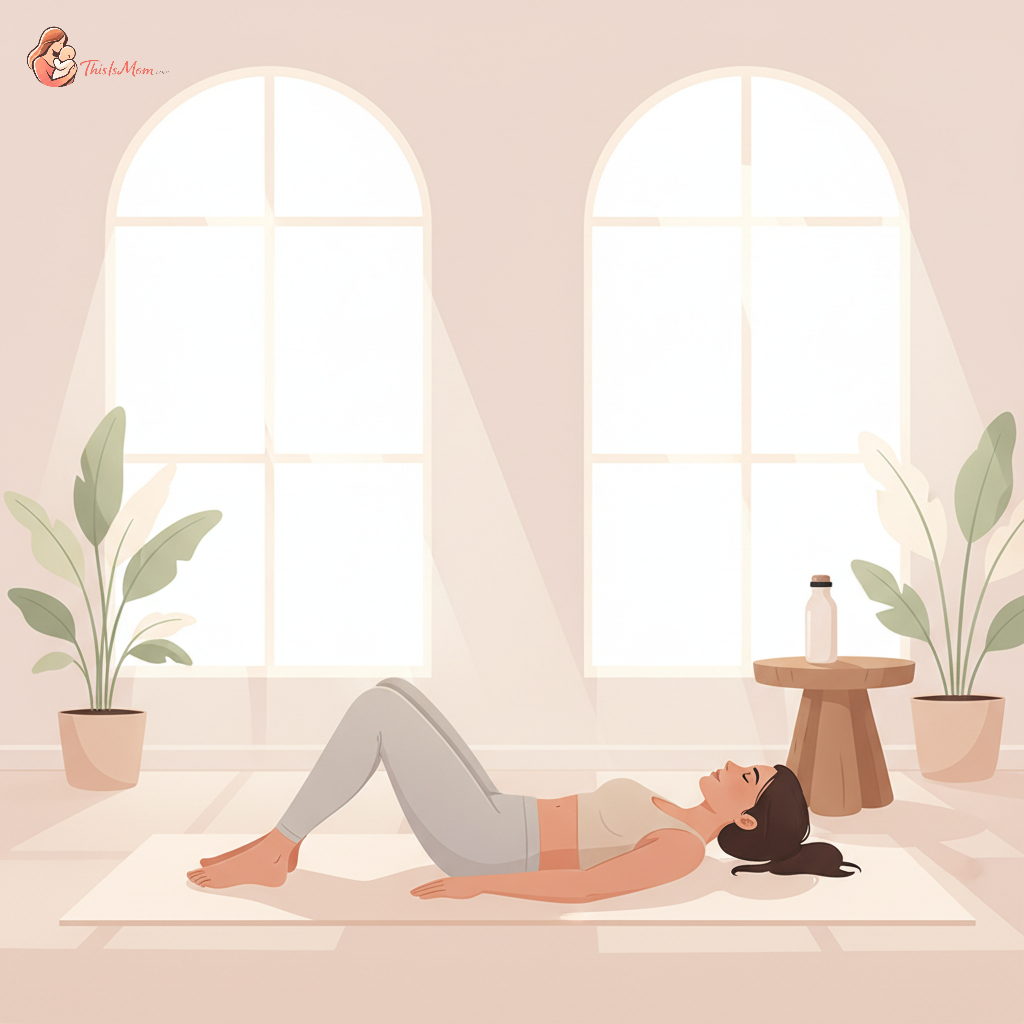
- Lie on your back with knees bent and feet flat, or sit comfortably.
- Place your hands on your lower abdomen, just inside your hip bones.
- Inhale deeply, allowing your belly to expand slightly.
- As you exhale, gently draw your belly button inward towards your spine, as if trying to zip up tight pants.
- You should feel a gentle tension under your fingertips. This is contracting your transverse abdominis.
- Hold the exhale briefly, then release. Repeat this 5-10 times.
The research suggests that proper diaphragmatic breathing is a cornerstone of restoring core function after pregnancy. It's also important to consider your packing list for the hospital.
Pelvic Tilts: Gentle Core Engagement
Pelvic tilts are a fantastic way to initiate gentle core contraction and mobilization.
- Lie on your back with knees bent and feet flat on the floor.
- Inhale. As you exhale, gently engage your transverse abdominis (as practiced in the breathing exercise) and flatten your lower back against the floor by tilting your pelvis slightly upward.
- Hold for a few seconds, then inhale and release back to a neutral position, allowing a small, natural curve in your lower back.
- Repeat 8-12 times.
Heel Slides: Controlled Movement for Core Stability
This exercise builds on the transverse abdominis engagement by adding controlled leg movement.
- Lie on your back with knees bent and feet flat, and engage your core.
- Slowly slide one heel away from you along the floor, keeping your pelvis stable and preventing your lower back from arching.
- Slide it back to the starting position.
- Alternate legs. Perform 8-10 repetitions on each side.
Discover your baby's phase
Modified Crunches (or 'Belly Scoops'): Focusing on Inner Core Strength
Traditional crunches can exacerbate diastasis recti. This modified version focuses on deep core activation.
- Lie on your back, knees bent, feet flat. Engage your transverse abdominis.
- Exhale and gently lift your head and shoulders off the floor only a few inches, keeping your neck relaxed. Think of pulling your rib cage down towards your pelvis, rather than just crunching your abs.
- You should feel activation more in the deep core, not a "bulging" sensation in your midsection. If you feel pain, stop.
- Inhale and slowly lower back down.
- Repeat 5-10 times. If this feels too challenging, start with just the breathing and pelvic tilts.
These are examples of how to heal diastasis recti at home safely and effectively by focusing on the deeper supportive muscles.
Exercises and Stretches to AVOID with Diastasis Recti
Just as important as knowing what to do is knowing what to avoid, especially when you're aiming for postpartum abdominal healing. Certain movements can put excessive strain on the abdominal wall and potentially widen the gap.
The Crunch Conundrum: Why Traditional Sit-Ups Are Out
Standard sit-ups and full crunches require a forceful contraction of the rectus abdominis muscles. When those muscles are separated, performing these exercises can cause them to bulge or separate further, hindering healing.
Twisting Movements and Planks: Proceed with Caution
While planks and twists are excellent core exercises for many, they can be too intense for a healing diastasis recti. Consider that after birth, your body is undergoing significant changes, and some parenting styles of the past might not be suitable for modern recovery.
- Planks: Full planks, especially on the forearms or hands, can cause the abdominal wall to bulge downwards if the deep core isn't sufficiently supportive. Modified planks might be appropriate later in recovery, but always with careful attention to form and core engagement.
- Twisting Movements: Traditional Russian twists, bicycle crunches, and sudden, forceful torso twists can put shearing stress on the abdominal midline.
Heavy Lifting and Straining: Protecting Your Core
The evidence suggests that avoiding sudden, forceful movements, heavy lifting, and straining (like you might do during constipation) is crucial. When lifting your baby or objects, engage your core first, and exhale as you lift. This is also relevant when thinking about C-section discharge outfits, as comfort and ease of movement are key.
Beyond Exercise: Everyday Habits for Diastasis Recti Healing
Healing diastasis recti isn't solely about specific exercises; it also involves adapting your daily movements and habits.
Posture Matters: Sitting, Standing, and Lifting Your Baby
Good posture is your ally. When sitting, try to maintain a slight natural curve in your lower back. When standing, imagine a string pulling you up from the crown of your head. When lifting your baby, engage your core before you lift and exhale during the lift. Proper body mechanics protect your recovering abdominal wall from unnecessary strain.
Does Postpartum Belly Wrapping Help Diastasis Recti?
Postpartum belly wraps or binders are a topic with varied opinions. Some anecdotal evidence suggests they can provide support and a sense of external stability, which may help with posture and body awareness. However, the research is not conclusive on whether they directly cause the abdominal muscles to heal or close diastasis recti.
The American Academy of Pediatrics (AAP) does not provide specific guidance on belly wrapping for diastasis recti. If you choose to use one, ensure it fits correctly and doesn't restrict breathing. It's best viewed as a supportive tool, not a standalone treatment. For a more direct approach to scar healing, consider C-section scar massage techniques.
When to Consult a Pelvic Floor Physical Therapist
If you're struggling with diastasis recti, experiencing pain, or unsure about your progress, a pelvic floor physical therapist is an invaluable resource. They can:
- Accurately assess the degree of your diastasis.
- Ensure you are performing exercises correctly.
- Develop a personalized rehabilitation plan.
- Address any associated issues like pelvic floor weakness or urinary incontinence.
Their expertise is essential for a comprehensive and safe recovery.
Your postpartum journey is unique. Prioritizing safe, gentle movements and being mindful of everyday habits can make a significant difference in your core recovery. When in doubt, remember the value of expert guidance.