Help Your 4-Year-Old Stop TV Tantrums: Gentle Strategies
Learn effective strategies to help your 4-year-old stop tantrums after TV is turned off. Discover tips for smooth transitions and emotional regulation.
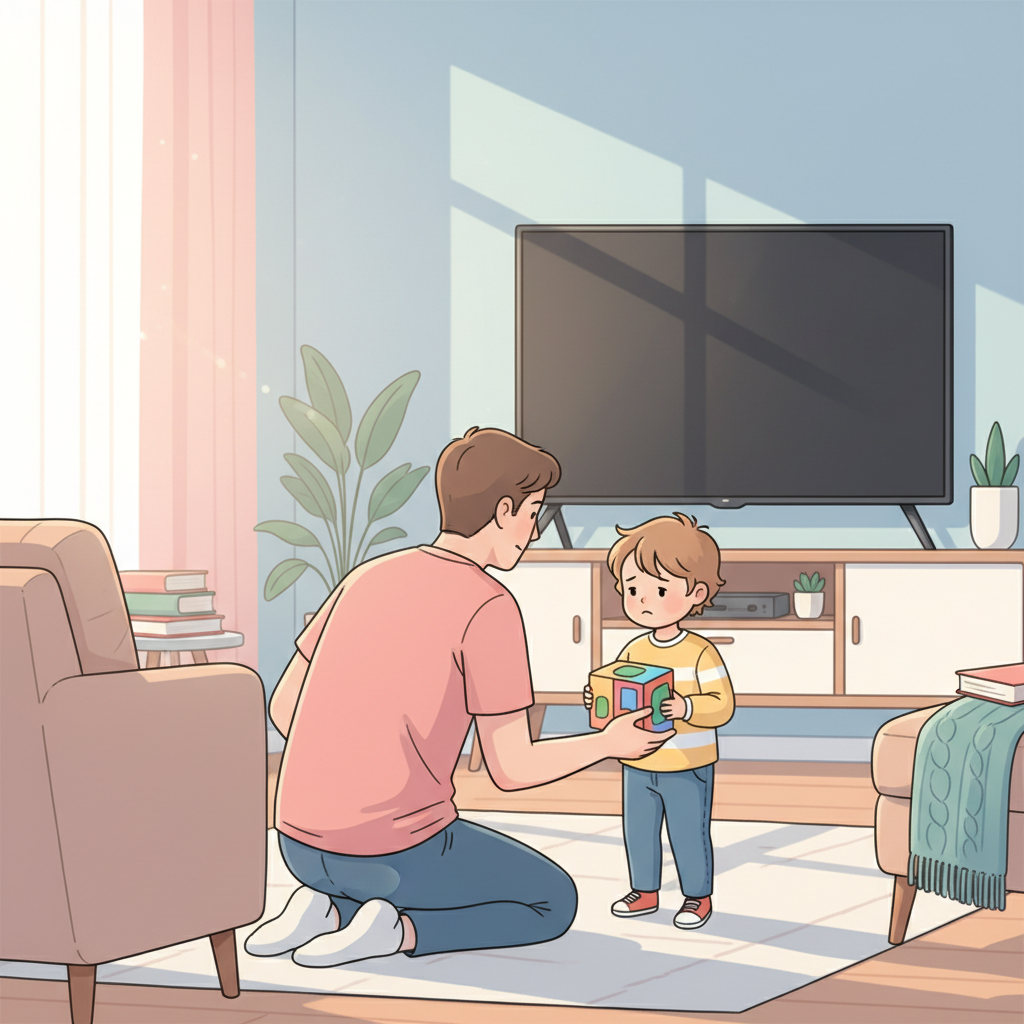
- Your 4-year-old is happily engrossed in their favorite show, and then, bam! The screen goes dark. Within seconds, you're navigating a full-blown tantrum. You're not alone. Understanding how to help a 4-year-old stop a tantrum after TV is turned off is a common challenge for parents. The shift from the captivating world of screens to the demands of real life can be jarring for young children.
This article explores why these screen time transitions can be so difficult and offers practical, gentle strategies to make the process smoother for both you and your child. The goal is to reduce the frequency and intensity of meltdowns through proactive planning and supportive responses, helping your child build emotional regulation skills.
Why the Screen’s End Means a Meltdown
The developing brain of a 4-year-old is still mastering complex skills, and transitions can be particularly challenging. What seems like a straightforward "off" switch for adults can feel like a sudden, jarring disconnection for children.
The Developing Brain: Transitions Are Tough
Children under 5 are still developing their executive functions — the brain's "control panel" that manages impulses, attention, and emotional regulation. Transitions require shifting focus, planning the next step, and managing disappointment. These are significant cognitive loads for a young child. The brain's prefrontal cortex, responsible for these functions, isn't fully developed until well into adulthood. This means that expecting smooth transitions without support might be setting ourselves up for disappointment.
Sensory Overload and Emotional Regulation
Screen time, especially fast-paced or visually stimulating content, can create a state of sensory engagement that's difficult to disengage from. When the abrupt stop occurs, children might experience a form of withdrawal or overstimulation reaction. This can make it harder for them to regulate their emotions, leading to frustration, anger, or sadness. Some children may find it particularly challenging to disengage if they are prone to sensory sensitivities.
Signs Your Child Might Be Watching Too Much TV
If screen time consistently leads to significant meltdowns, difficulty shifting focus, or irritability that lasts long after the screen is off, it might be an indicator that screen time is playing too large a role in their day. The American Academy of Pediatrics (AAP) recommends limiting screen use for children and adolescents to ensure it doesn't displace essential activities like physical play, face-to-face interaction, and sleep. You can find their latest recommendations here: AAP Screen Time Guidelines.
Preparing for Success: Setting the Stage Before Screen Time Starts
Preventing screen time meltdowns begins long before you reach for the remote. Proactive strategies create a framework that helps children understand expectations and feel more secure.
Establishing Clear Boundaries and Routines
A consistent routine around screen time is crucial. This helps your child know what to expect and when. For example, a routine might look like: "We have screen time after we finish lunch, and then it's time for outside play." This predictability can significantly reduce anxiety and resistance. Routines help children feel secure and understand the rhythm of their day.
Using Visual Timers and Verbal Warnings
Visual timers are invaluable tools for this age group. A physical timer that shows time decreasing can be easier for a 4-year-old to grasp than abstract minutes. Offering clear verbal warnings is also key. The AAP suggests providing warnings like, "You have 10 minutes left," "5 minutes left," and then "1 minute left." This gives your child time to mentally prepare for the transition, reducing the shock of a sudden stop.
The Power of Choice: Empowering Your Child (Within Limits)
Giving your child a sense of control can make a big difference. Within the established screen time boundaries, offer limited choices. For instance, "You can choose to watch this show or that show for 30 minutes." Or, when it’s time to turn it off, "Would you like to pause the show to get a snack, or would you like to finish this scene before we turn it off?" This empowers them without undermining the rules. Offering choices, even small ones, can reduce oppositional behavior.
Gentle Scripts for a Smooth Screen Time Exit
The words we use during transitions can either escalate a situation or de-escalate it. Calm, clear, and consistent language is your best tool.
Language to Use: Clear, Calm, and Consistent
When it’s time for screen time to end, use phrases that are both gentle and firm. Try these:
- "Showtime is all done. Let's go play with your blocks now."
- "The timer says it's time to turn off the TV. What would you like to do next?"
- "I know you're enjoying that, but our screen time is finished. We can read a book together."
Consistency is key. If you say it's time to turn it off, follow through calmly.
Discover your baby's phase
What NOT to Say: Avoiding Power Struggles
Certain phrases can trigger defiance or escalate frustration. It’s generally best to avoid:
- "Just turn it off, it’s not a big deal!" (This dismisses their feelings.)
- "If you don't turn it off right now, you'll get no more screen time ever!" (This can feel like an overreaction and lead to a power struggle.)
- "Don't cry, you’re being silly." (This invalidates their emotions.)
These approaches can often make the 4-year-old tantrums after TV situation worse. Managing toddler meltdowns when parents use phones can be another area where gentle approaches are key.
When Your 4-Year-Old Isn't Listening: Calm Responses
If your child protests or doesn't immediately comply, try to stay calm and avoid engaging in an argument. Acknowledge their distress: "I see you're feeling upset that the TV is off." Then, gently redirect: "Let's go find your favorite teddy bear for a snuggle." If necessary, and if it's safe to do so, you might need to physically turn off the TV. Remaining calm and consistent is more effective than getting drawn into a battle of wills.
Bridging the Gap: Sensory and Engaging Activities
What happens immediately after the screen goes off can significantly influence whether a tantrum erupts. Having a plan for engaging activities ready can be a game-changer.
Hands-On Activities as a Distraction
For children who are sensitive to transitions, redirecting their focus to a tactile or creative activity can be very effective.
- Playdough: Offers a calming sensory experience and encourages creativity.
- Building Blocks or LEGOs: Promotes focus and problem-solving.
- Puzzles: Engages their minds in a quiet, structured way.
- Drawing or Coloring: Provides an outlet for expression.
These activities provide a much-needed sensory shift. Distraction techniques for tablet removal can also be highly beneficial.
Movement Breaks: Dancing, Jumping, Outdoor Play
Sometimes, a child just needs to release pent-up energy. A quick, fun movement break can effectively bridge the transition.
- Put on some music and have a spontaneous dance party.
- Go outside for a few minutes of fresh air and active play.
- Do some simple exercises like jumping jacks or running in place.
This physical release can help reset their emotional state.
Connecting Through Stories and Quiet Time
For a calmer transition, consider integrating quieter activities. Reading a beloved book together, engaging in a simple pretend-play scenario, or even just sitting together for a few minutes of quiet conversation can help your child reconnect and feel settled. This can be especially helpful if they are prone to overstimulation. Resetting 3-year-old screen time after vacation can also involve similar calming techniques.
When Meltdowns Persist: De-escalation and Support
Even with the best strategies, tantrums will sometimes happen. The key is how you respond during and after the meltdown to help your child learn to manage their emotions.
Acknowledging Feelings Without Giving In
During a tantrum, your child is feeling overwhelmed. It's important to validate their emotions without necessarily giving them what they want (in this case, more screen time). "I hear you're really mad that it's time to turn off the TV. It's okay to feel mad, but the TV is off now." This teaches them that their feelings are understandable but that actions have consequences and boundaries are firm. Toddler throws everything can also be a phase where acknowledging feelings without giving in is crucial.
Offering Comfort and Co-regulation
Once your child has calmed slightly, offer your presence and comfort. This is called "co-regulation," where you help them regulate their emotions by being a calm, steady presence. You might sit nearby, offer a hug if they're receptive, or simply speak in a soothing tone. Parental calmly guiding children through difficult emotions is a foundational aspect of healthy development.
Knowing When to Call Your Pediatrician About Escalating Tantrums
For most children, these screen time transitions will become easier with consistent, gentle parenting. However, if you notice a significant increase in the frequency or intensity of tantrums, if they are highly destructive, or if your child is consistently unable to be consoled, it's always a good idea to check with your pediatrician. They can help rule out any underlying issues and offer personalized guidance. Your pediatrician is your best resource for understanding your child's unique developmental path and any specific concerns you may have.
Guiding a 4-year-old through the challenging shift away from screens is a journey. By understanding the underlying developmental reasons for these meltdowns and implementing consistent, gentle strategies, you can help your child build crucial emotional regulation skills, one calm transition at a time.